Dallas to Denver
Denver → DallasFTL freight transportation service between Dallas and Denver. Reliable logistics solutions for your business.
Route Description
Everything you need to know about the corridor Dallas - Denver
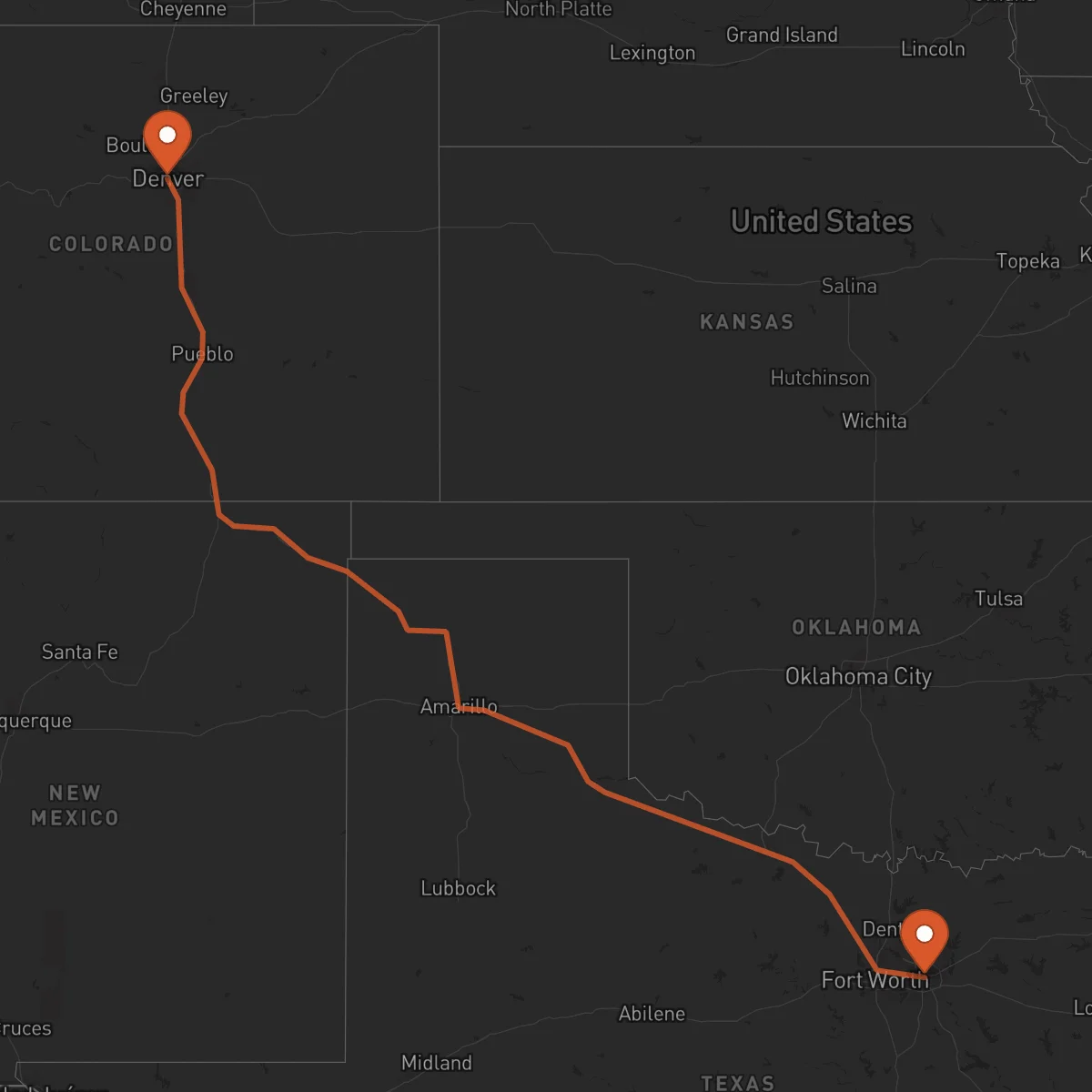
The Dallas-Denver corridor represents a vital logistics route connecting two of the most dynamic economic centers in the United States. This 1066-kilometer route links Texas's largest metropolitan area with Colorado's capital, facilitating the movement of goods between the South-Central and Mountain regions. The corridor traverses diverse terrain, from the plains of North Texas through the Oklahoma Panhandle and into the Rocky Mountain foothills, making it a crucial artery for commerce between these regions.
The economic significance of this route is substantial, supporting industries ranging from energy and technology to agriculture and manufacturing. Dallas serves as a major distribution hub for the Southwest, while Denver acts as a gateway to the Mountain West and beyond. This corridor enables efficient supply chain operations for companies requiring reliable transportation between these strategic markets, supporting the flow of industrial equipment, consumer goods, agricultural products, and raw materials.
Control Terrestre specializes in providing full truckload (FTL) transportation services along this corridor, leveraging our network of certified carriers and strategic partnerships. Our expertise in managing cross-regional freight movements ensures that your cargo moves efficiently between Dallas and Denver, with dedicated equipment options including dry vans, refrigerated units, and specialized trailers to meet your specific transportation needs.
Services for this Route
Available services for the corridor Dallas - Denver
 Origin
Dallas
Dallas stands as a premier logistics hub in the southern United States, offering unparalleled connectivity and infrastructure. The Dallas-Fort Worth metroplex features multiple interstate highways converging in the region, including I-20, I-30, I-35E, and I-45, creating a robust transportation network. Dallas's strategic location provides access to major ports, rail terminals, and airports, making it an ideal origin point for nationwide distribution. The region's logistics infrastructure includes extensive warehousing facilities, cross-docking operations, and advanced freight handling capabilities.
The Dallas area is home to diverse industries including technology, telecommunications, healthcare, and financial services. The region also serves as a major center for aerospace manufacturing, automotive production, and food processing. With a strong presence of Fortune 500 companies and a skilled workforce, Dallas offers the economic foundation necessary to support complex supply chain operations. The city's central location within the continental United States provides optimal positioning for reaching both coastal markets and inland destinations efficiently.
 Destination
Denver
Denver serves as the primary logistics gateway to the Rocky Mountain region, offering strategic advantages for freight transportation and distribution. The city's location at the intersection of I-25 and I-70 provides direct access to major transportation corridors connecting the Mountain West with the rest of the country. Denver International Airport, one of the largest cargo facilities in the nation, complements the city's robust ground transportation infrastructure. The region's extensive network of highways and rail lines facilitates efficient movement of goods throughout Colorado and neighboring states.
The Denver metropolitan area supports a diverse economic base including aerospace, technology, energy, and outdoor recreation industries. The region is home to numerous federal agencies, research institutions, and corporate headquarters, creating substantial demand for logistics services. Denver's proximity to major mining operations, agricultural areas, and manufacturing centers makes it a crucial distribution point for various commodities. The city's growing population and strong consumer market further enhance its importance as a logistics destination, requiring reliable transportation solutions to support both inbound and outbound freight movements.










