Denver to Dallas
Dallas → DenverFTL freight transportation service between Denver and Dallas. Reliable logistics solutions for your business.
Route Description
Everything you need to know about the corridor Denver - Dallas
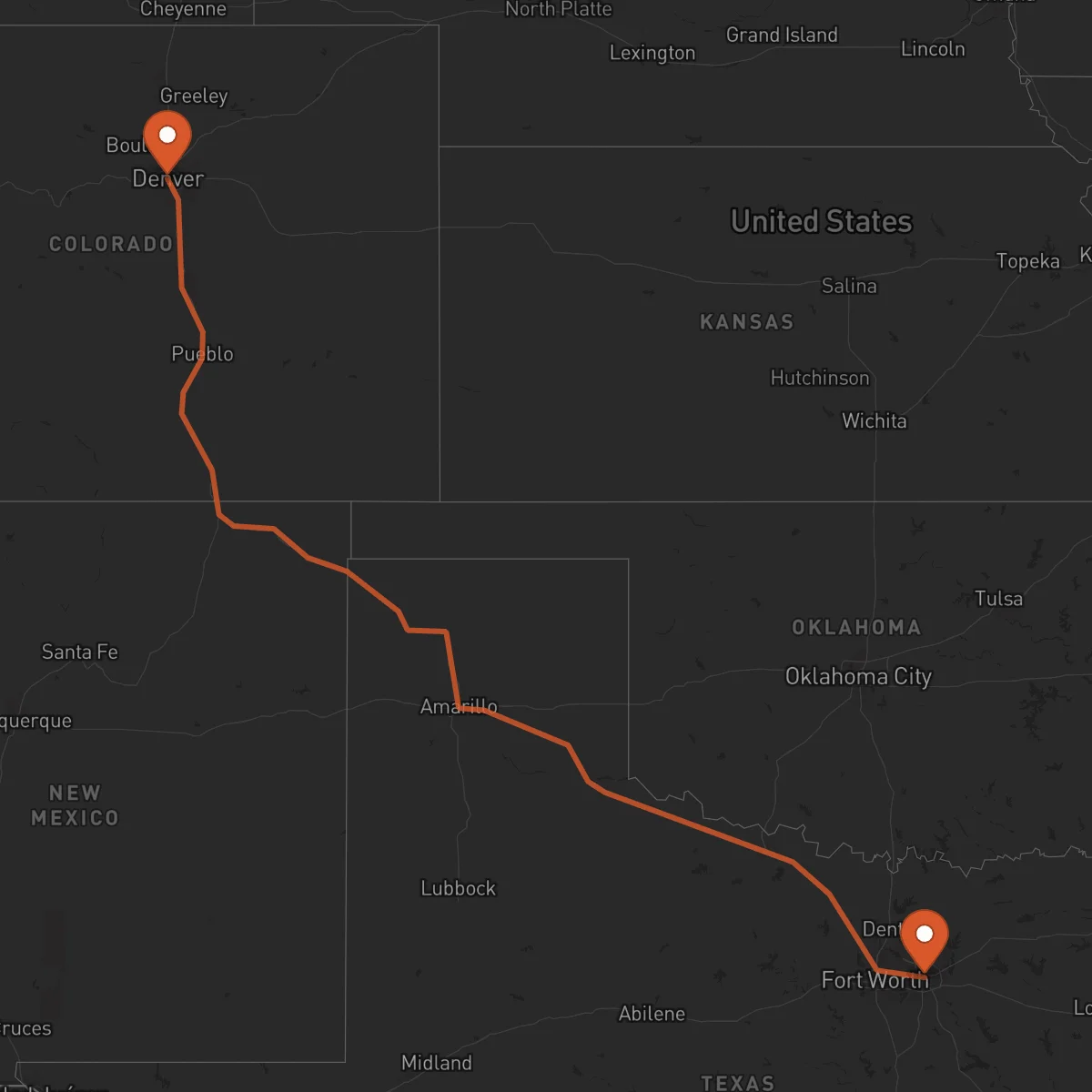
The Denver-Dallas corridor represents one of the most vital freight transportation routes in the central United States, connecting the Rocky Mountain region with the heart of Texas. This 1066-kilometer route serves as a crucial link between two major economic centers, facilitating the movement of goods across multiple states including Colorado, New Mexico, Oklahoma, and Texas. The corridor's strategic importance stems from its role in connecting manufacturing hubs, agricultural regions, and major consumer markets.
The economic significance of this route cannot be overstated. Denver serves as a gateway to the western United States, while Dallas stands as a major logistics hub in the South. The corridor supports diverse industries including technology, energy, agriculture, automotive, and retail. Key transportation infrastructure includes major highways such as I-25, I-40, and I-35, which provide efficient north-south and east-west connectivity. The route also benefits from proximity to major rail networks and airports, creating a comprehensive multimodal transportation system.
Control Terrestre specializes in optimizing freight movements along this corridor through our network of certified carriers and strategic partnerships. Our dedicated services ensure reliable, full truckload transportation that meets the specific needs of businesses operating between Denver and Dallas. We understand the unique challenges of this route, including varying terrain, weather conditions, and regulatory requirements across state lines. Our expertise in handling specialized cargo, including hazardous materials and oversized loads, makes us the preferred partner for companies requiring dependable transportation solutions along this critical corridor.
Services for this Route
Available services for the corridor Denver - Dallas
 Origin
Denver
Denver, Colorado, serves as a strategic logistics hub in the Rocky Mountain region, offering unique advantages for freight transportation. Located at the intersection of major transportation routes, Denver provides access to both western and central United States markets. The city's elevation and geographic position make it a natural gateway for goods moving between coastal regions and the heartland. Denver International Airport, one of the largest cargo airports in the country, complements the extensive ground transportation network.
The Denver metropolitan area is home to diverse industries including aerospace, telecommunications, energy, and technology. The region's strong manufacturing sector, particularly in electronics and medical devices, generates significant freight volume. Additionally, Colorado's agricultural industry, including beef production and craft beverages, contributes to the robust freight activity. The city's well-developed infrastructure includes multiple interstate highways, rail connections, and a modern logistics park system that facilitates efficient cargo handling and distribution.
 Destination
Dallas
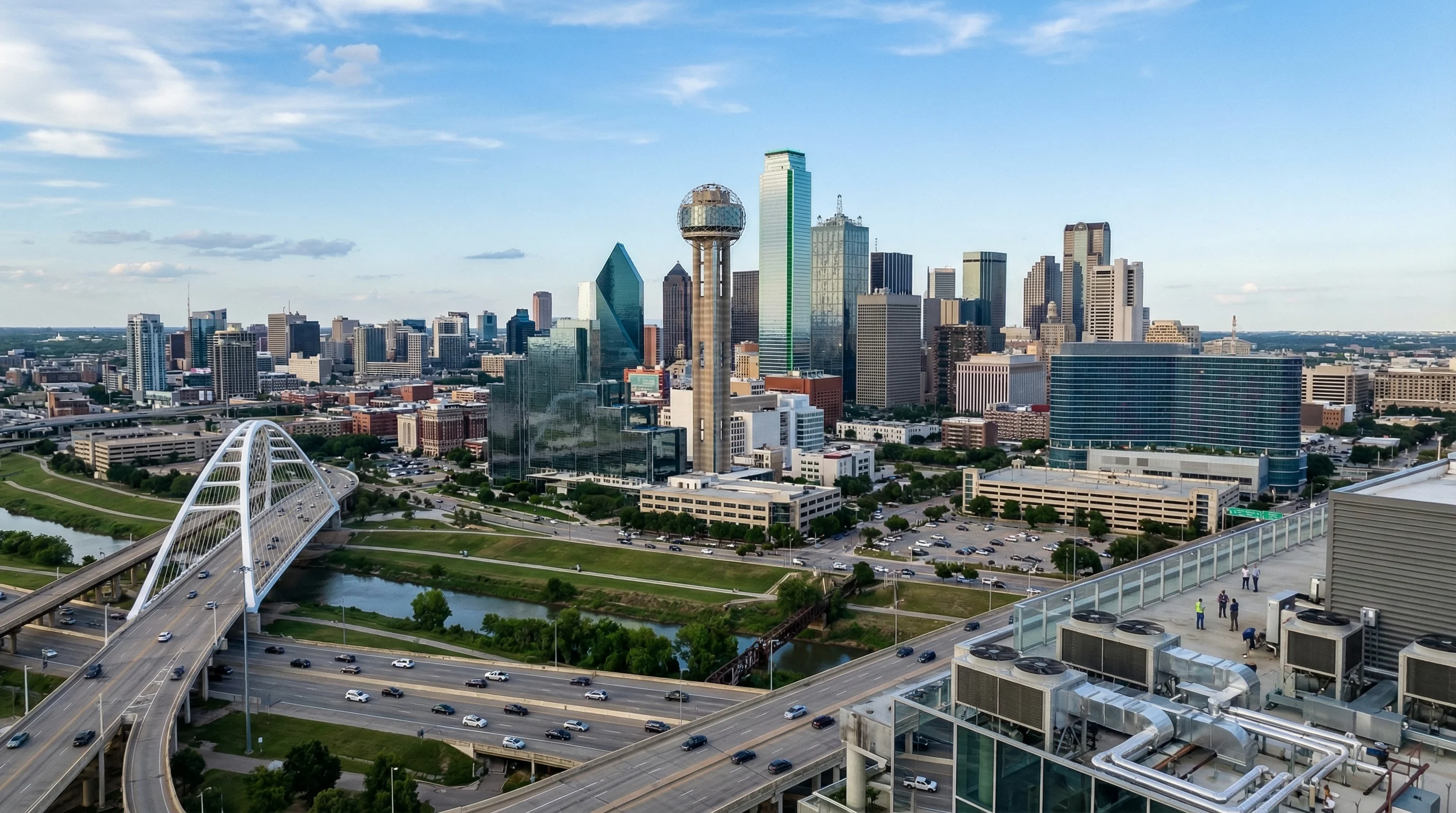
Dallas, Texas, stands as a premier logistics hub in the southern United States, offering unparalleled connectivity and infrastructure for freight transportation. The Dallas-Fort Worth metroplex is strategically positioned at the crossroads of major interstate highways, providing direct access to markets throughout the South, Midwest, and Southwest. The region's central location within the continental United States makes it an ideal distribution center for companies serving national markets.
The Dallas area boasts a diverse and thriving economy, with strong presence in technology, telecommunications, healthcare, and manufacturing sectors. The region is home to numerous corporate headquarters and distribution centers, creating substantial freight demand. Dallas's transportation infrastructure is among the most advanced in the country, featuring the Dallas/Fort Worth International Airport, extensive rail networks operated by major carriers, and a comprehensive highway system. The city's logistics ecosystem includes modern warehousing facilities, cross-docking operations, and specialized handling capabilities that support efficient freight movement and distribution.










