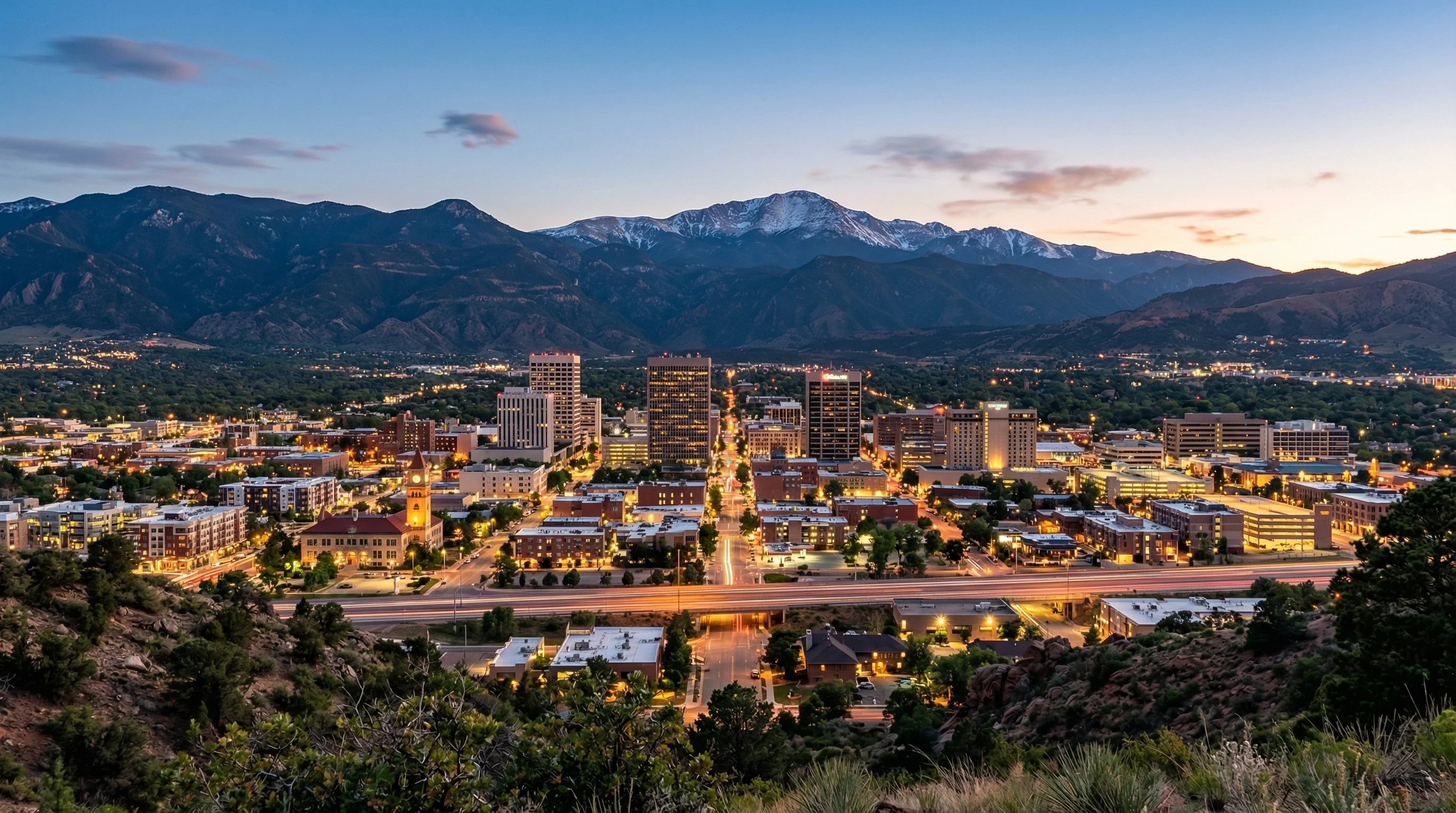

FTL freight in these cities of Colorado
Ground freight transportation in Colorado: strategic connection in the heart of North America
Colorado occupies a privileged geographic position in the center of the United States, serving as a natural logistics bridge between the east and west coasts and between the country's northern and southern markets. Its strategic location in the Rocky Mountains and its interstate transportation infrastructure make it a critical distribution hub for companies seeking to reach markets across the continent. At Control Terrestre, we operate daily in Colorado, moving full truckload (FTL) freight through the main corridors that cross the state, connecting Denver, Colorado Springs, Pueblo, and Fort Collins with the rest of North America.
Colorado's logistics ecosystem is characterized by its industrial diversity, ranging from technology and advanced manufacturing to agriculture, energy, and consumer products. We operate in this state with a deep understanding of its particularities: altitudes that impact vehicle performance, winter weather conditions that demand prepared equipment, and weight regulations that vary on certain mountain routes. Our carrier network includes transporters with specific experience in Colorado operations, many of them holding C-TPAT, FAST, and Transporte Limpio certifications that guarantee safety and compliance.
Infrastructure and connectivity
Interstate 25 (I-25) is the backbone of north-south transportation in Colorado, connecting the Wyoming border to the north, passing through Fort Collins, Denver, Colorado Springs, and Pueblo, all the way to New Mexico. This route is essential for movements connecting the Front Range corridor markets with the rest of the Great Plains and the southwestern United States. Interstate 70 (I-70) crosses the state from east to west, being one of the most important transcontinental routes in the country. It connects Kansas with Utah, traversing the Rocky Mountains through passes such as the Eisenhower Tunnel, and is vital for trade between the Midwest and the West Coast.
Interstate 76 connects Denver with Nebraska and the I-80 corridor, serving as an important alternative route for traffic heading toward Chicago and the Northeast. Interstate 25 to the south links to Albuquerque and El Paso, connecting with routes toward Mexico and Texas. These interstate highways, along with state highways such as US 287, US 50, and US 285, form a network that provides efficient access to virtually any point in the state and its regional connections.
Denver International Airport (DEN) is one of the most important cargo airports in the United States due to its capacity and central location, serving as a crucial hub for expedited logistics and international trade. Although Colorado does not have access to seaports, its central position makes it a transshipment point for freight coming from both coasts destined for locations in the interior of the continent.
The Denver metropolitan area concentrates millions of square feet of warehousing and distribution space, especially in areas such as Commerce City, Aurora, and zones near the airport. These distribution centers serve as consolidation and deconsolidation points for companies serving the entire Midwest and Rocky Mountains region.
Key industries and sectors
Colorado's economy is highly diverse. The technology industry in the Denver-Boulder corridor (Silicon Flats) is home to software, telecommunications, cybersecurity, and aerospace companies that require specialized transportation of electronic equipment, servers, and precision components. The aerospace and defense industry has a significant presence in Colorado Springs and Denver, with manufacturers of satellites, defense systems, and space technology that demand dedicated services with high security standards.
The energy sector is fundamental: Colorado is a major producer of oil and natural gas in the Denver-Julesburg (DJ) Basin and the western region of the state. This industry generates constant demand for specialized transportation of drilling equipment, pipelines, chemicals, and hazardous materials. Our carriers with Hazmat and Responsible Care certifications are prepared for these specialized movements.
Agriculture on Colorado's eastern plains produces wheat, corn, cattle, and dairy products, requiring refrigerated transportation and services to national markets. The brewery and beverage industry is particularly notable: Colorado is home to some of the largest breweries in the country and many craft breweries, generating transportation needs for raw materials, equipment, and finished product.
Consumer product trade for the entire Rocky Mountains region is centralized in Colorado. Distribution centers in Denver serve markets in Wyoming, Montana, Utah, New Mexico, and surrounding rural areas, making the state a natural hub for retail, e-commerce, and wholesale distribution companies.
Our solutions for Colorado
At Control Terrestre, we offer full truckload solutions specifically designed for Colorado's logistics needs. Our domestic ground transportation services connect Colorado with all major U.S. markets: routes to California and the Pacific Northwest via I-70 west, to Texas and the Gulf via I-25 south, to Chicago and the Midwest via I-76 and I-80, and to the Southeast through multiple corridors.
We operate 48' and 53' dry vans (full and tandem) for general manufacturing, consumer products, technology, and general commerce movements. These units are available for both spot freight (one-time) and dedicated services that provide guaranteed capacity on recurring routes, ideal for companies with predictable logistics needs between Colorado and their plants or distribution centers in other regions.
Our expedited freight services are essential for sectors such as technology, aerospace, and manufacturing that require maximum-priority deliveries. These services keep freight in continuous motion without unnecessary transfers, operated by teams experienced in routes that cross the Rocky Mountains under variable conditions.
For the agriculture and food and beverage sector, we offer refrigerated transportation in 48' and 53' units with temperature control, essential for dairy, meat, beer, and other perishable products. Our refrigerated carriers are knowledgeable in cold chain handling best practices and food safety protocols.
We handle specialized freight including hazardous materials for the energy and chemical industry, with carriers holding Hazmat and Responsible Care certifications. We also have flatbeds for oversized loads such as drilling equipment, industrial machinery, and construction structures. For specific needs of the energy industry, we have access to tankers for the transportation of non-hazardous and hazardous liquids.
We work with carriers that maintain C-TPAT certifications for companies requiring supply chain security standards, and some hold FAST certification to facilitate border crossings when freight originates from or is destined for Canada or Mexico. The commitment to sustainability is present through partners certified in Transporte Limpio.
Frequently asked questions
Can Control Terrestre handle movements during winter in Colorado with adverse weather conditions?
Yes, we operate in Colorado year-round, including during the winter months. Our network includes carriers with specific experience in Rocky Mountain operations, equipment prepared for winter conditions, and safety protocols for high-altitude routes such as the I-70 corridor. We constantly monitor weather conditions and work with carriers who know the alternative routes and chain-up protocols on mountain passes when conditions require it.
What options exist for companies that need dedicated capacity between Colorado and other states?
We offer dedicated services designed for companies with recurring logistics needs. This can include regular routes between manufacturing plants in Colorado and distribution centers in California, Texas, Illinois, or any other state. Dedicated services provide predictability in capacity, schedules, and costs, and are especially useful for just-in-time operations, raw material movements, or regular distribution of finished product.
Does Control Terrestre handle specialized freight for the energy industry in Colorado?
Yes, we have experience moving specialized freight for the energy sector, including drilling equipment, pipelines, chemicals, and hazardous materials related to oil and gas operations. We work with carriers certified in Hazmat and Responsible Care that comply with all federal and state regulations for the transportation of hazardous materials. We have flatbeds for oversized loads and tankers for liquids, depending on the specific requirements of each shipment.


Freight experts
Ground freight from North to Central America with full coverage and 24/7 monitoring.








