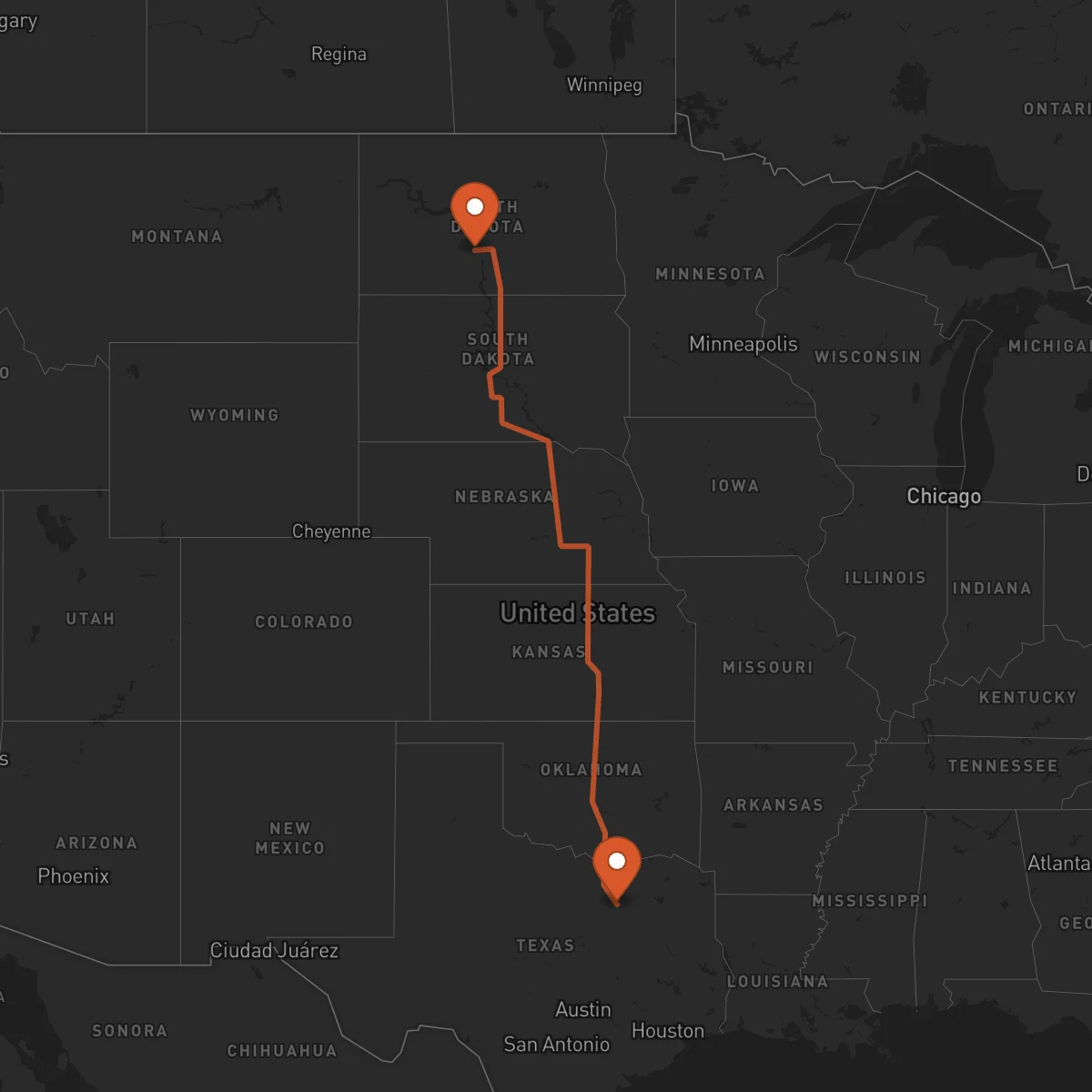
Dallas to Bismarck
Bismarck → DallasFTL freight transportation service between Dallas and Bismarck. Reliable logistics solutions for your business.
Route Description
Everything you need to know about the corridor Dallas - Bismarck
The Dallas to Bismarck corridor represents a vital freight transportation link connecting the economic powerhouse of Texas with the strategic markets of North Dakota. This 1,596 km route traverses diverse landscapes and industrial regions, serving as a crucial artery for the movement of goods between the southern and northern United States. The corridor's significance has grown substantially with the expansion of energy, agriculture, and manufacturing sectors across both states, making it an essential pathway for businesses looking to optimize their supply chain operations.
The economic context of this corridor is shaped by Dallas's position as a major logistics hub and Bismarck's role as the capital and economic center of North Dakota. Dallas serves as a gateway to the Mexican border and international trade, while Bismarck connects to the vast agricultural and energy resources of the northern plains. This complementary relationship creates substantial freight movement in both directions, supporting industries ranging from energy and agriculture to retail and manufacturing.
Key industries utilizing this corridor include energy equipment and supplies, agricultural products, industrial machinery, and consumer goods. The route particularly benefits from the energy sector's needs, with Dallas-based companies requiring reliable transportation for equipment and supplies to support operations in North Dakota's Bakken oil fields. Additionally, agricultural producers in both regions depend on this corridor for the timely movement of products and equipment.
Control Terrestre facilitates seamless operations on this corridor through our extensive network of certified transportation providers and specialized equipment. Our dedicated FTL services ensure that your cargo moves efficiently and securely from origin to destination, with real-time tracking and professional handling throughout the journey. We understand the unique requirements of this route and provide tailored solutions that address the specific needs of businesses operating between these strategic locations.
Services for this Route
Available services for the corridor Dallas - Bismarck
 Origin
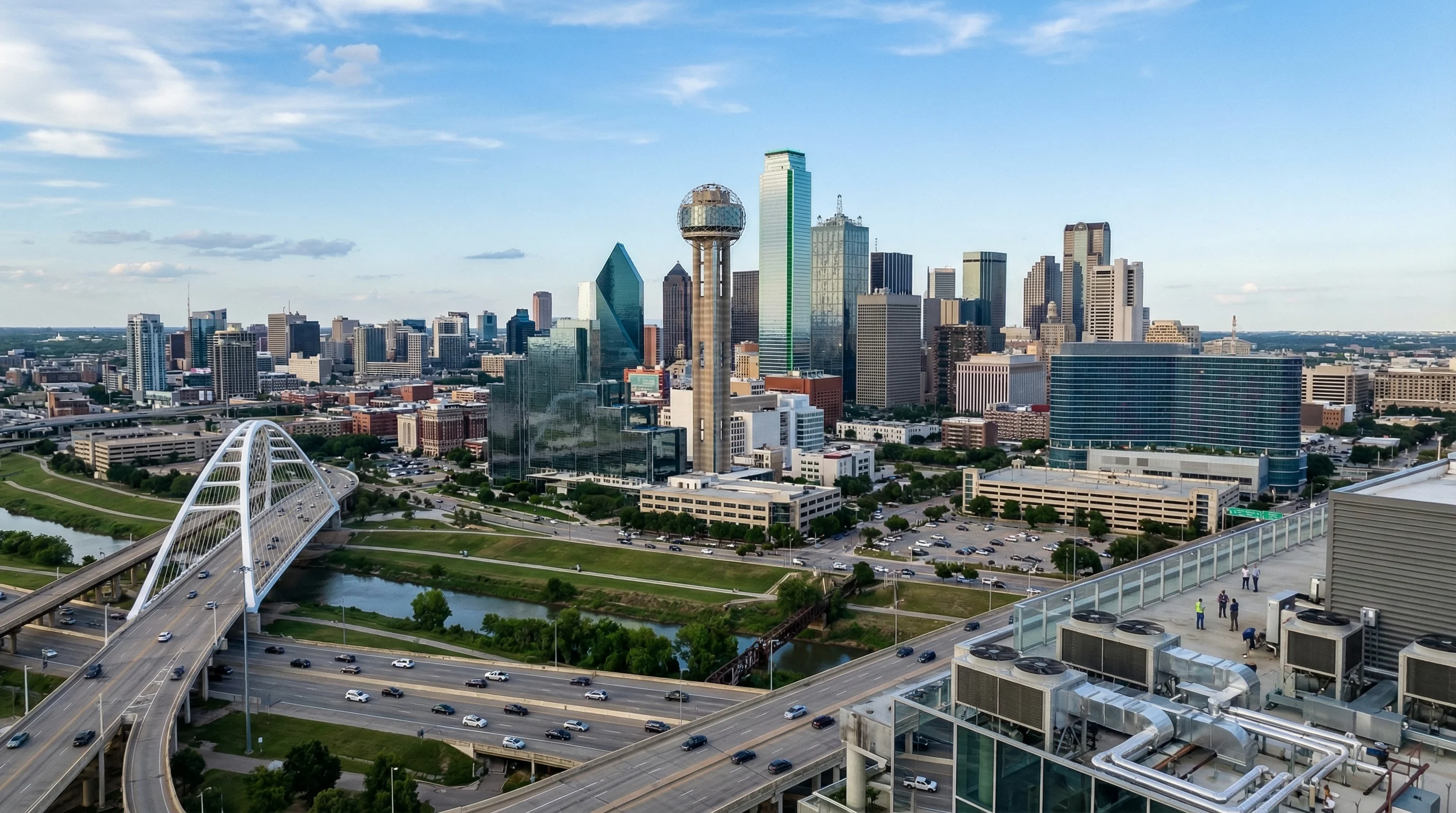
Dallas
Dallas, Texas stands as a premier logistics hub in the southern United States, offering exceptional connectivity and infrastructure for freight transportation. The city's strategic location provides direct access to major interstate highways, including I-35 and I-20, facilitating efficient movement of goods throughout the region and beyond. Dallas's robust transportation network includes multiple rail terminals, the Dallas/Fort Worth International Airport, and the Port of Houston's proximity, creating a comprehensive multimodal logistics ecosystem that supports diverse freight needs.
The economic landscape of Dallas is characterized by its strength in technology, telecommunications, energy, and manufacturing sectors. The city hosts numerous corporate headquarters and distribution centers, making it a critical node in national supply chains. Dallas's pro-business environment and skilled workforce have attracted significant investment, resulting in state-of-the-art warehousing and distribution facilities that enhance its capabilities as a freight origin point.
 Destination
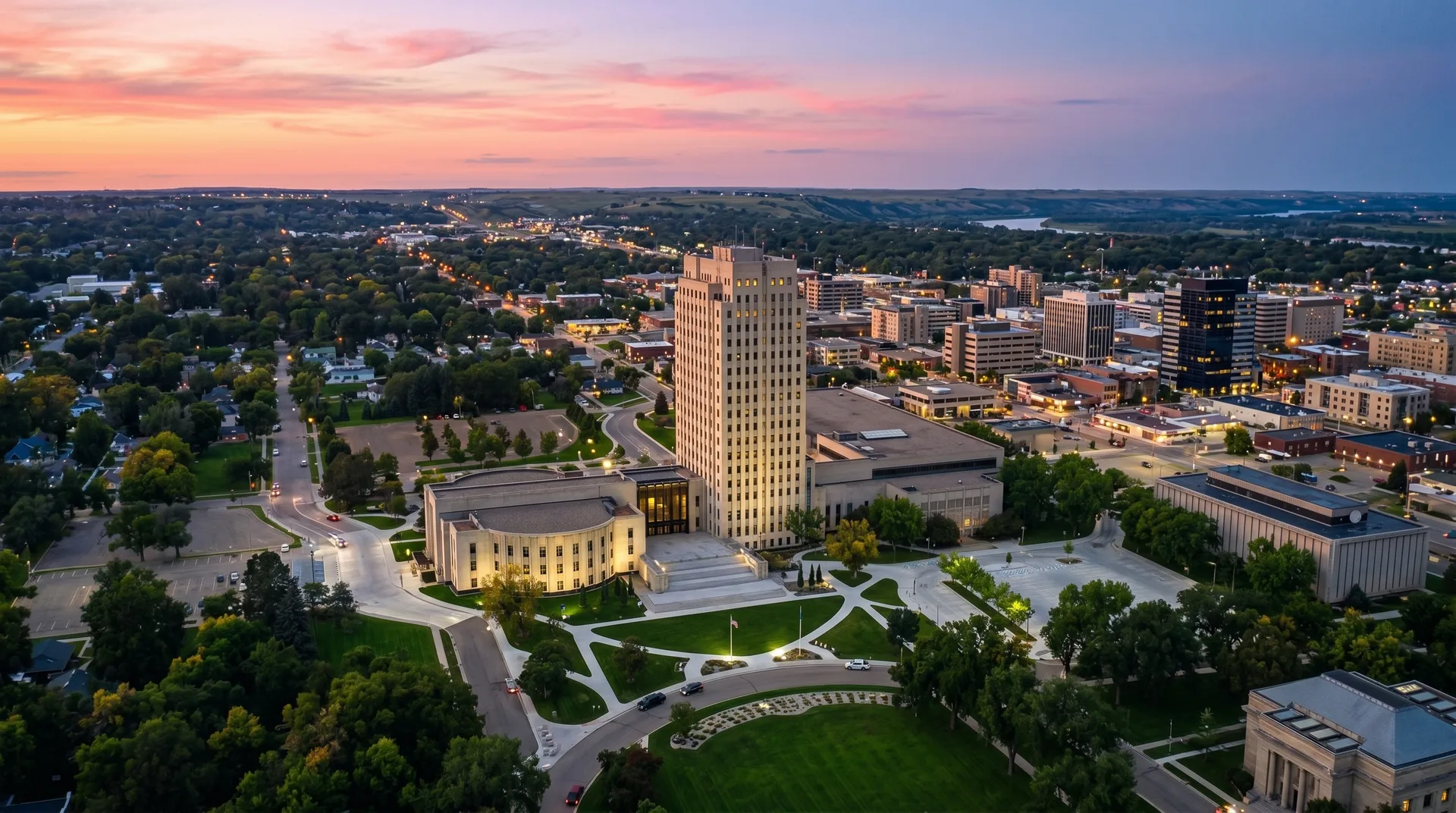
Bismarck
Bismarck, North Dakota serves as a strategic logistics center for the northern Great Plains region, offering unique advantages for freight transportation and distribution. The city's location along the Missouri River and its access to major highways, including I-94, provide efficient connections to regional markets and beyond. Bismarck's transportation infrastructure includes rail service through BNSF Railway and comprehensive road networks that facilitate the movement of goods throughout North Dakota and neighboring states.
The economic profile of Bismarck is anchored by government services, healthcare, energy, and agriculture. As the state capital, it hosts numerous state agencies and related businesses, while also serving as a commercial center for the surrounding agricultural region. The city's growing energy sector, particularly in oil and natural gas, has increased the demand for reliable freight transportation services, making it an important destination for specialized cargo and equipment.










