

FTL freight in these cities of Texas
Ground freight transportation in Texas: the main gateway for trade with Mexico and the energy hub of the United States
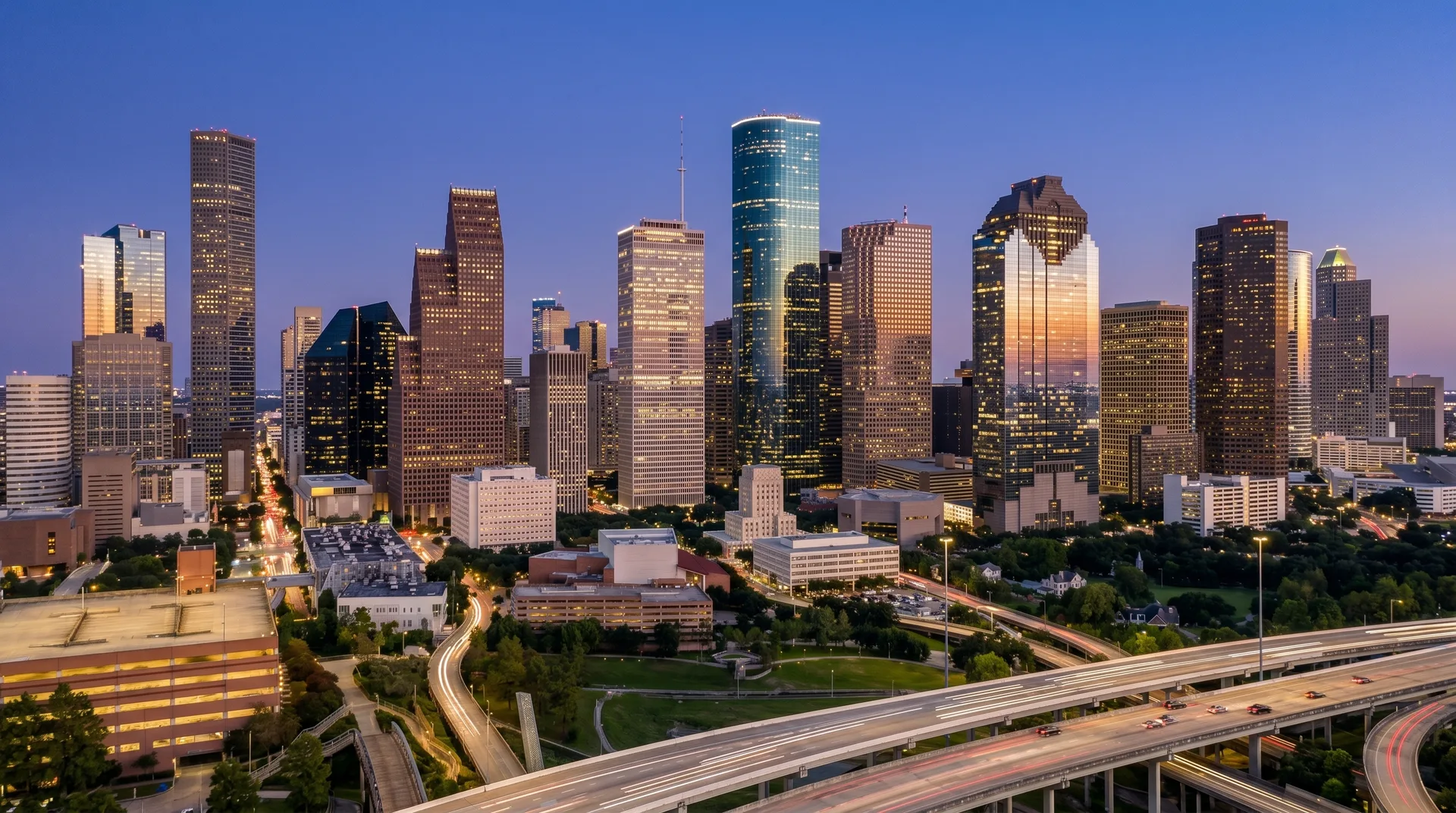
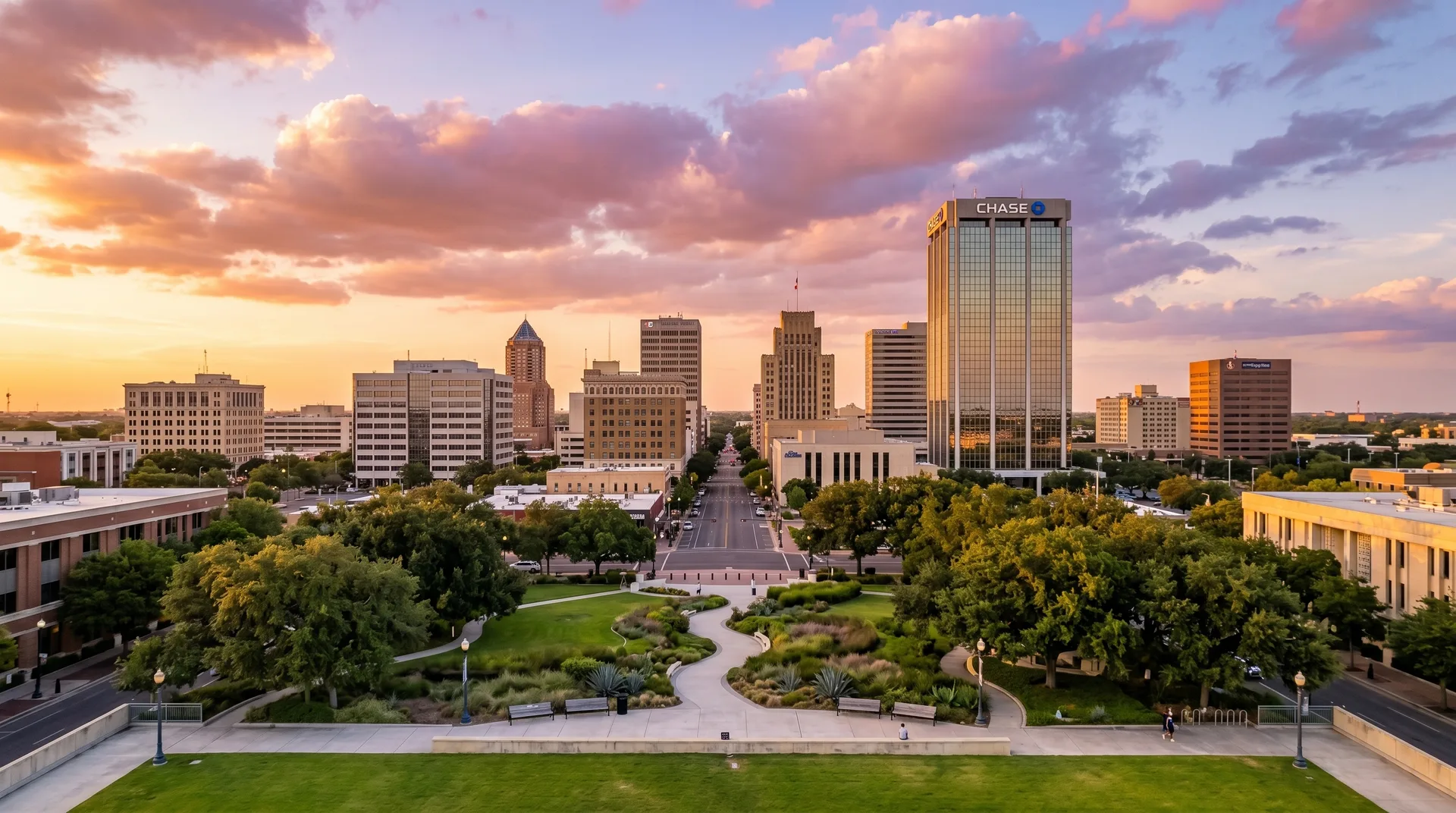
Texas represents the most strategic state for trade between the United States and Mexico, accounting for more than 40% of the total value of bilateral trade under the USMCA. With a border of over 1,900 kilometers shared with Mexico and an economy that on its own would surpass that of most countries in the world, Texas functions as the epicenter of integrated North American supply chains. At Control Terrestre, we operate in Texas recognizing its critical importance for our clients, both those engaged in international trade and those leveraging the state's robust domestic economy. Houston, Dallas-Fort Worth, San Antonio, and the border corridor stretching from Brownsville to El Paso are central operational points in our transportation network.
Texas's economic diversification, spanning from energy and petrochemicals to technology, advanced manufacturing, agriculture, and logistics, generates ground transportation demands of a complexity and scale unmatched in the United States.
Infrastructure and connectivity
Texas has the most extensive highway network in the United States, a fundamental system for both domestic and international freight movement. Interstate 35 (I-35) is arguably the most important highway for Mexico–United States trade, running through Texas from south to north from Laredo to Dallas-Fort Worth and continuing toward Oklahoma, Kansas, Iowa, and Minnesota. Laredo, located along I-35, is the highest-volume land border crossing for commercial traffic in the Western Hemisphere, handling a significant share of bilateral trade.
Interstate 10 (I-10) crosses Texas from east to west, connecting El Paso with San Antonio, Houston, and Louisiana, linking Texas's western border with the Gulf Coast. I-20 provides a parallel route connecting West Texas with Dallas-Fort Worth and continuing toward the southeastern United States.
I-45 links Houston with Dallas-Fort Worth, connecting the two largest metropolitan complexes in Texas and facilitating the flow of goods between the Port of Houston and distribution centers to the north. I-37 connects San Antonio with Corpus Christi, providing access to the Gulf of Mexico.
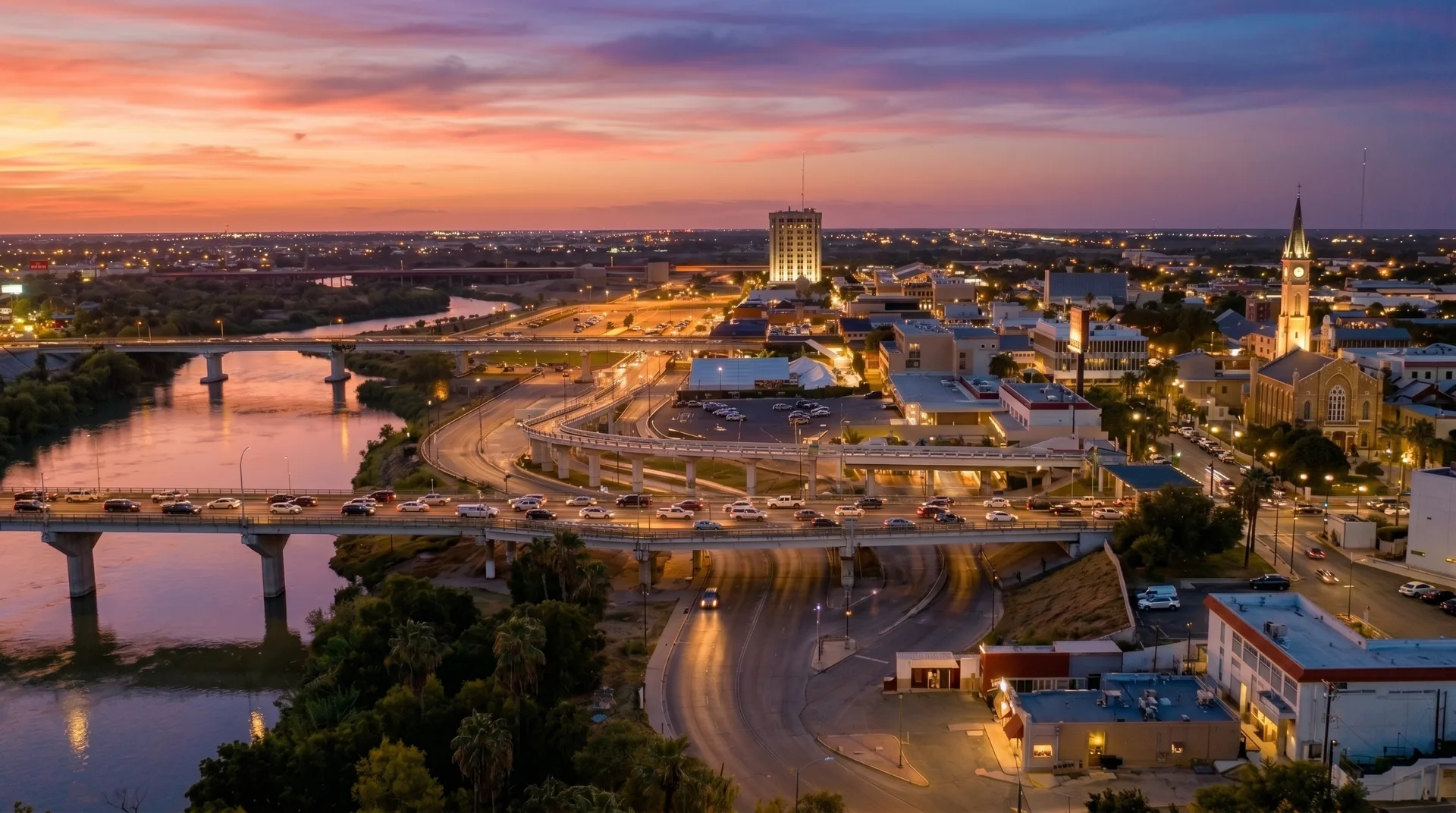
Texas's border crossings are the backbone of trade with Mexico. Laredo–Nuevo Laredo handles the largest trade volume, followed by El Paso–Ciudad Juárez, Pharr–Reynosa, Brownsville–Matamoros, Del Río–Acuña, and Eagle Pass–Piedras Negras. Each of these points has specific operational characteristics and specialization in cargo types.
The Port of Houston ranks first in tonnage in the United States, handling petrochemicals, petroleum, grains, containerized cargo, and manufactured goods. Connectivity between the port and the highway network is essential for intermodal operations.
Texas also has inland container ports such as the Dallas Inland Port and the San Antonio Inland Port, which function as extensions of seaports and facilitate deconsolidation and distribution operations.
Key industries and sectors
The energy and petrochemical industry is emblematic of Texas, with the state producing more oil and natural gas than any other in the United States. Gulf Coast refineries process crude oil and produce gasoline, diesel, aviation fuel, and petrochemicals. Transporting these products, both as raw materials and finished goods, requires specialized equipment and strict certifications.
Manufacturing in Texas is highly diversified, including production of transportation equipment, machinery, electronic components, metal products, and processed foods. The corridor from San Antonio to Austin and Dallas-Fort Worth concentrates manufacturing operations of global companies operating under just-in-time schemes integrated with plants in Mexico.
The automotive industry has a growing presence in Texas, with assembly plants and component suppliers distributed across several regions of the state. The transportation of auto parts between Texas and manufacturing plants in Mexico under the USMCA is constant.
Texas's agricultural sector is the largest in the United States in terms of revenue, with production of beef cattle, cotton, dairy products, poultry, corn, sorghum, and fruits. Food processing generates significant volumes of freight requiring both refrigerated and dry transportation.
Technology has experienced explosive growth in Austin, Dallas, and Houston, with companies in semiconductors, software, telecommunications equipment, and data centers. Transporting technology equipment and electronic components frequently requires specialized handling and expedited deliveries.
Retail and distribution have turned Texas into a hub for national chains that use the state as a point of entry for goods imported from Mexico or Asia (via West Coast ports) and as a distribution center for the southern and central United States.
Our solutions for Texas
At Control Terrestre, Texas represents one of our most important and active operational markets. We operate cross-border transportation at all major Texas–Mexico crossings, handling export and import freight connecting North America's integrated supply chains. Some of our carriers hold C-TPAT and FAST certifications, facilitating expedited crossings and reducing inspection times at high-congestion points such as Laredo and El Paso.
For the manufacturing industry with operations on both sides of the border, we offer dedicated services that provide guaranteed capacity and operational continuity. This modality is especially valued by companies operating under integrated production schedules between Texas and Mexico.
The transportation of petrochemical products and hazardous materials is carried out with Hazmat-certified carriers that comply with all federal and state regulations. For the movement of industrial chemicals, fuels, and other specialty materials, we have specialized tank trailers.
The processed food and agricultural products industry requires refrigerated transportation with strict temperature control. We operate with 48' and 53' refrigerated units (Full and Tandem) for the movement of meats, dairy products, fruits, vegetables, and frozen products. Our carriers with Transporte Limpio certification ensure proper handling under food industry standards.
For the manufacturing and general commerce sector, we use 48' and 53' dry vans that transport electronic components, auto parts, machinery, consumer products, and diverse manufactured goods. When companies require urgent deliveries, we offer expedited services that minimize transit times.
The transportation of heavy machinery, construction equipment, and oversized loads is carried out using specialized flatbeds. We also have container chassis for intermodal movements from the ports of Houston, Corpus Christi, and other Gulf Coast points.
Spot shipments provide flexibility for one-time needs, seasonal peaks, or unscheduled situations, allowing our clients in Texas to access capacity when additional requirements arise.
Our export and import freight services not only handle border crossings with Mexico but also coordinate movements to and from Canada, connecting Texas with the continental trade network under the USMCA.
Frequently Asked Questions (FAQ)
Which border crossings do you operate at between Texas and Mexico?
We operate at all major Texas–Mexico border crossings, including Laredo–Nuevo Laredo, El Paso–Ciudad Juárez, Pharr–Reynosa, Brownsville–Matamoros, Eagle Pass–Piedras Negras, and Del Río–Acuña. Our carrier network has operational experience at each of these points and is familiar with the specific protocols, schedules, and best practices for efficient crossings. Some of our carriers hold C-TPAT and FAST certifications that facilitate expedited inspections.
Can you transport petrochemical products and hazardous materials?
Yes, we have Hazmat-certified carriers for the transportation of petrochemical products, industrial chemicals, and hazardous materials in Texas. We have specialized tank trailers and equipment that comply with all federal and state regulations. We handle both domestic movements within Texas and cross-border freight of these materials when the client holds the corresponding permits.
What is your coverage in Texas?
We operate throughout the entire state of Texas, including the major metropolitan areas such as Houston, Dallas-Fort Worth, San Antonio, Austin, El Paso, Corpus Christi, Laredo, McAllen, and all border cities. We also serve the rural regions where agricultural, oil, and manufacturing operations are concentrated. Our carrier network is familiar with local routes, access to industrial plants, distribution centers, and border crossings.


Freight experts
Ground freight from North to Central America with full coverage and 24/7 monitoring.








