Detroit to Brampton
Brampton → DetroitFTL freight transportation service between Detroit and Brampton. Reliable logistics solutions for your business.
Route Description
Everything you need to know about the corridor Detroit - Brampton
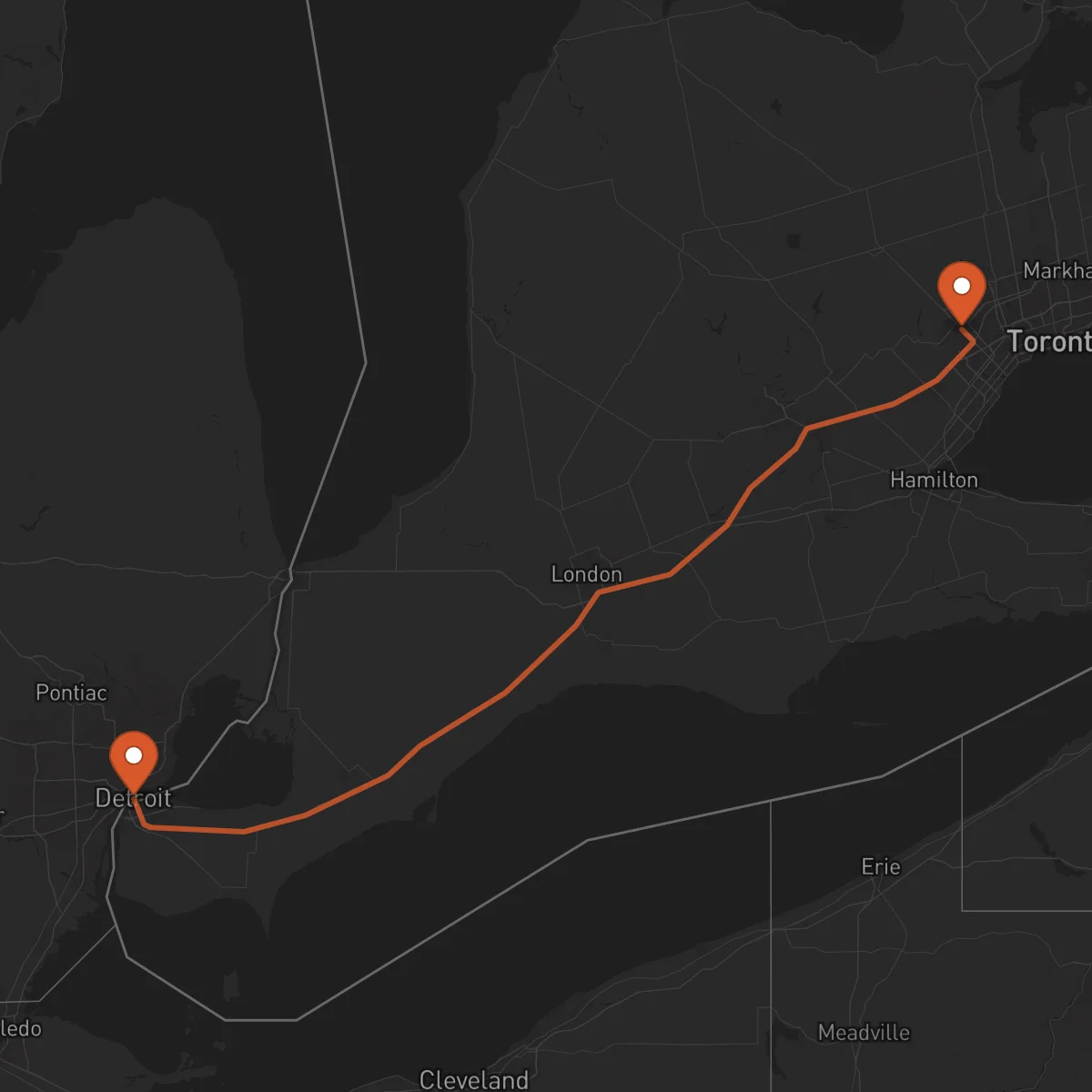
The Detroit to Brampton corridor represents one of the most critical cross-border freight transportation routes in North America. This strategic connection links the industrial heartland of Michigan with Ontario's manufacturing powerhouse, facilitating the seamless movement of goods between the United States and Canada. The corridor spans approximately 306 kilometers and serves as a vital artery for North American supply chains, particularly for automotive, manufacturing, and technology sectors.
The economic significance of this route cannot be overstated. Detroit, known as the automotive capital of the world, maintains deep industrial ties with Brampton's extensive manufacturing facilities. This corridor supports billions of dollars in annual trade, with thousands of trucks crossing the border daily. The automotive industry dominates this route, with major manufacturers and suppliers relying on just-in-time delivery systems that demand precision and reliability.
Transportation infrastructure along this corridor includes major highways such as I-75 and Highway 401, providing efficient connectivity between both markets. The Ambassador Bridge and Detroit-Windsor Tunnel serve as primary border crossings, though alternative routes through Sarnia and other points offer flexibility for freight movement. Control Terrestre's expertise in cross-border operations ensures smooth customs clearance and compliance with both US and Canadian regulations, minimizing delays and optimizing transit times for our clients' critical shipments.
Services for this Route
Available services for the corridor Detroit - Brampton
 Origin
Detroit
Detroit, Michigan stands as a strategic logistics hub in the Great Lakes region, offering exceptional connectivity for freight transportation. The city's location provides direct access to major interstate highways, including I-75, I-94, and I-96, creating efficient routes to both Canadian and domestic markets. Detroit's extensive rail network and international airport further enhance its multimodal transportation capabilities, making it an ideal origin point for cross-border freight operations.
The Motor City's economy remains heavily focused on automotive manufacturing, with the presence of major automakers like Ford, General Motors, and Stellantis. Beyond automotive, Detroit has diversified into healthcare, technology, and advanced manufacturing sectors. The city's industrial infrastructure includes numerous warehouses, distribution centers, and specialized facilities that support just-in-time manufacturing processes. Detroit's proximity to the Canadian border, combined with its robust transportation network, positions it as a critical gateway for US-Canada trade, handling millions of tons of freight annually.
 Destination
Brampton, Ontario serves as a major logistics and manufacturing center in Canada's Greater Toronto Area, offering strategic advantages for freight transportation. Located just west of Toronto, Brampton provides excellent access to Highway 401, North America's busiest highway, which connects to major markets across Ontario and Quebec. The city's transportation infrastructure includes proximity to Toronto Pearson International Airport and extensive rail connections, creating a comprehensive multimodal logistics network.
The city has evolved into a significant manufacturing and distribution hub, with a particular focus on advanced manufacturing, automotive parts production, and technology sectors. Brampton hosts numerous warehouses, fulfillment centers, and industrial parks that support both domestic and international supply chains. The city's strong economic ties with the United States, particularly through the automotive sector, make it a critical destination for cross-border freight. Brampton's skilled workforce and business-friendly environment continue to attract investment, strengthening its position as a key logistics node in the Ontario industrial corridor.










