Detroit to Halifax
Halifax → DetroitFTL freight transportation service between Detroit and Halifax. Reliable logistics solutions for your business.
Route Description
Everything you need to know about the corridor Detroit - Halifax
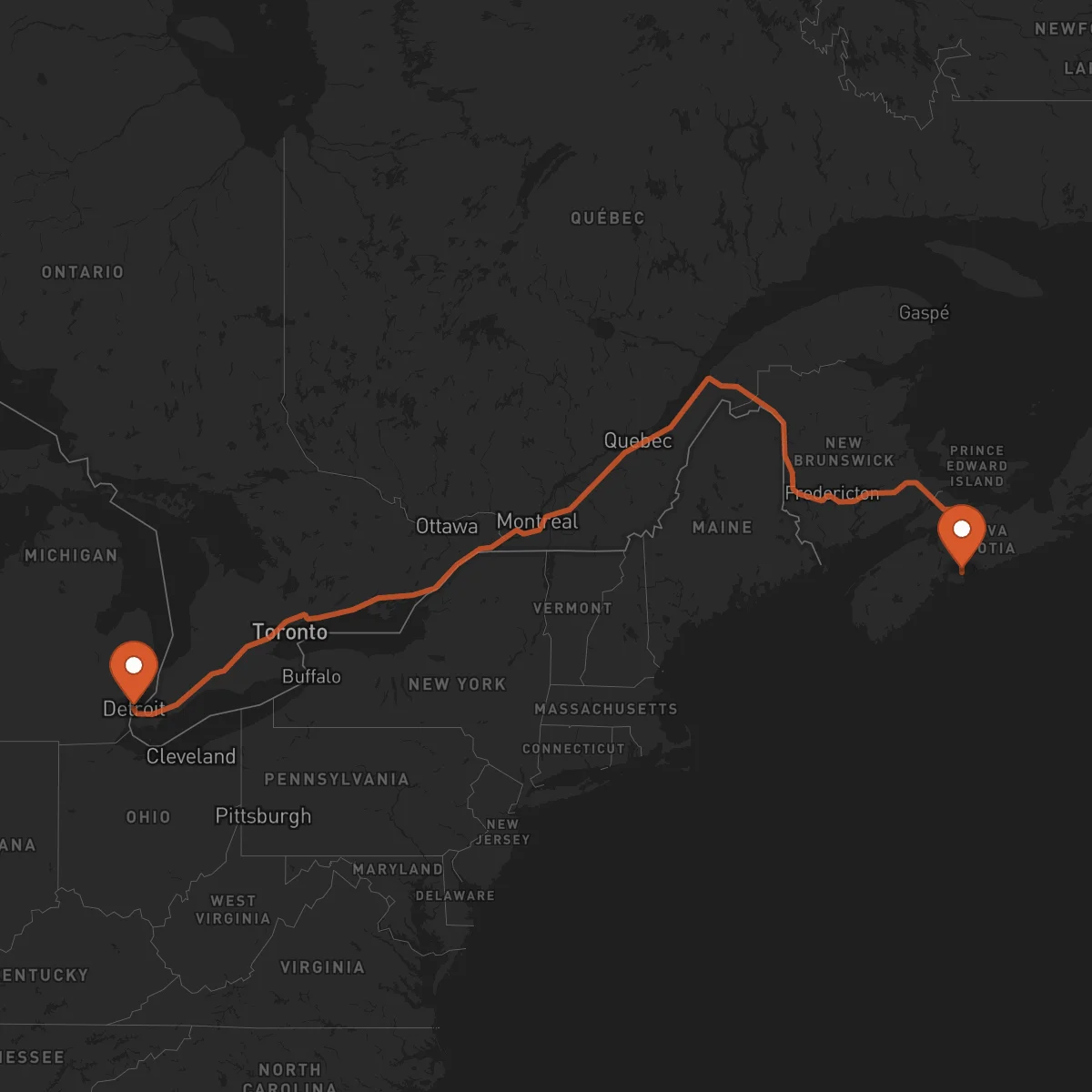
The Detroit-Halifax corridor represents a vital cross-border freight transportation route connecting the industrial heartland of the United States with Canada's Atlantic gateway. This 1,586-kilometer corridor links Michigan's automotive and manufacturing powerhouse with Nova Scotia's strategic maritime port, creating a seamless supply chain solution for businesses operating across North America. The route traverses multiple states and provinces, crossing international borders at key points while utilizing the most efficient highway networks available.
The economic significance of this corridor cannot be overstated. Detroit serves as the epicenter of North America's automotive industry, while Halifax functions as Atlantic Canada's primary container port and logistics hub. This creates a natural flow of automotive parts, finished vehicles, and industrial equipment between these two critical economic centers. The corridor also supports the movement of consumer goods, agricultural products, and specialized cargo, making it essential for diverse industries seeking efficient cross-border transportation solutions.
Major transportation infrastructure along this route includes Interstate 75, I-94, and I-69 in the United States, transitioning to Canadian highways 401, 416, and 401 through Ontario and Quebec, before connecting to Nova Scotia's highway network. The corridor offers multiple border crossing options, with the Detroit-Windsor crossing serving as the primary international gateway. Control Terrestre's expertise in navigating these cross-border operations ensures smooth customs clearance and compliance with all regulatory requirements, minimizing delays and optimizing transit times for our clients' freight shipments.
Services for this Route
Available services for the corridor Detroit - Halifax
 Origin
Detroit
Detroit stands as a strategic logistics hub in the heart of North America's industrial corridor. Located in southeastern Michigan, Detroit provides immediate access to major manufacturing centers, automotive assembly plants, and distribution facilities throughout the Midwest. The city's position along the Detroit River, directly across from Windsor, Ontario, creates a natural gateway for cross-border freight movement between the United States and Canada. Detroit's extensive transportation infrastructure includes multiple interstate highways, rail connections, and proximity to major airports, making it an ideal origin point for freight distribution across North America.
The Detroit metropolitan area hosts a diverse industrial base, with the automotive sector remaining the dominant economic force. Major automakers and their suppliers maintain significant operations throughout the region, creating consistent freight movement patterns. Beyond automotive, Detroit supports advanced manufacturing, healthcare, technology, and logistics industries. The city's industrial parks and specialized freight terminals are equipped to handle various cargo types, from automotive components to oversized equipment, providing comprehensive logistics solutions for businesses of all sizes.
 Destination
Halifax
Halifax serves as Atlantic Canada's premier logistics and maritime gateway, strategically positioned to facilitate international trade and domestic distribution throughout the eastern provinces. As the capital of Nova Scotia and home to one of North America's deepest natural harbors, Halifax provides year-round port access and serves as a critical node in global supply chains. The city's location on the Atlantic coast makes it an ideal destination for goods entering or exiting North America via ocean freight, with excellent connectivity to inland markets through its robust transportation network.
The Halifax region boasts a diverse economic landscape, with strengths in ocean technology, aerospace and defense, information technology, and financial services. The port of Halifax handles millions of tons of cargo annually, including containerized goods, bulk commodities, and project cargo. The city's transportation infrastructure includes extensive highway networks, rail connections through CN Rail, and the Halifax Stanfield International Airport, providing multiple options for freight movement. Halifax's role as a regional distribution center makes it particularly valuable for companies seeking to serve Atlantic Canada and the northeastern United States efficiently.










