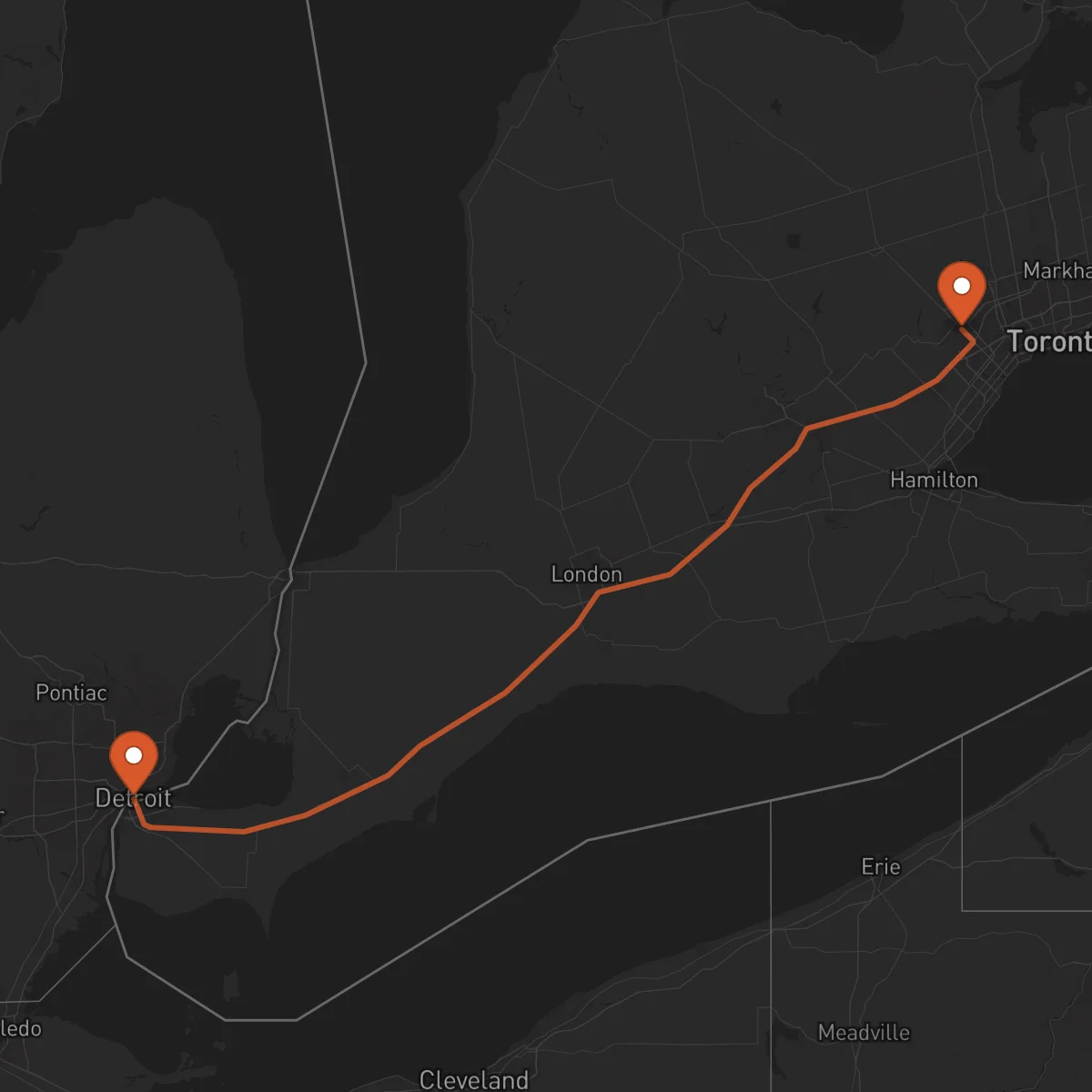
Brampton to Detroit
Detroit → BramptonFTL freight transportation service between Brampton and Detroit. Reliable logistics solutions for your business.
Route Description
Everything you need to know about the corridor Brampton - Detroit
The Brampton-Detroit corridor represents one of the most vital trade routes between Canada and the United States, connecting two major industrial hubs across the Ontario-Michigan border. This strategic 306 km route facilitates billions of dollars in annual trade, supporting the automotive, manufacturing, and technology sectors that define both regions. The corridor benefits from excellent infrastructure, including the 401 and 402 highways in Canada connecting seamlessly to I-75 and I-94 in the United States.
The corridor's importance stems from its role in the North American automotive supply chain, with Brampton serving as a key manufacturing center and Detroit remaining the historic heart of the American automotive industry. Major border crossings such as the Ambassador Bridge and Detroit-Windsor Tunnel handle substantial freight volumes daily, making efficient customs clearance essential. Control Terrestre provides specialized cross-border FTL services along this corridor, ensuring seamless transportation of full truckloads with experienced drivers familiar with customs procedures and border requirements.
Our dedicated services along the Brampton-Detroit route include real-time tracking, compliance with all cross-border regulations, and coordination with certified carriers who understand the unique requirements of this critical trade lane. We facilitate the movement of automotive parts, finished vehicles, industrial equipment, and general freight between these two economic powerhouses, helping businesses maintain their supply chain efficiency across the Canada-US border.
Services for this Route
Available services for the corridor Brampton - Detroit
 Origin
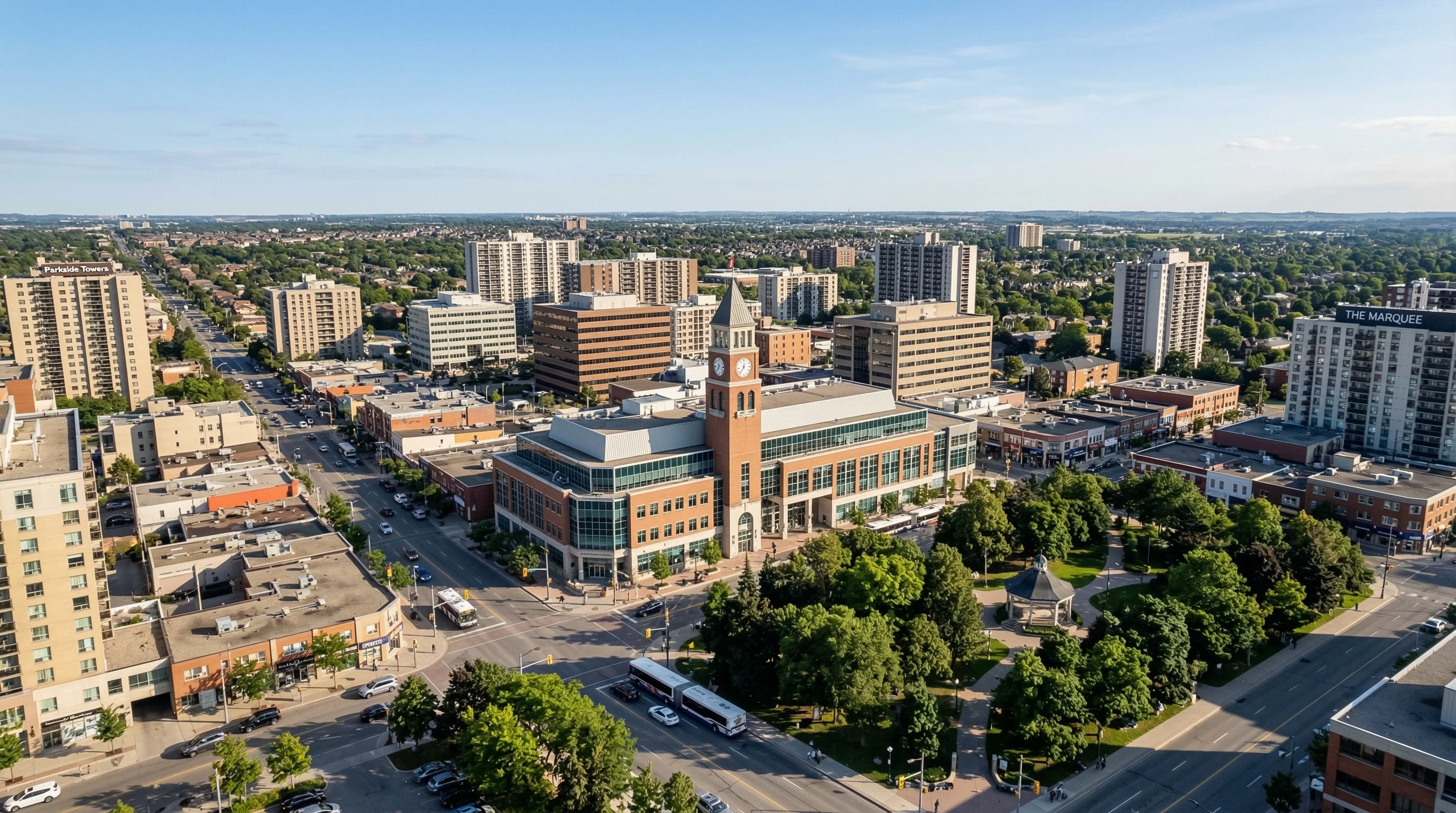
Brampton, located in the Greater Toronto Area, serves as a strategic logistics hub in Ontario with excellent connectivity to major transportation networks. The city's proximity to Toronto Pearson International Airport and its extensive highway system, including direct access to Highway 401, makes it an ideal origin point for freight distribution. Brampton's industrial sector includes advanced manufacturing, automotive parts production, food processing, and technology companies, creating substantial freight movement requirements. The city's logistics infrastructure includes numerous warehousing facilities, distribution centers, and intermodal yards that support efficient cargo consolidation and distribution throughout the region.
 Destination
Detroit
Detroit, Michigan stands as a critical logistics destination and the historic center of American automotive manufacturing. The city's strategic location along the Great Lakes and its position as a major border crossing point with Canada make it essential for North American trade. Detroit's industrial base extends beyond automotive to include manufacturing, healthcare, technology, and logistics services. The metropolitan area features extensive transportation infrastructure, including multiple interstate highways, rail connections, and proximity to major ports. Detroit's logistics ecosystem includes large-scale warehousing facilities, specialized automotive logistics centers, and a robust network of freight forwarders and customs brokers that facilitate international trade.










