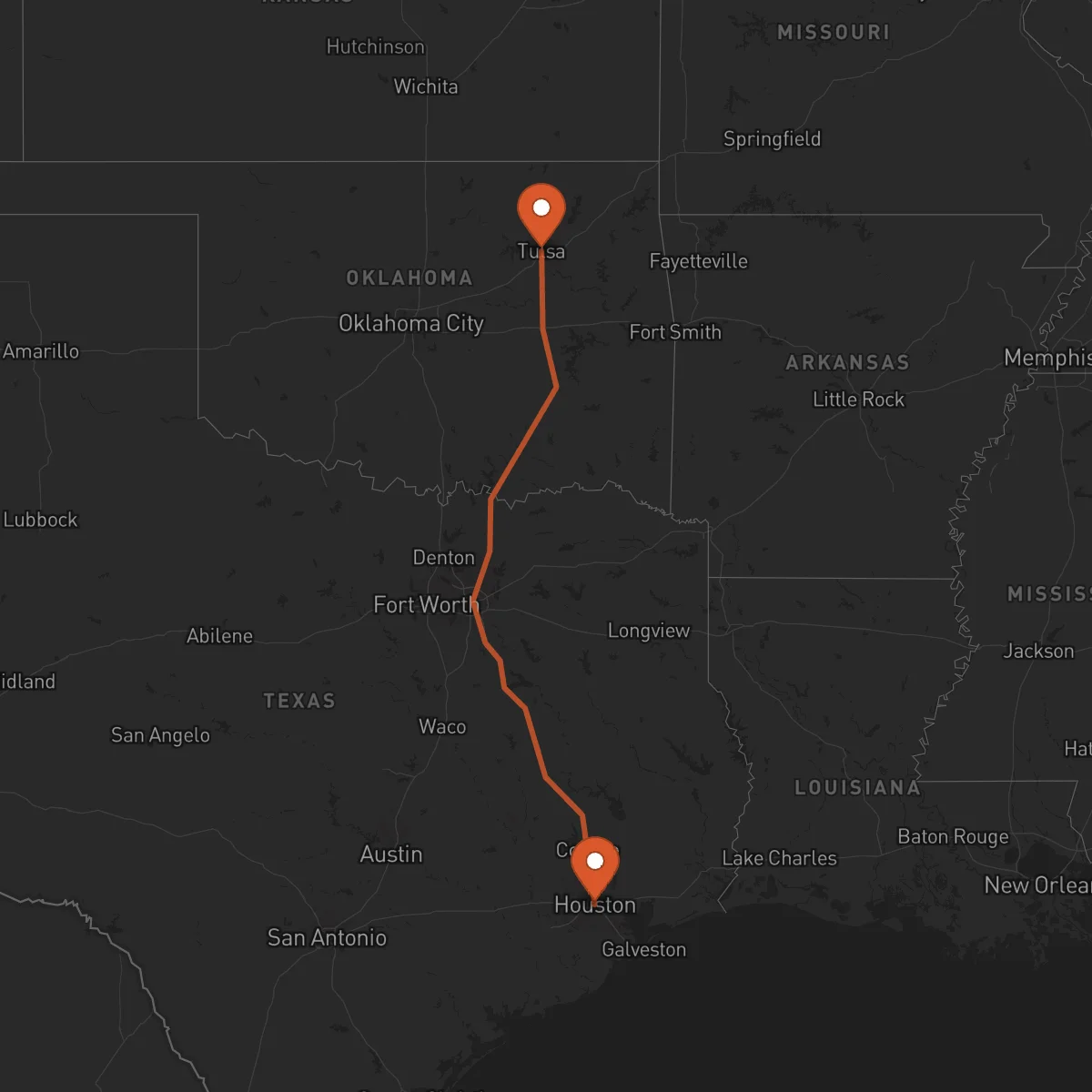
Tulsa to Houston
Houston → TulsaFTL freight transportation service between Tulsa and Houston. Reliable logistics solutions for your business.
Route Description
Everything you need to know about the corridor Tulsa - Houston
The logistics corridor between Tulsa, Oklahoma and Houston, Texas represents a vital artery for freight transportation in the southern United States. This 713-kilometer route connects two major economic hubs, facilitating the movement of goods between the industrial heartland of Oklahoma and the energy and manufacturing powerhouse of Texas. The corridor traverses diverse terrain and crosses state lines, requiring expertise in cross-border regulations and efficient coordination to ensure timely deliveries.
The economic significance of this route cannot be overstated. Tulsa serves as a logistics center for the Midwest, while Houston stands as a global energy capital and one of the nation's busiest ports. This corridor enables the seamless flow of industrial equipment, petroleum products, automotive parts, and consumer goods between these regions. The route primarily utilizes Interstate 45 South, a major north-south highway that provides reliable transportation infrastructure and connects to other key freight corridors throughout the region.
Control Terrestre specializes in optimizing this corridor through our network of certified transportation providers. Our dedicated FTL services ensure that your cargo moves efficiently from origin to destination without the delays associated with consolidated freight. We understand the unique requirements of industries operating along this route, from the aerospace sector in Tulsa to the petrochemical industry in Houston, and we tailor our services to meet these specific needs. Our providers' certifications including C-TPAT and FAST ensure that your shipments move through this corridor with maximum security and minimal delays at any inspection points.
Services for this Route
Available services for the corridor Tulsa - Houston
 Origin
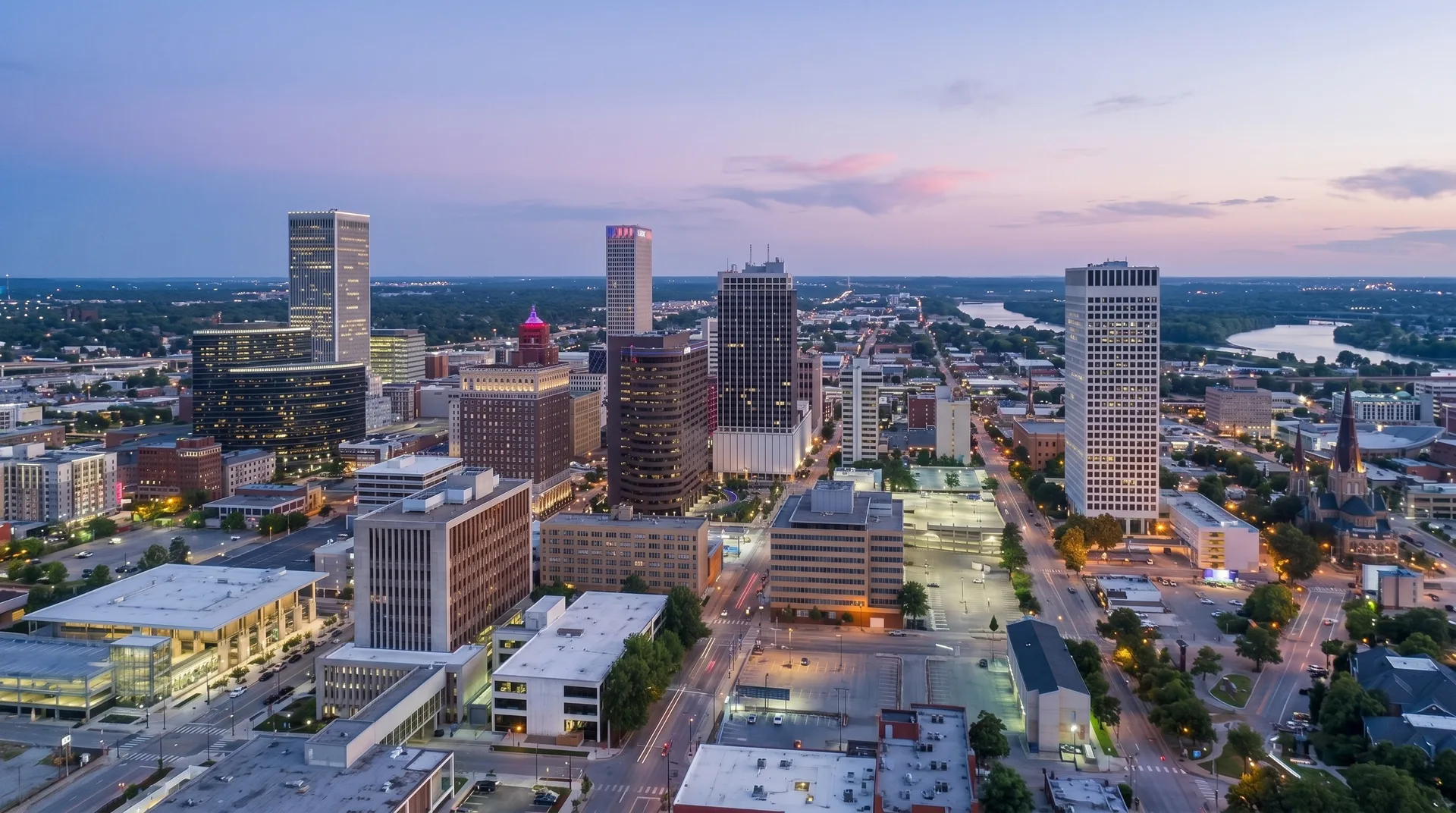
Tulsa
Tulsa, Oklahoma serves as a strategic logistics hub in the central United States, offering excellent connectivity to major freight corridors. The city's location provides access to key transportation networks including Interstate 44, which connects to major freight routes heading east and west. Tulsa's logistics infrastructure includes the Tulsa Port of Catoosa, an inland seaport providing barge transportation along the McClellan-Kerr Arkansas River Navigation System, and Tulsa International Airport for air freight operations. The city has developed into a major distribution center, particularly for the aerospace, energy, and manufacturing sectors.
 Destination
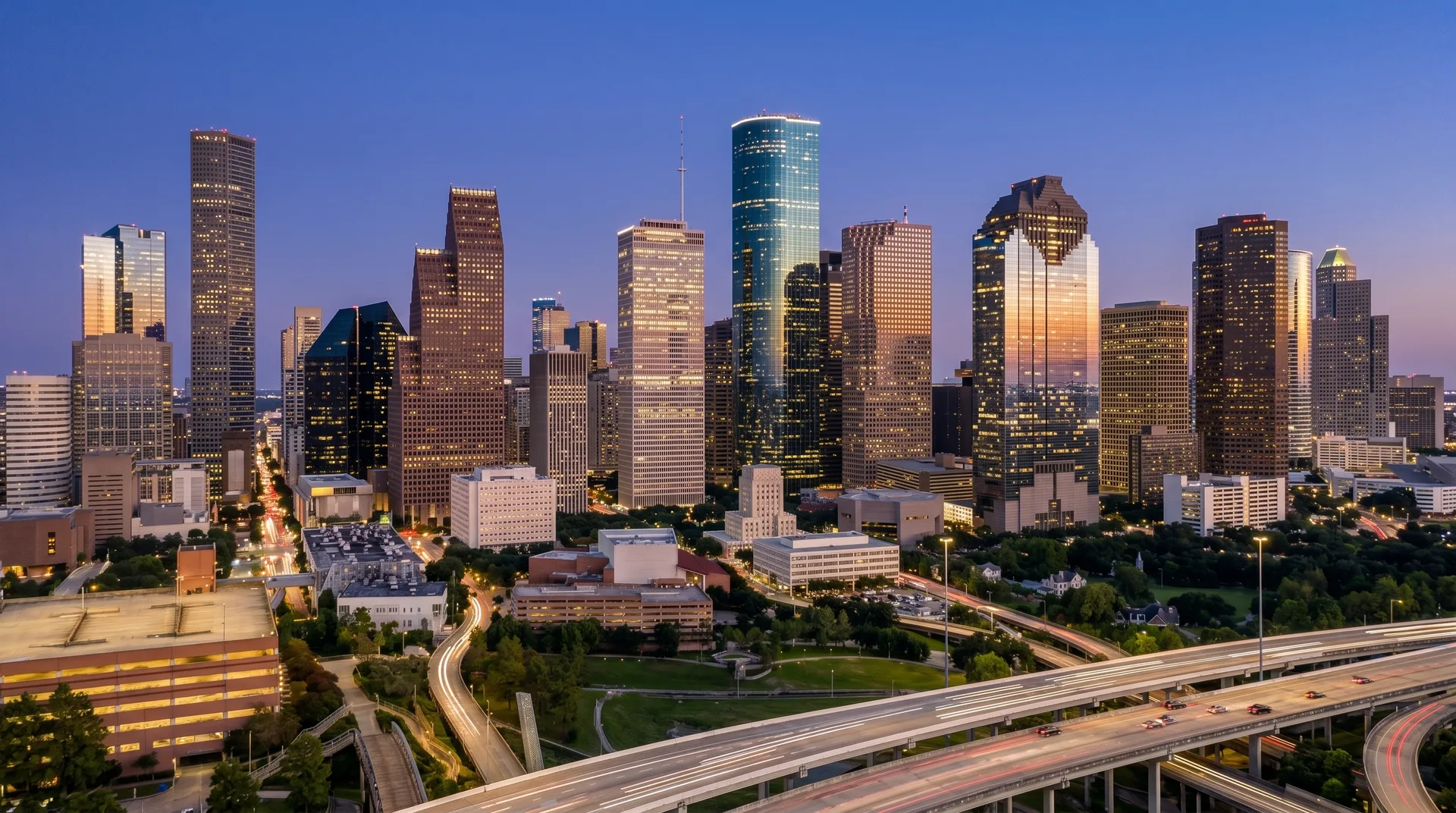
Houston
Houston, Texas stands as one of the most important logistics centers in the United States, with a strategic location that provides access to international markets through the Port of Houston, the second-largest port in the country by tonnage. The city's extensive transportation infrastructure includes three major interstate highways (I-10, I-45, and I-69) and two international airports (George Bush Intercontinental and William P. Hobby). Houston's economy is dominated by the energy sector, with numerous refineries, petrochemical plants, and oilfield service companies requiring reliable freight transportation. The city also hosts significant aerospace, healthcare, and manufacturing industries, creating diverse freight transportation needs.










