Tulsa to Regina
Regina → TulsaFTL freight transportation service between Tulsa and Regina. Reliable logistics solutions for your business.
Route Description
Everything you need to know about the corridor Tulsa - Regina
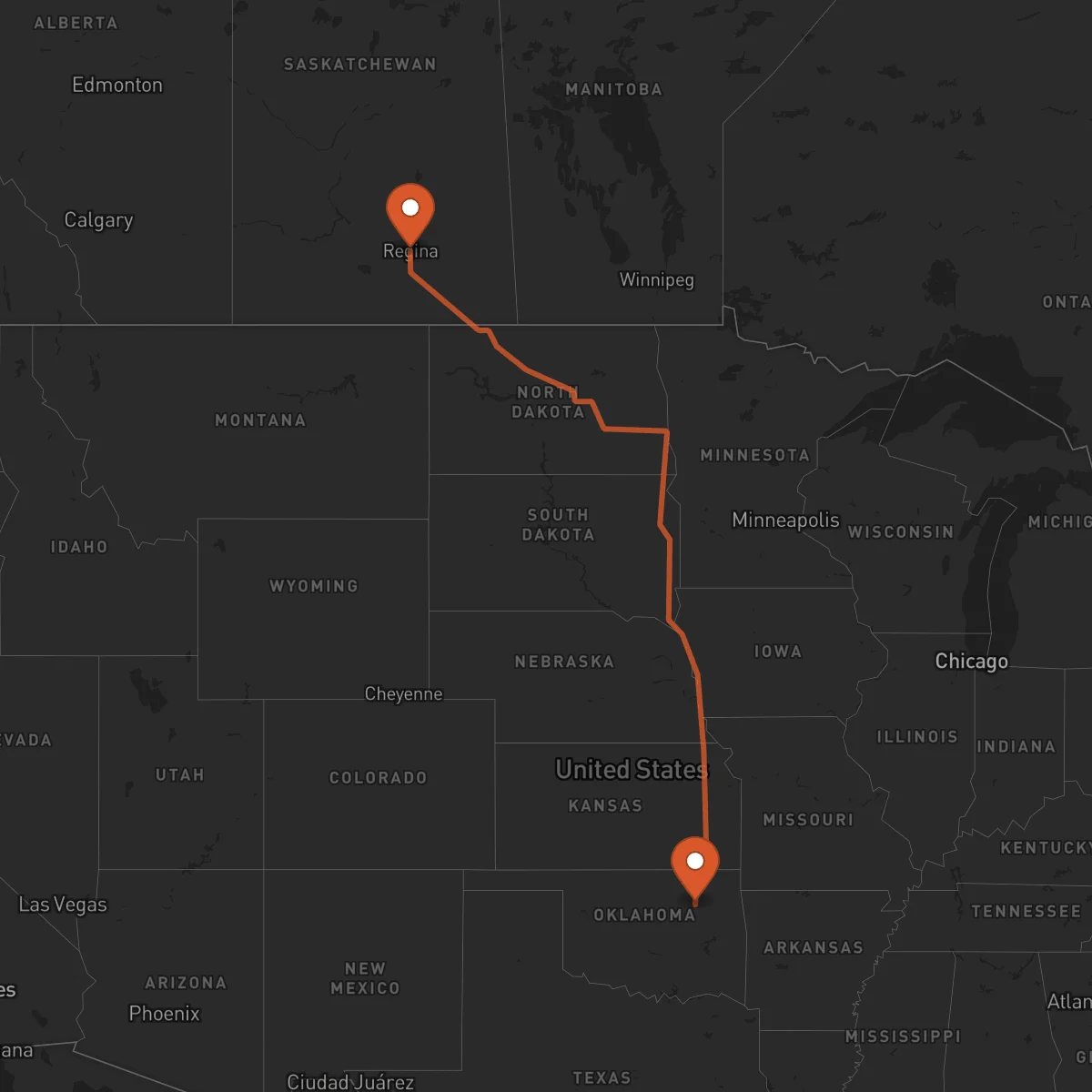
The Tulsa to Regina corridor represents a vital cross-border freight transportation route connecting the industrial heartland of Oklahoma with the agricultural and energy hub of Saskatchewan. This 1,733 km corridor traverses diverse terrain and crosses the international border at multiple points, facilitating the movement of goods between the United States and Canada. The route serves as a critical link in the North American supply chain, supporting trade relationships and economic integration between both nations.
The corridor's strategic importance stems from its connection between Tulsa's manufacturing and energy sectors with Regina's agricultural processing and resource extraction industries. Major highways including I-35, I-29, and various Canadian provincial routes form the backbone of this transportation artery. The route passes through key economic centers and agricultural regions, making it essential for industries ranging from energy and manufacturing to food processing and construction materials.
Control Terrestre specializes in managing cross-border operations along this corridor, handling all necessary customs documentation and compliance requirements. Our expertise in navigating the complexities of US-Canada trade regulations ensures smooth transit across the border. We coordinate with trusted partners at major border crossings to minimize delays and maintain efficient freight movement. Our dedicated fleet and experienced team provide reliable full truckload services, supporting industries that depend on timely delivery of goods between these two important economic centers.
Services for this Route
Available services for the corridor Tulsa - Regina
 Origin
Tulsa
Tulsa, Oklahoma serves as a strategic logistics hub in the southern United States, offering excellent connectivity to major markets across North America. The city's central location provides access to an extensive network of interstate highways, including I-44 and I-35, facilitating efficient distribution throughout the region. Tulsa's logistics infrastructure includes multiple warehousing facilities, intermodal yards, and a major international airport, supporting diverse freight transportation needs.
The city's economy is anchored by strong energy, aerospace, and manufacturing sectors. Tulsa is known as the "Oil Capital of the World," hosting numerous energy companies and related industries. The manufacturing sector produces a wide range of goods, from industrial equipment to consumer products. These industries generate substantial freight volumes, creating consistent demand for full truckload transportation services to both domestic and international destinations.
 Destination
Regina
Regina, Saskatchewan stands as a key logistics center in Western Canada, strategically positioned to serve the Prairie provinces and beyond. The city's location along the Trans-Canada Highway and its connection to major rail networks make it an important distribution point for goods moving throughout the region. Regina's transportation infrastructure includes a modern airport, extensive warehousing facilities, and well-maintained road networks that support efficient freight movement.
The Regina economy is primarily driven by agriculture, energy, and government services. As the capital of Saskatchewan, it serves as a regional center for government operations and related services. The surrounding area is one of Canada's most productive agricultural regions, producing grains, oilseeds, and pulses that require reliable transportation to both domestic and international markets. The energy sector, particularly potash mining and natural gas production, also contributes significantly to the local economy and freight transportation needs.










