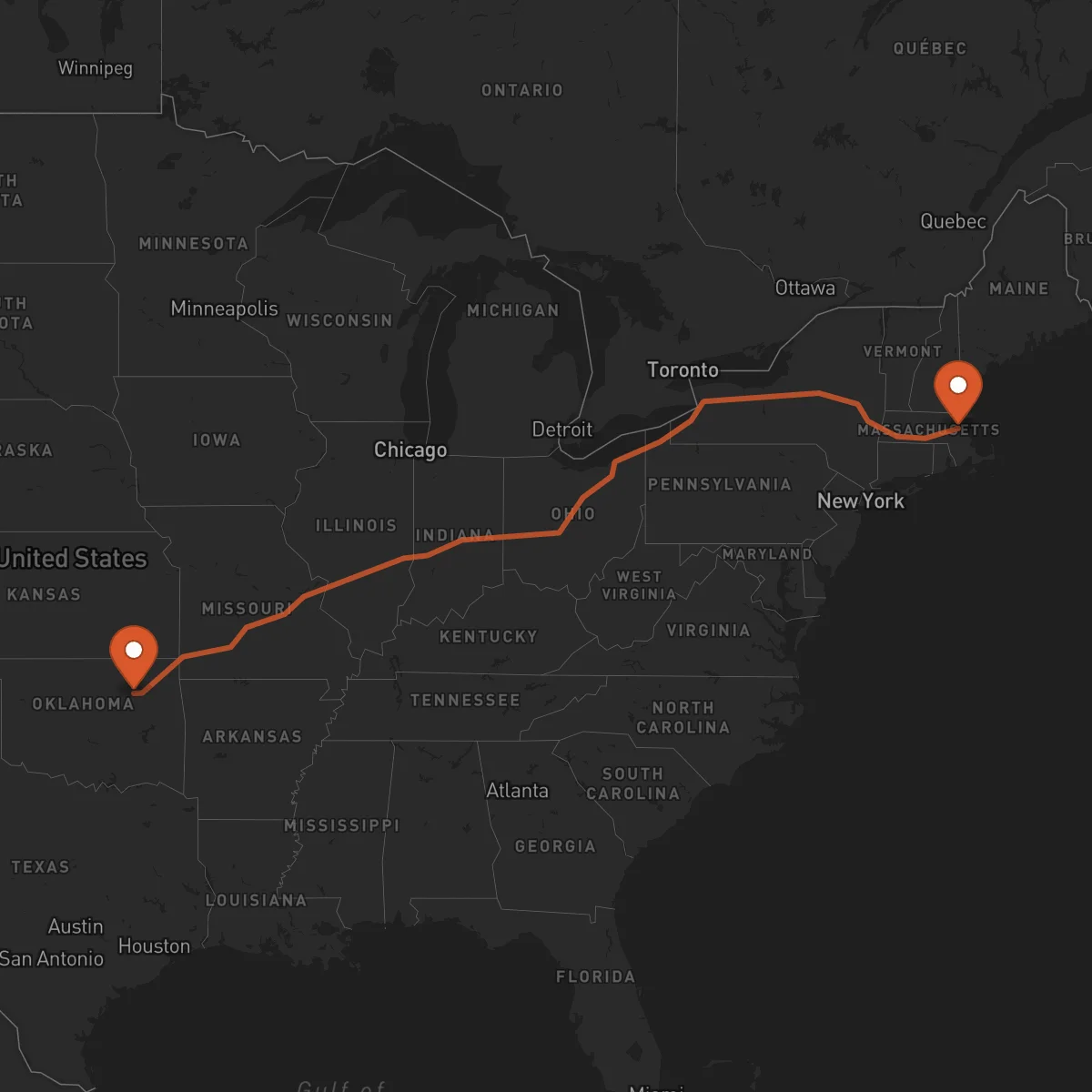
Tulsa to Boston
Boston → TulsaFTL freight transportation service between Tulsa and Boston. Reliable logistics solutions for your business.
Route Description
Everything you need to know about the corridor Tulsa - Boston
The Tulsa to Boston corridor represents a vital domestic transportation route spanning approximately 2245 km across the United States. This east-west connection links the industrial heartland of Oklahoma with the historic and economically significant city of Boston on the Atlantic coast. The corridor traverses diverse geographic and economic regions, making it essential for businesses moving goods between the Midwest and the Northeast.
The route serves as a critical link between Tulsa's energy and manufacturing sectors and Boston's technology, education, and healthcare industries. This transportation corridor supports the movement of specialized equipment, industrial components, and finished goods that fuel both regional and national supply chains. The economic interdependence between these regions creates consistent demand for reliable freight transportation services.
Key industries utilizing this corridor include energy equipment manufacturing, aerospace components, automotive parts, and technology hardware. The route accommodates both raw materials moving eastward and finished products traveling westward, creating a balanced flow of goods that maximizes transportation efficiency. Manufacturing facilities, distribution centers, and research institutions along the route depend on consistent, timely freight movement.
Control Terrestre facilitates seamless operations on this corridor through our network of certified transportation providers. We offer dedicated full truckload services with specialized equipment options including dry vans, refrigerated units, and flatbeds to accommodate diverse cargo requirements. Our providers maintain C-TPAT certification and adhere to strict safety standards, ensuring your freight moves efficiently and securely from Tulsa to Boston.
Services for this Route
Available services for the corridor Tulsa - Boston
 Origin
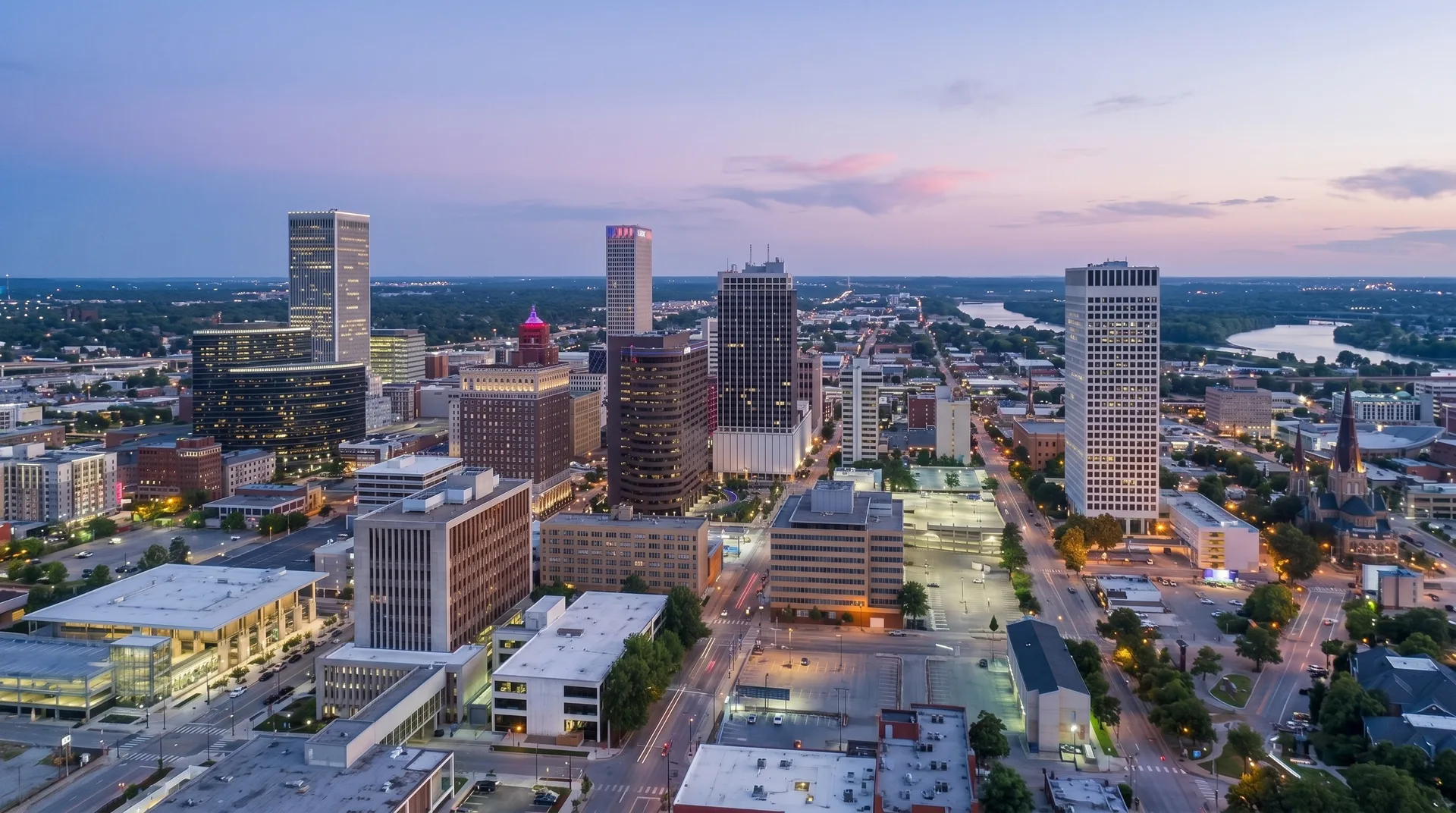
Tulsa
Tulsa, Oklahoma serves as a strategic logistics hub in the southern central United States, positioned at the intersection of major transportation networks. The city's location provides excellent access to rail terminals, interstate highways, and air cargo facilities, making it an ideal origin point for freight distribution. Tulsa's infrastructure includes the Tulsa Port of Catoosa, offering barge transportation along the McClellan-Kerr Arkansas River Navigation System, which connects to the Mississippi River and Gulf of Mexico.
The city's economy centers on energy, aerospace, and manufacturing sectors, with numerous Fortune 500 companies maintaining operations in the area. Tulsa's industrial base produces energy equipment, aircraft components, and specialized machinery that frequently requires transportation to markets across the country. The presence of major distribution centers and manufacturing facilities creates consistent freight movement opportunities, supported by a skilled logistics workforce and modern warehousing facilities.
 Destination
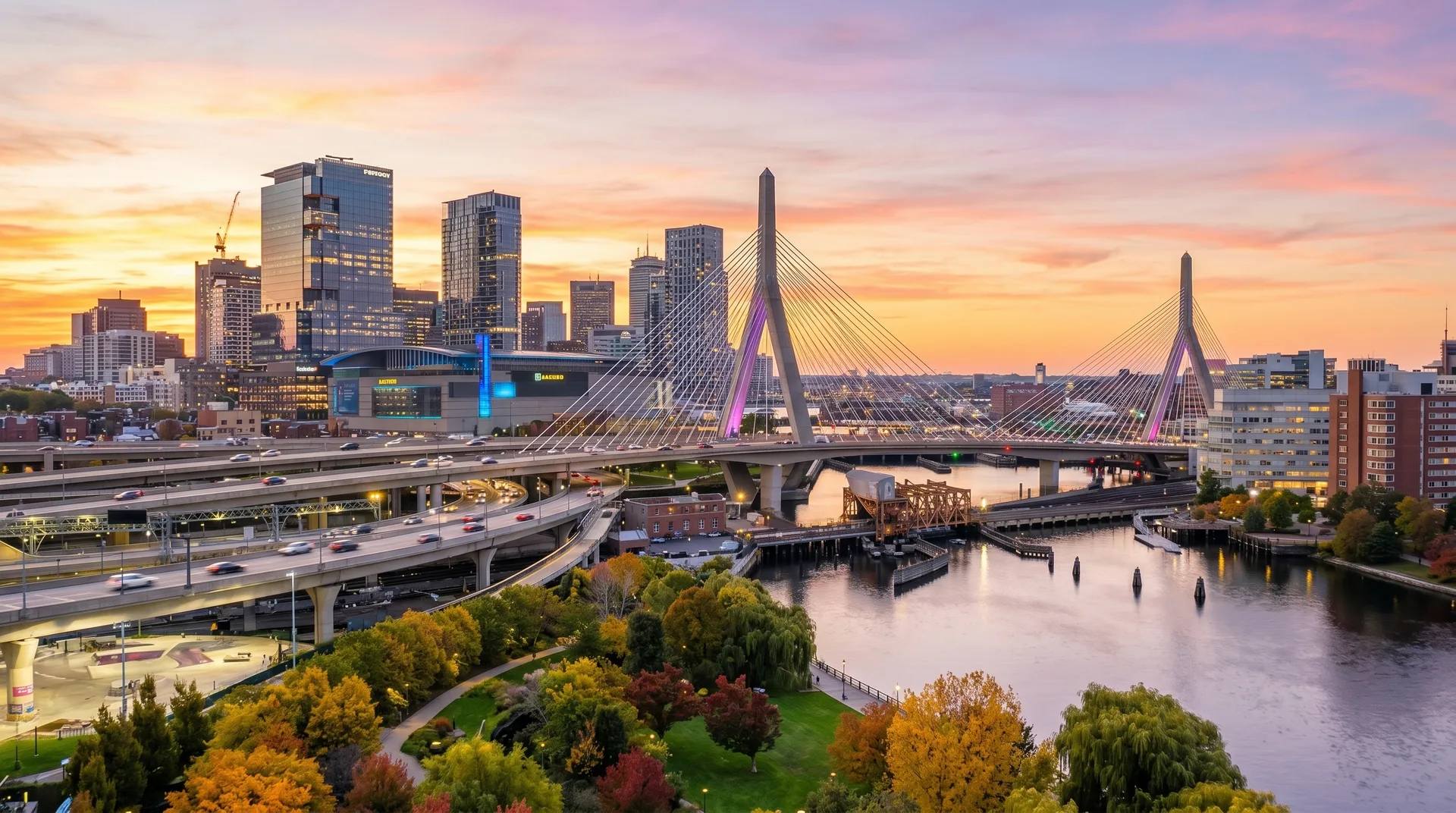
Boston
Boston, Massachusetts stands as a premier logistics destination on the East Coast, offering strategic access to major Northeast markets and international shipping routes. The city's port facilities, including the Port of Boston, provide ocean freight connections to global destinations, while Logan International Airport serves as a major cargo hub for air freight. Boston's extensive highway network, including I-90 and I-93, ensures efficient ground transportation access to surrounding regions.
The Boston metropolitan area hosts a diverse economy driven by technology, education, healthcare, and financial services. World-renowned institutions like MIT and Harvard create demand for specialized equipment and research materials, while the city's manufacturing sector requires consistent supply chain support. Boston's dense urban environment is complemented by modern logistics facilities in surrounding areas, creating a balanced ecosystem for freight distribution. The region's commitment to innovation extends to logistics operations, with many facilities implementing advanced inventory management systems.










