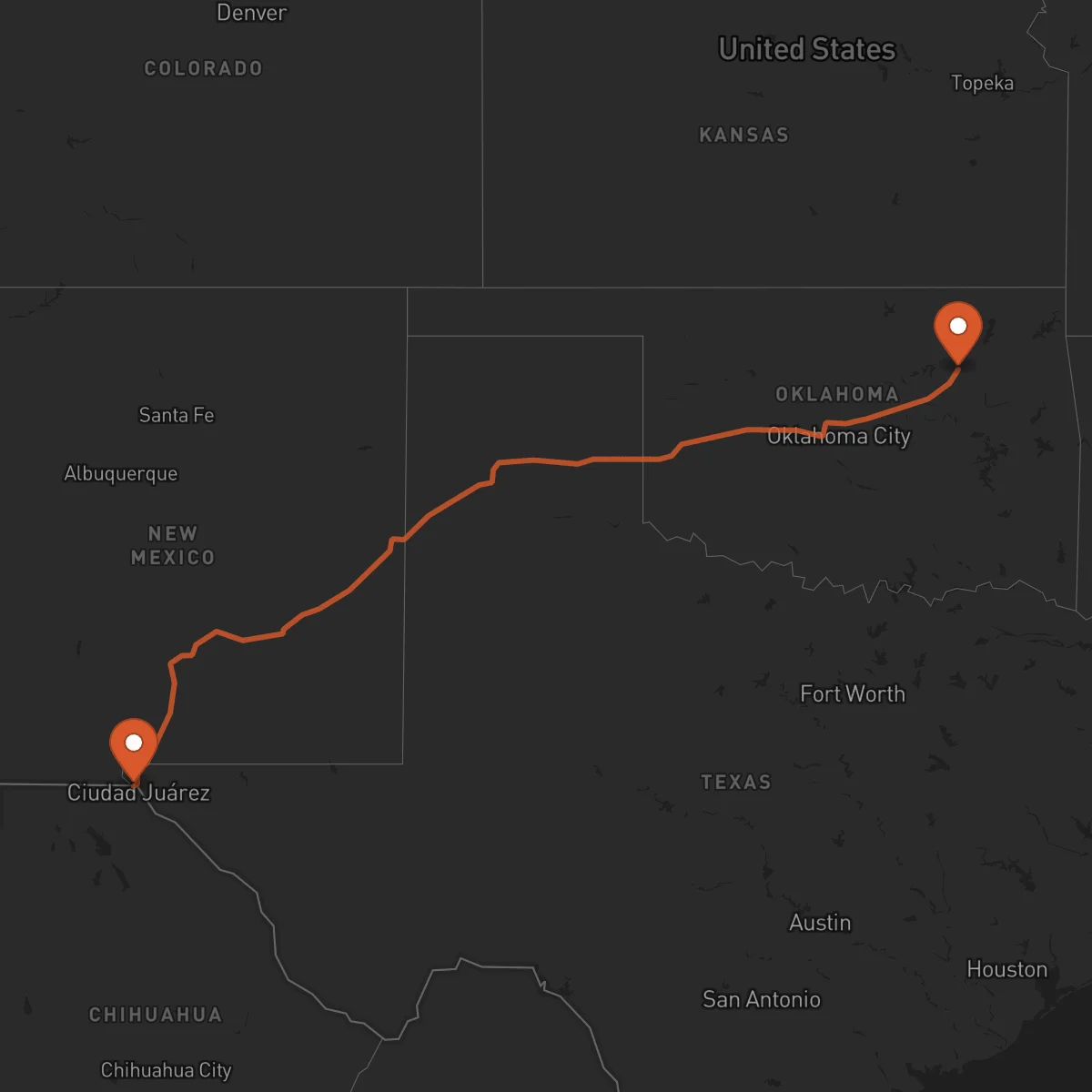
Tulsa to El Paso
El Paso → TulsaFTL freight transportation service between Tulsa and El Paso. Reliable logistics solutions for your business.
Route Description
Everything you need to know about the corridor Tulsa - El Paso
The Tulsa to El Paso corridor represents a vital freight transportation link connecting the industrial heartland of Oklahoma with the strategic border region of West Texas. This 1083 km domestic route traverses diverse landscapes and economic zones, facilitating the movement of goods between two important commercial centers. The corridor serves as a critical artery for companies operating across the central United States, providing efficient access to both inland markets and international trade gateways.
The economic significance of this route extends beyond its physical distance. Tulsa, known for its energy sector and manufacturing base, connects with El Paso's unique position as a major border crossing and logistics hub. This corridor supports industries ranging from aerospace and automotive to energy and consumer goods, enabling businesses to optimize their supply chains across multiple states. The route's strategic importance is amplified by its connection to major transportation networks, including interstate highways that link to both coastal ports and inland distribution centers.
Control Terrestre enhances the efficiency of this corridor through our specialized full truckload services. Our experienced carriers navigate the route using optimal equipment configurations, ensuring reliable delivery of your freight. We understand the specific requirements of this corridor, from Oklahoma's manufacturing districts to Texas's border infrastructure, allowing us to provide tailored transportation solutions that meet the unique demands of each shipment. Our commitment to safety, compliance, and timely delivery makes us the trusted partner for companies moving freight between Tulsa and El Paso.
Services for this Route
Available services for the corridor Tulsa - El Paso
 Origin
Tulsa
Tulsa, Oklahoma serves as a strategic logistics hub in the American Midwest, offering excellent connectivity and infrastructure for freight transportation. Located in the heart of the country's energy corridor, Tulsa provides direct access to major interstate highways including I-44 and I-35, facilitating efficient distribution throughout the central United States. The city's logistics infrastructure includes multiple freight terminals, warehousing facilities, and proximity to Tulsa International Airport, creating a comprehensive transportation network.
The economic base of Tulsa centers around energy, aerospace, and manufacturing sectors. The city hosts numerous corporate headquarters and industrial facilities, generating consistent freight volumes that require reliable transportation solutions. Tulsa's manufacturing sector produces everything from aircraft components to industrial machinery, while its energy industry requires specialized transportation for equipment and materials. This diverse industrial landscape creates substantial demand for full truckload services connecting Tulsa to markets across the country.
 Destination
El Paso
El Paso, Texas occupies a unique strategic position as a major logistics gateway on the U.S.-Mexico border. The city's location provides direct access to international trade routes while maintaining strong connections to domestic markets through major highways including I-10. El Paso's transportation infrastructure includes the El Paso International Airport, extensive rail connections, and multiple border crossing points, making it an ideal distribution center for companies operating in both the United States and Mexico.
The economy of El Paso is driven by international trade, military installations, and manufacturing. The city's maquiladora industry creates significant cross-border freight movements, while its role as a border crossing generates substantial logistics activity. El Paso's proximity to major ports of entry and its position along the I-10 corridor connecting the West Coast to the Southwest make it a critical node in North American supply chains. The region's industrial base includes everything from electronics manufacturing to food processing, requiring diverse transportation solutions to support various cargo types and delivery requirements.










