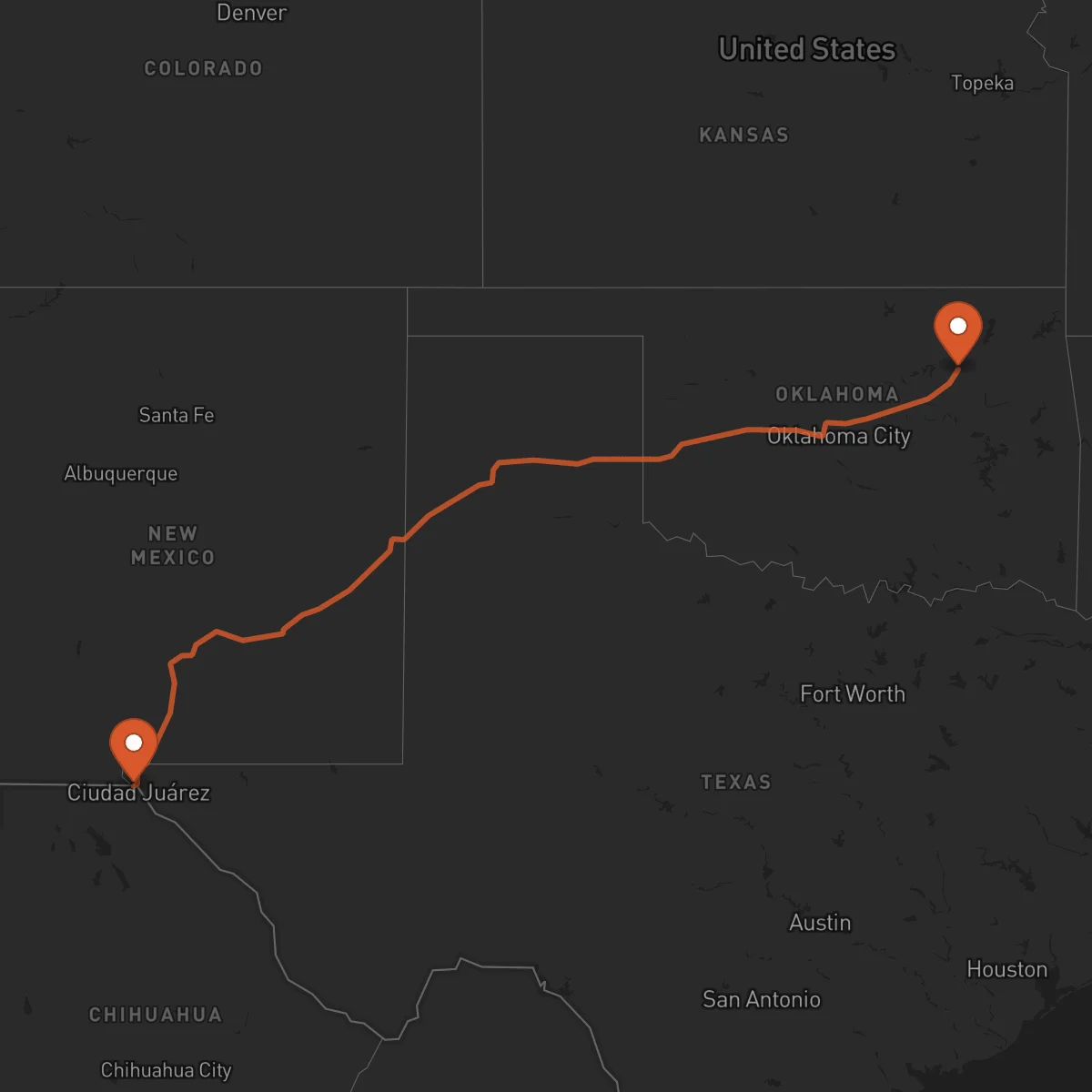
El Paso to Tulsa
Tulsa → El PasoFTL freight transportation service between El Paso and Tulsa. Reliable logistics solutions for your business.
Route Description
Everything you need to know about the corridor El Paso - Tulsa
The freight transportation corridor between El Paso, Texas, and Tulsa, Oklahoma, represents a vital logistics route connecting the U.S.-Mexico border region with the industrial heartland of the Midwest. Spanning approximately 1,083 kilometers, this domestic corridor serves as a crucial link for businesses moving goods between the Southwest and the Central United States. The route traverses diverse terrain and crosses multiple state lines, making it essential for companies requiring reliable full truckload (FTL) transportation services.
The economic significance of this corridor is substantial, facilitating trade and commerce between regions with distinct industrial profiles. El Paso serves as a major gateway for international trade, while Tulsa functions as a key distribution hub for the Midwest. This connection supports industries ranging from manufacturing and energy to retail and agriculture, enabling the efficient movement of raw materials, finished products, and consumer goods across the country.
Key transportation infrastructure along this corridor includes major highways such as I-40 and I-44, which provide direct and efficient routes for freight movement. These well-maintained interstate highways ensure reliable transit times and support the high-volume freight traffic that characterizes this important logistics pathway. The corridor's strategic position allows for seamless integration with other major transportation networks throughout the United States.
Control Terrestre specializes in providing comprehensive FTL transportation solutions along this corridor, leveraging our extensive network of certified carriers and strategic partnerships. Our expertise in full truckload services ensures that your cargo moves efficiently and securely from origin to destination, with dedicated equipment and professional handling throughout the journey. We understand the unique requirements of this route and offer customized solutions to meet the specific needs of your supply chain.
Services for this Route
Available services for the corridor El Paso - Tulsa
 Origin
El Paso
El Paso, Texas, occupies a strategic position as a major logistics hub on the U.S.-Mexico border. This location makes it an essential gateway for international trade, with access to major transportation corridors connecting North America. The city's proximity to the border facilitates efficient cross-border operations and serves as a critical point for freight entering and exiting the United States. El Paso's economic landscape includes significant manufacturing, logistics, and international trade sectors, supported by a skilled workforce and business-friendly environment.
The transportation infrastructure in El Paso is robust and well-developed, featuring multiple interstate highways including I-10, which runs east-west across the southern United States. The city also benefits from the El Paso International Airport and the Union Pacific Railroad, providing multimodal transportation options. The Bridge of the Americas and other border crossings enhance El Paso's role as a key logistics center, enabling seamless freight movement between the United States and Mexico.
 Destination
Tulsa
Tulsa, Oklahoma, serves as a strategic logistics and distribution center in the heart of the United States. Located in northeastern Oklahoma, Tulsa provides excellent access to major Midwestern markets and serves as a gateway to the Central United States. The city's central location makes it ideal for distribution operations, offering relatively equal access to major metropolitan areas across the country. Tulsa's economy is diverse, with strong presence in energy, aerospace, manufacturing, and logistics sectors, creating substantial freight transportation demand.
The transportation infrastructure in Tulsa is comprehensive and well-connected. The city is served by major highways including I-44 and I-244, providing efficient connections to regional and national transportation networks. Tulsa International Airport supports air freight operations, while the Tulsa Port of Catoosa on the McClellan-Kerr Arkansas River Navigation System offers unique inland waterway access. The city's rail connections through BNSF and Union Pacific railroads further enhance its multimodal transportation capabilities, making it an ideal destination for freight distribution.










