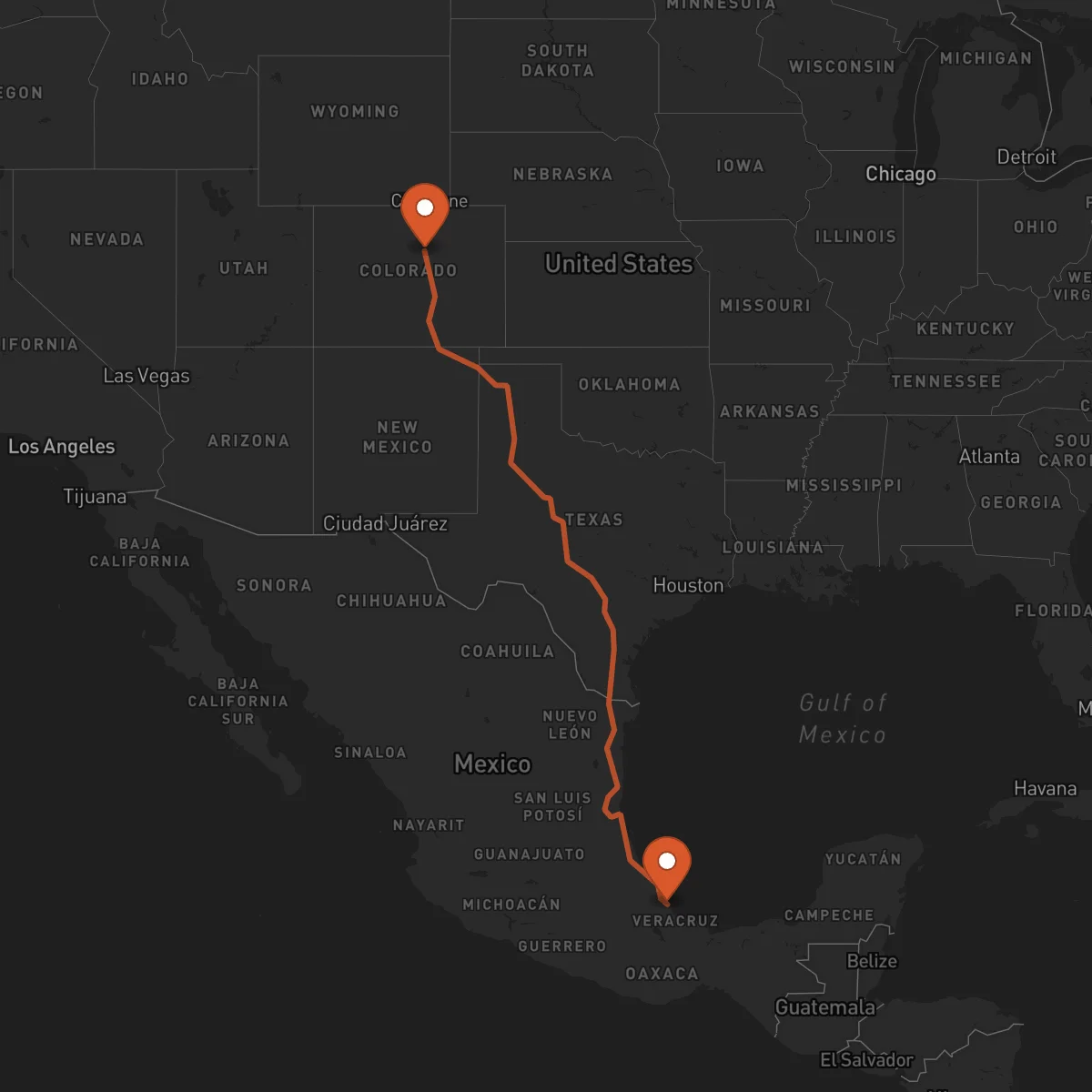
Denver to Veracruz
Veracruz → DenverFTL freight transportation service between Denver and Veracruz. Reliable logistics solutions for your business.
Route Description
Everything you need to know about the corridor Denver - Veracruz
The Denver to Veracruz corridor represents a vital logistics connection between the United States and Mexico, spanning approximately 2439 km through diverse terrain and crossing multiple states. This route connects the industrial heart of Colorado with one of Mexico's most important port cities, facilitating the movement of goods between North America's manufacturing centers and international markets. The corridor traverses key economic regions, linking Denver's aerospace and technology industries with Veracruz's petrochemical, automotive, and agricultural sectors.
This transportation route is particularly significant for industries requiring cross-border logistics solutions, including automotive parts, electronics, agricultural products, and industrial equipment. The corridor benefits from well-developed transportation infrastructure, including major highways such as I-25, I-40, and Mexican Federal Highways 140 and 180. The primary border crossing at Laredo/Nuevo Laredo serves as the main gateway, offering efficient customs processing for qualified carriers.
Control Terrestre specializes in managing cross-border operations along this corridor, ensuring seamless freight movement from origin to destination. Our experienced team handles all customs documentation, regulatory compliance, and coordination with certified carriers who maintain C-TPAT and FAST certifications. We provide dedicated full truckload (FTL) services with real-time tracking and proactive communication throughout the journey, guaranteeing that your cargo moves efficiently across international borders while maintaining the highest standards of security and reliability.
Services for this Route
Available services for the corridor Denver - Veracruz
 Origin
Denver
Denver, Colorado serves as a strategic logistics hub in the Rocky Mountain region, offering excellent connectivity to major transportation networks. The city's central location provides access to interstate highways I-25 and I-70, facilitating efficient distribution throughout the western United States. Denver's economy is driven by aerospace, technology, telecommunications, and energy sectors, with numerous manufacturing and distribution centers supporting cross-border trade. The city's elevation and infrastructure make it an ideal origin point for freight moving south to Mexico, with extensive warehousing and logistics facilities supporting just-in-time delivery operations.
 Destination
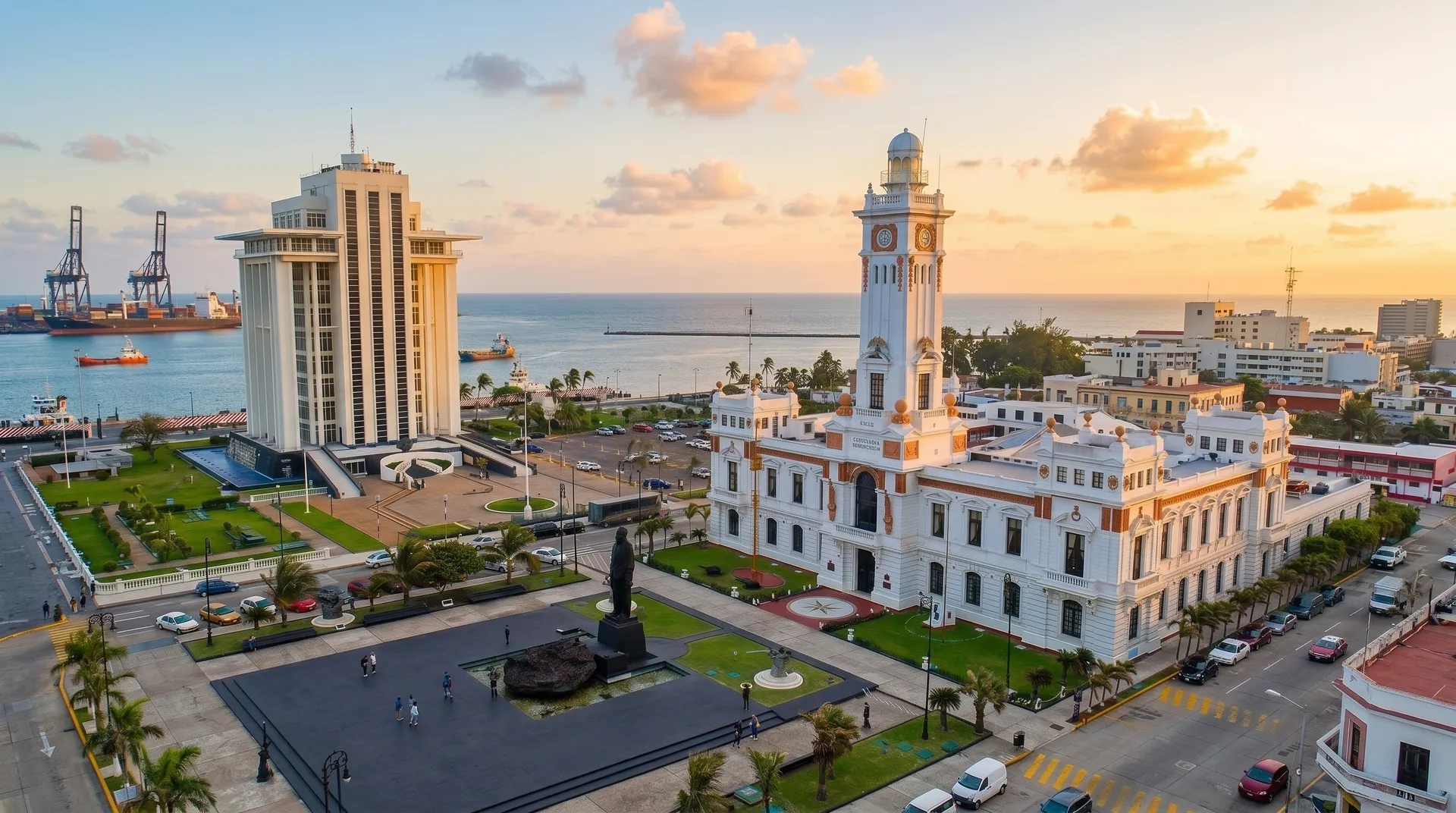
Veracruz, located on Mexico's Gulf coast, is one of the country's most important port cities and logistics centers. The city's strategic position provides access to the Port of Veracruz, Mexico's oldest and one of its busiest ports, handling a significant portion of the country's imports and exports. Veracruz's economy is anchored by the petrochemical industry, automotive manufacturing, agriculture, and fishing sectors. The region benefits from excellent transportation infrastructure, including Federal Highways 180 and 140 connecting to the Mexican interior, as well as rail connections that integrate with the port facilities. The city's proximity to major industrial parks and free trade zones makes it a crucial destination for cross-border freight operations.










