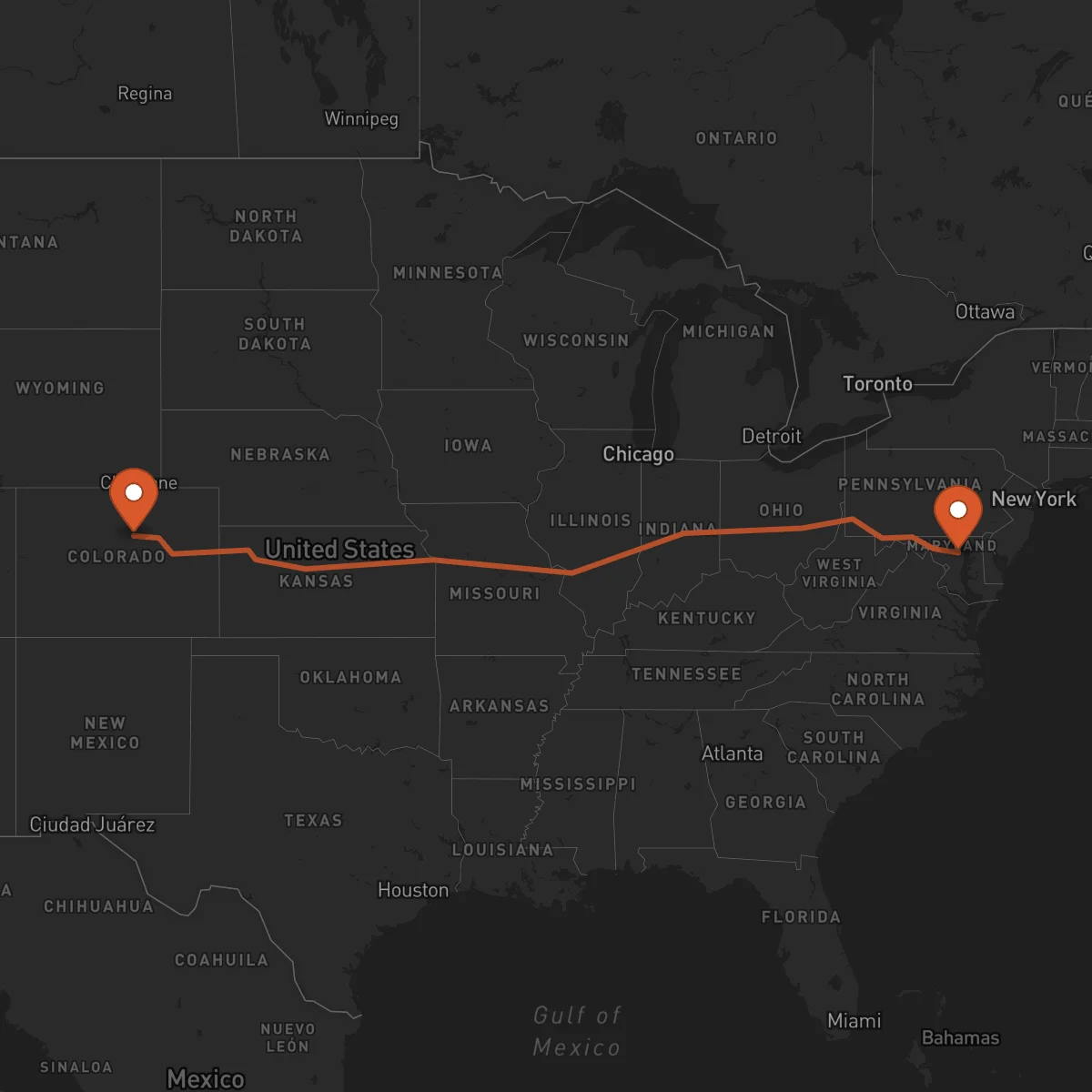
Denver to Baltimore
Baltimore → DenverFTL freight transportation service between Denver and Baltimore. Reliable logistics solutions for your business.
Route Description
Everything you need to know about the corridor Denver - Baltimore
The Denver to Baltimore corridor is a vital freight transportation route connecting the Rocky Mountain region with the Mid-Atlantic, spanning approximately 2,425 kilometers. This domestic corridor serves as a crucial link for businesses moving goods between Colorado's industrial heartland and Maryland's major port and distribution center. The route primarily utilizes Interstate 70 eastbound through the Midwest, connecting with I-76 and I-70 in Pennsylvania before transitioning to I-695 around Baltimore.
This corridor supports a diverse range of industries, with Denver's aerospace, technology, and energy sectors shipping to Baltimore's established manufacturing, healthcare, and maritime industries. The route is particularly important for time-sensitive shipments of high-value electronics, automotive parts, and industrial equipment. Baltimore's strategic position as a major East Coast port creates significant import-export activity, while Denver's central location in the Mountain West makes it a key distribution point for western U.S. markets.
Control Terrestre specializes in full truckload (FTL) transportation along this corridor, offering dedicated services that ensure your freight moves efficiently and securely. Our experienced carriers utilize state-of-the-art equipment including 53' dry vans and refrigerated units to handle various cargo types. With our strategic partnerships and commitment to reliability, we provide seamless door-to-door service, maintaining consistent transit times and real-time tracking capabilities for your peace of mind.
Services for this Route
Available services for the corridor Denver - Baltimore
 Origin
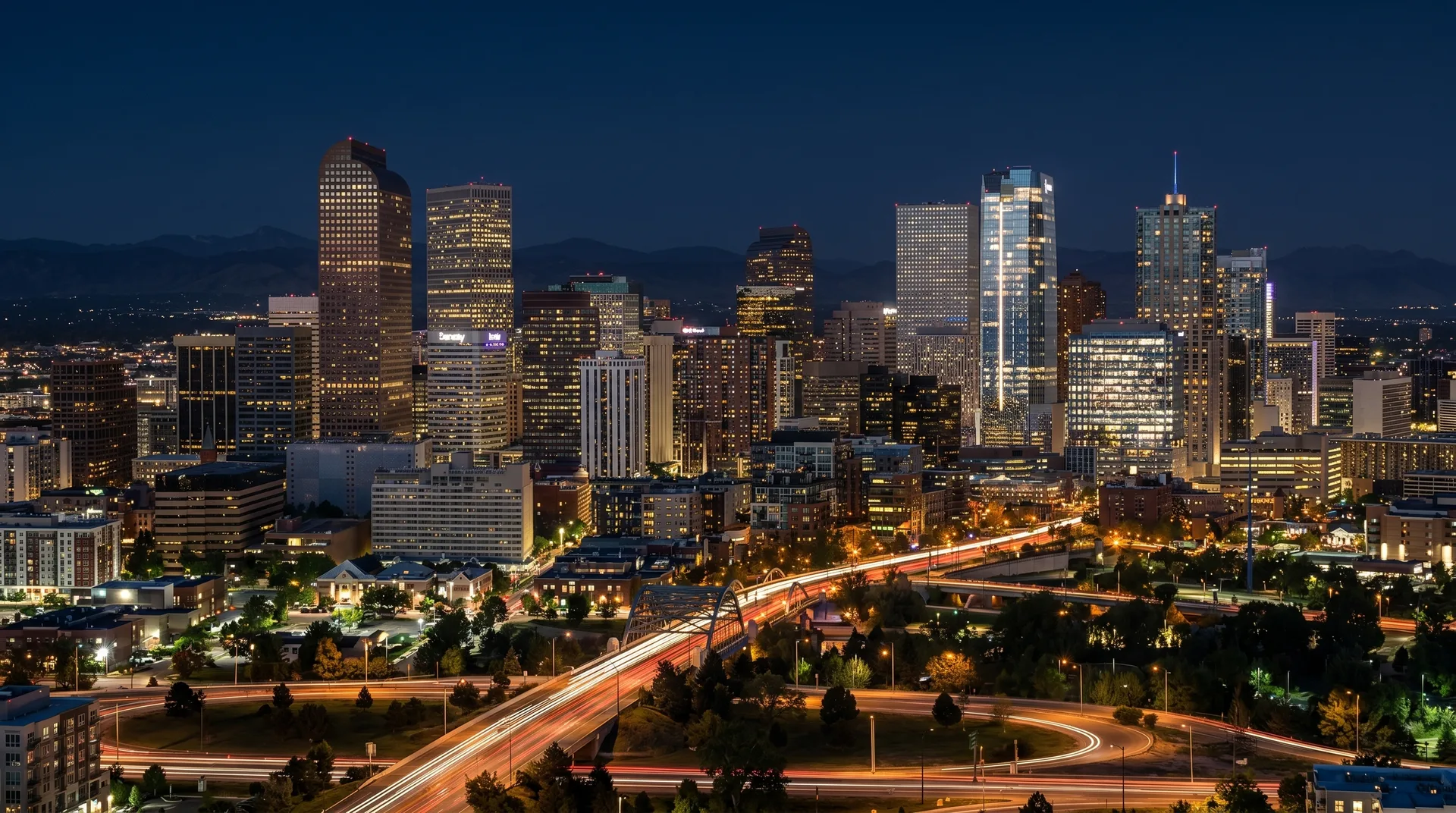
Denver
Denver, Colorado serves as a strategic logistics hub in the Mountain West region, positioned at the intersection of major transportation routes. The city's location at the base of the Rocky Mountains provides access to western U.S. markets while offering relatively efficient routes to both coasts. Denver International Airport, one of the largest airports in the world by land area, complements the city's robust ground transportation infrastructure. The city sits at the convergence of I-70, I-25, and I-76, providing excellent connectivity for freight movement.
Denver's economy is diverse and growing, with key industries including aerospace, technology, telecommunications, energy (particularly oil and gas), and outdoor recreation equipment manufacturing. The region is home to numerous federal agencies, research institutions, and corporate headquarters, creating consistent demand for freight transportation services. Denver's proximity to major mining operations and agricultural regions in Colorado and surrounding states further enhances its importance as a distribution center for raw materials and finished goods.
 Destination
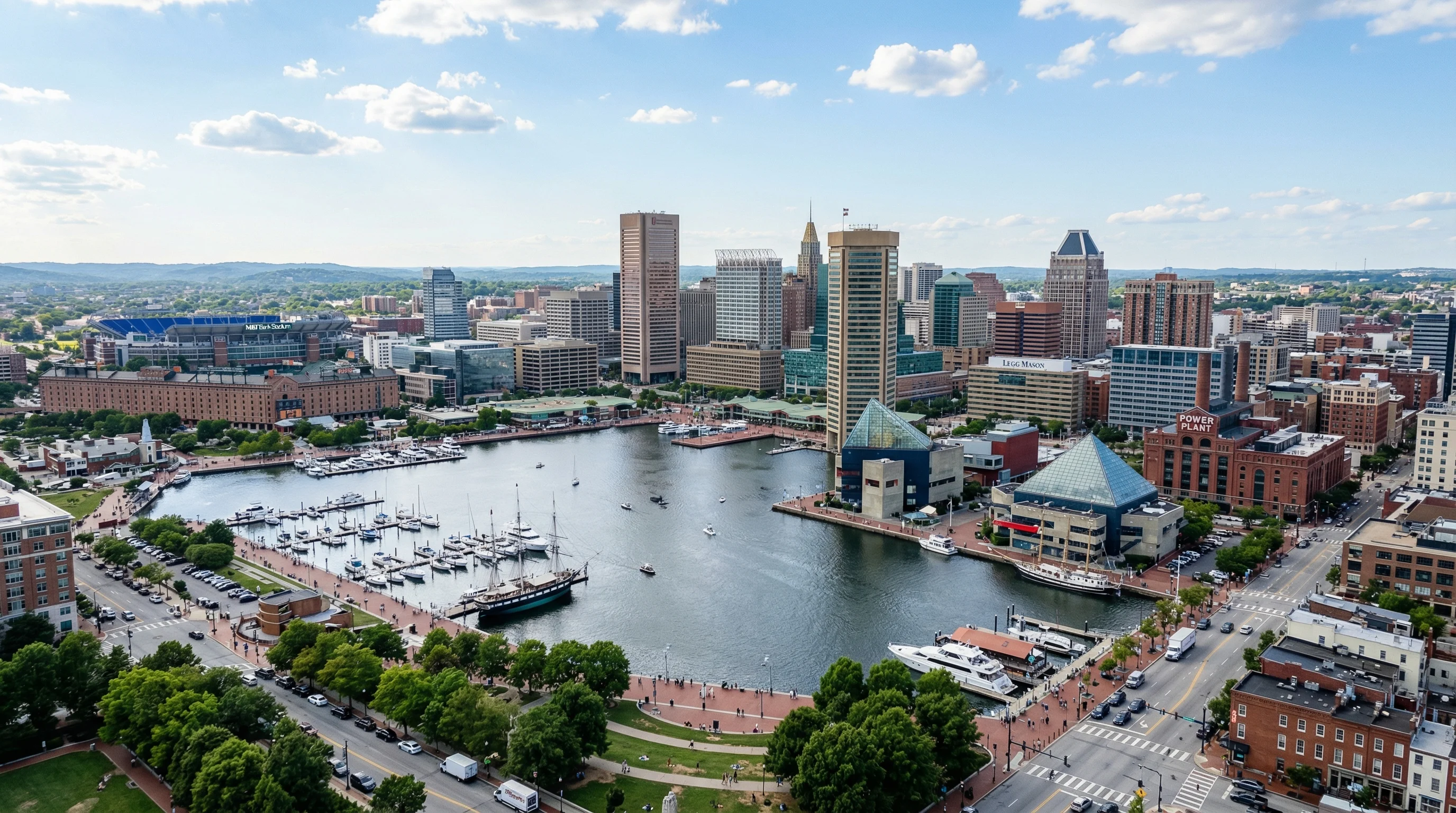
Baltimore
Baltimore, Maryland is a premier East Coast logistics hub with unparalleled access to major markets along the Atlantic seaboard. The city's strategic location just 40 miles northeast of Washington D.C. and 100 miles southwest of Philadelphia positions it perfectly for regional distribution. Baltimore's port is one of the busiest in the United States, featuring extensive container facilities and specialized terminals for automobiles, bulk cargo, and project cargo. The city's transportation infrastructure includes I-95, I-895, I-695 (Baltimore Beltway), and direct rail connections via CSX and Norfolk Southern.
Baltimore's economy is anchored by strong manufacturing, healthcare, education, and maritime industries. The region hosts major healthcare institutions, defense contractors, and a significant presence of life sciences and biotechnology companies. The port's automotive handling capabilities make it a key entry point for vehicles and auto parts, while the city's industrial parks support manufacturing and distribution operations. Baltimore's central location on the East Coast provides efficient access to over one-third of the U.S. population within an overnight drive, making it an ideal destination for regional distribution networks.










