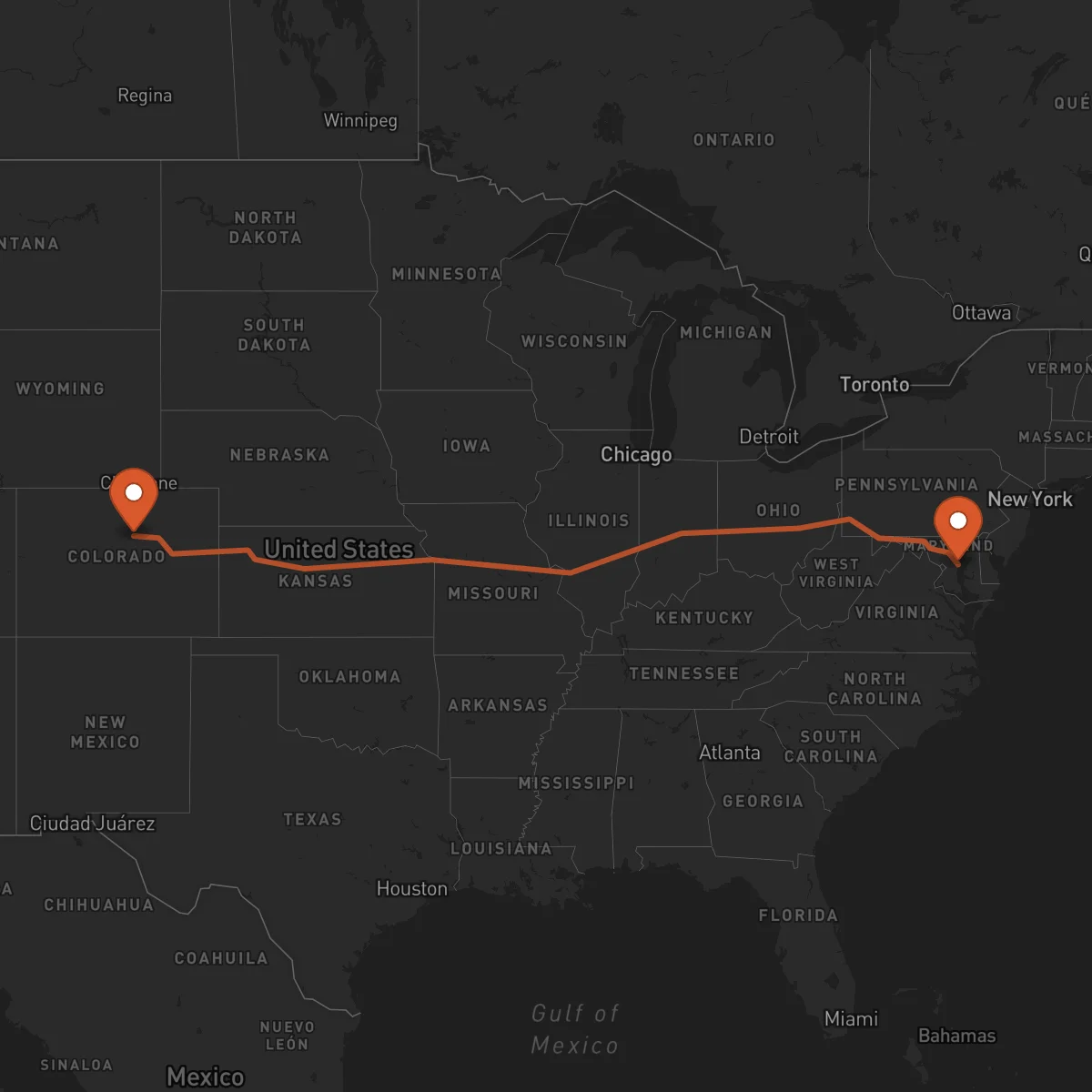
Denver to Annapolis
Annapolis → DenverFTL freight transportation service between Denver and Annapolis. Reliable logistics solutions for your business.
Route Description
Everything you need to know about the corridor Denver - Annapolis
The Denver to Annapolis corridor is a vital freight transportation route connecting the Rocky Mountain region with the Mid-Atlantic coast. Spanning approximately 2,441 kilometers, this domestic corridor traverses diverse terrain and serves as a crucial link between Colorado's growing industrial base and Maryland's strategic East Coast location. This route facilitates the movement of goods across eight states, utilizing major interstate highways including I-70, I-76, I-80, and I-76, before connecting to I-70 East and various state highways leading to Annapolis.
The economic significance of this corridor cannot be overstated. Denver, as a major hub for technology, aerospace, and energy sectors, produces a steady stream of high-value cargo requiring efficient transportation to East Coast markets. Annapolis, while known for its maritime heritage, serves as a gateway to the broader Baltimore-Washington metropolitan area, providing access to one of the nation's largest consumer markets and numerous government and military installations.
Control Terrestre specializes in full truckload (FTL) transportation along this corridor, offering dedicated services that ensure your cargo moves efficiently and securely. Our strategic partnerships with certified carriers allow us to provide reliable transportation solutions for various industries, including technology, manufacturing, and government contractors. With our expertise in handling specialized cargo and commitment to on-time delivery, we help businesses maintain their supply chain integrity across this extensive route.
Services for this Route
Available services for the corridor Denver - Annapolis
 Origin
Denver
Denver, Colorado serves as a strategic origin point for freight transportation, offering unique advantages for logistics operations. Located at the intersection of major interstate highways I-25 and I-70, Denver provides direct access to both north-south and east-west transportation corridors. The city's elevation of 5,280 feet above sea level positions it as a crucial distribution center for the Rocky Mountain region. Denver's economy is diverse, with strong presence in aerospace, technology, energy, and manufacturing sectors, generating consistent demand for freight services. The city boasts the Denver International Airport, one of the largest airports in the world by land area, and extensive rail connections through Union Pacific and BNSF rail networks. These multimodal transportation options, combined with the city's central location in the Mountain Time Zone, make Denver an ideal starting point for coast-to-coast freight movements.
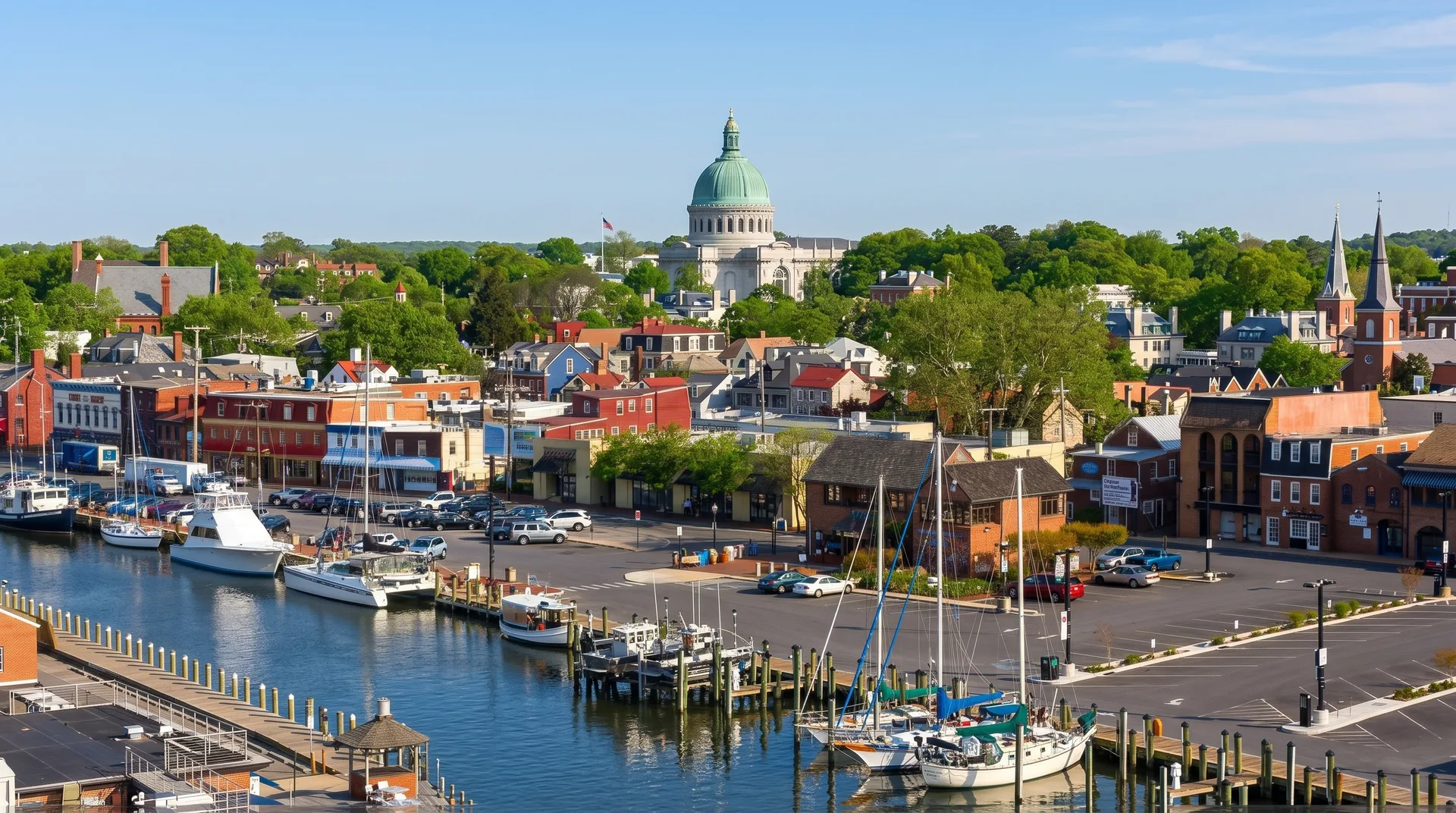 Destination
Annapolis
Annapolis, Maryland, while smaller than nearby Baltimore, holds significant strategic importance in the Mid-Atlantic logistics network. Located on the Chesapeake Bay, Annapolis provides access to maritime shipping routes and serves as a complement to the extensive trucking infrastructure in the region. The city's proximity to major metropolitan areas like Baltimore and Washington D.C. makes it an important node in the supply chain for government contractors, defense industries, and maritime services. Annapolis is connected to the broader regional transportation network through Maryland Route 50 and is within close distance to major interstate highways I-97, I-95, and I-695. The region's economy benefits from its proximity to government installations, research facilities, and a strong maritime industry, all of which require reliable freight transportation services. The Port of Baltimore, one of the largest ports in the United States, is easily accessible from Annapolis, providing additional multimodal transportation options.










