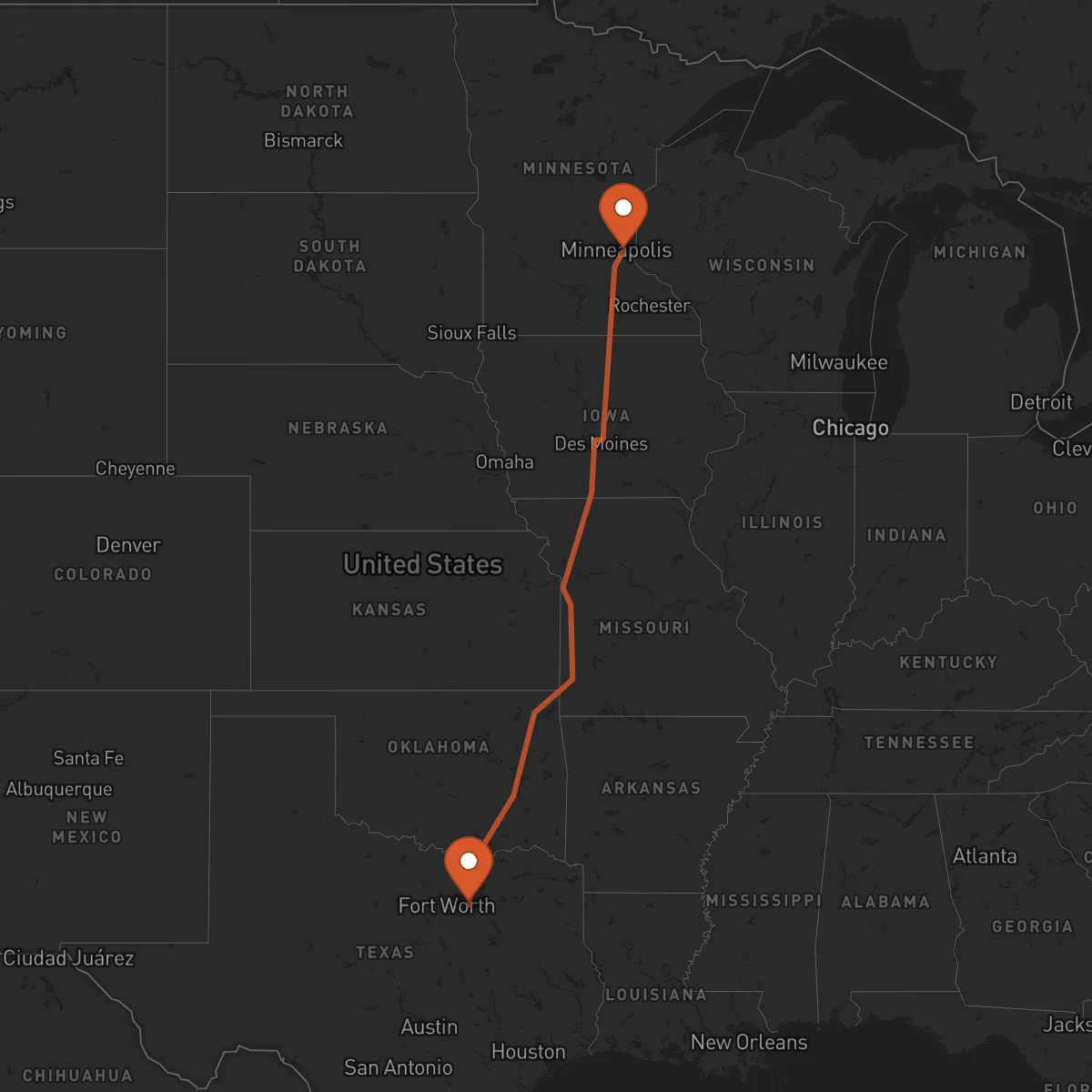
Dallas to Saint Paul
Saint Paul → DallasFTL freight transportation service between Dallas and Saint Paul. Reliable logistics solutions for your business.
Route Description
Everything you need to know about the corridor Dallas - Saint Paul
The Dallas to Saint Paul corridor represents a vital logistics connection in the central United States, spanning approximately 1,391 kilometers through the heart of America's industrial and agricultural regions. This north-south route traverses multiple states and connects two major economic hubs, facilitating the movement of goods between Texas's manufacturing and energy sectors and Minnesota's distribution and food processing industries. The corridor passes through key states including Texas, Oklahoma, Kansas, Missouri, Iowa, and Minnesota, offering multiple routing options through major transportation arteries.
The economic significance of this corridor is substantial, linking Dallas's diverse industrial base with Saint Paul's role as a major distribution center for the Upper Midwest. Along this route, freight moves between Texas's automotive manufacturing, electronics, and energy equipment sectors and Minnesota's food processing, medical device manufacturing, and retail distribution networks. The corridor particularly serves the automotive supply chain, agricultural equipment movement, and temperature-sensitive goods requiring reliable transportation between these distinct climate zones.
Control Terrestre optimizes operations on this corridor through our network of certified transportation providers, offering full truckload (FTL) services that ensure direct, dedicated shipping between Dallas and Saint Paul. Our strategic partnerships with carriers along this route provide consistent capacity, competitive rates, and reliable transit times. We understand the specific requirements of cross-state freight movement, including regulatory compliance and seasonal weather considerations, particularly important for the northern segments of this journey where winter conditions can impact transportation.
Services for this Route
Available services for the corridor Dallas - Saint Paul
 Origin
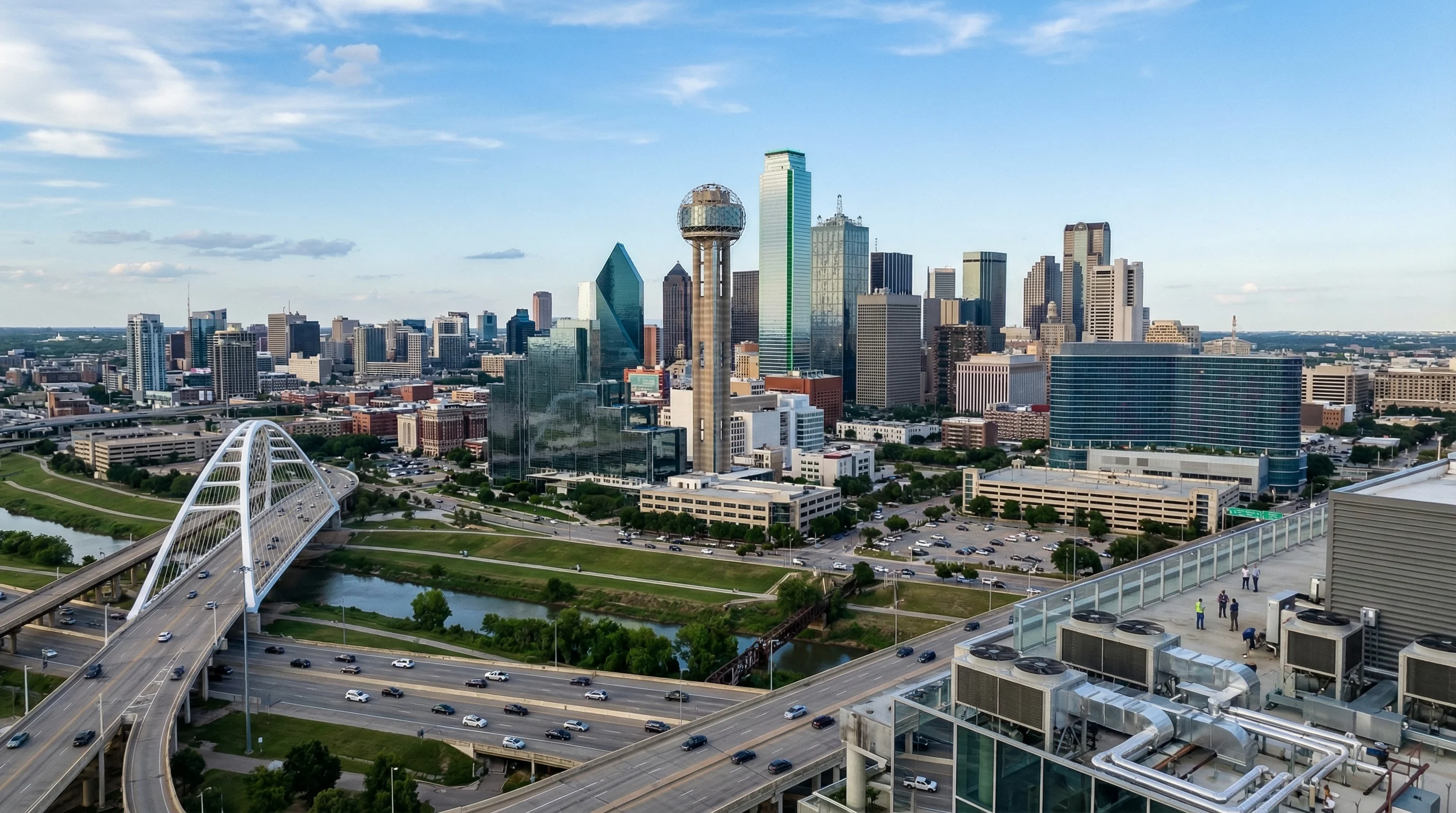
Dallas
Dallas serves as a major logistics hub in the southern United States, strategically positioned with excellent access to major transportation networks. The city's location provides direct connections to Interstate 35E and Interstate 45, facilitating efficient north and south-bound freight movement. Dallas's robust infrastructure includes multiple intermodal facilities, a major international airport, and extensive warehousing and distribution centers that support its role as a key logistics center for Texas and the surrounding region.
The Dallas metropolitan area hosts diverse industries including technology, telecommunications, defense, and financial services. The region is also a significant manufacturing center, particularly for electronics, automotive components, and industrial equipment. Dallas's economic strength is complemented by its proximity to the Gulf Coast ports, creating a comprehensive logistics ecosystem that supports both domestic and international trade. The city's central location within Texas makes it an ideal origin point for freight distribution throughout the central United States.
 Destination
Saint Paul
Saint Paul, as part of the Minneapolis-Saint Paul metropolitan area, represents a crucial logistics center in the Upper Midwest. The city's strategic location along the Mississippi River and its comprehensive transportation infrastructure, including major highways like I-94 and I-35E, provide excellent connectivity for freight movement throughout the region. Saint Paul's extensive warehousing and distribution facilities, combined with its proximity to major retail centers and manufacturing facilities, make it a key destination for logistics operations.
The region's economy is anchored by strong healthcare, education, and financial services sectors, along with significant food processing and agricultural industries. Saint Paul serves as a major distribution hub for companies serving the Upper Midwest and beyond, with its logistics infrastructure supporting both inbound raw materials and outbound finished goods. The area's cold storage facilities and temperature-controlled warehousing capabilities are particularly important for the food and beverage industry, while its manufacturing base includes medical devices, machinery, and technology products.










