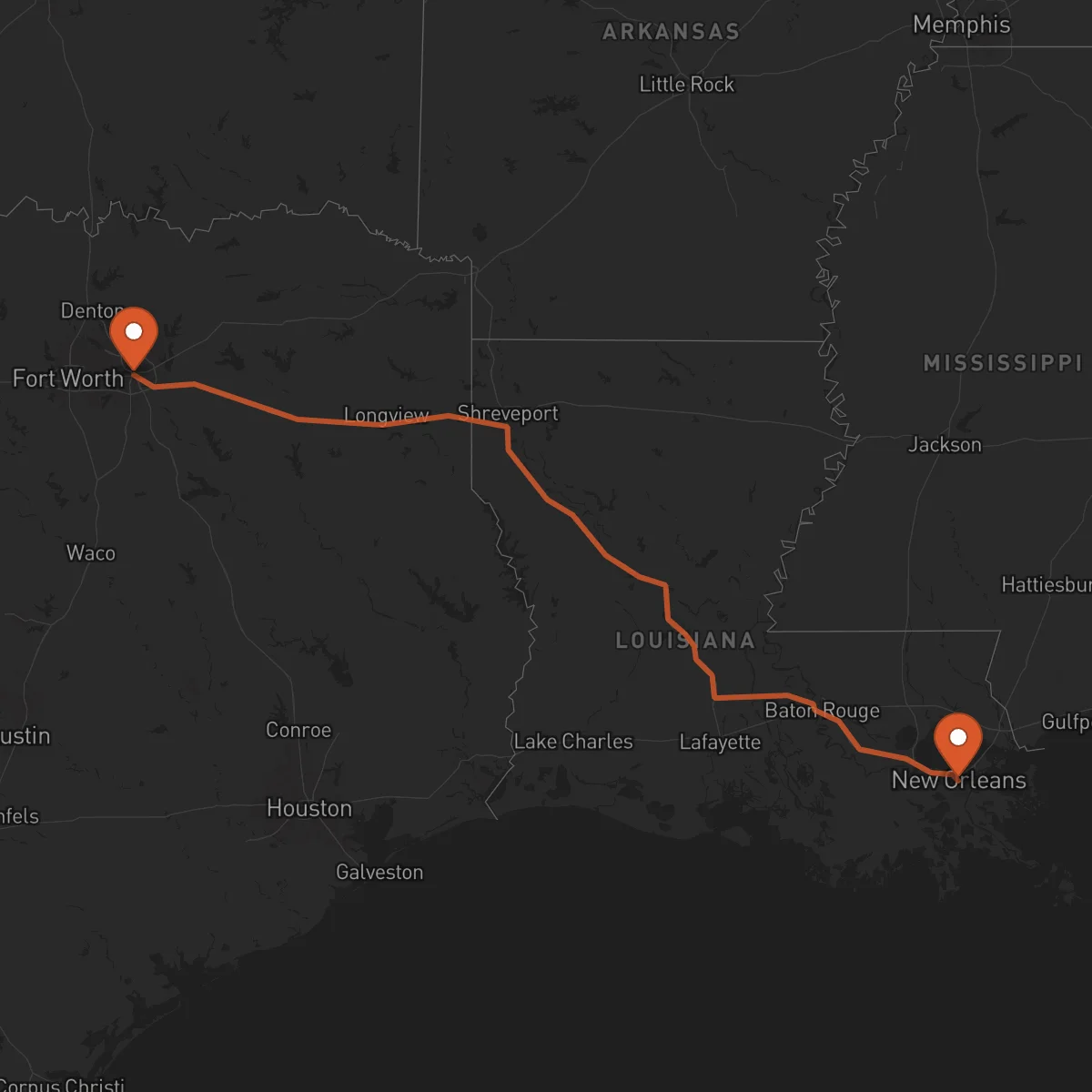
Dallas to New Orleans
New Orleans → DallasFTL freight transportation service between Dallas and New Orleans. Reliable logistics solutions for your business.
Route Description
Everything you need to know about the corridor Dallas - New Orleans
The Dallas to New Orleans corridor represents a vital logistics connection between two major economic hubs in the southern United States. This 711-kilometer route links Texas's largest metropolitan area with Louisiana's most important port city, creating an essential supply chain artery for multiple industries. The corridor traverses diverse landscapes and crosses state lines, requiring sophisticated logistics coordination to ensure seamless freight movement.
The economic significance of this route extends beyond simple transportation, as it connects the energy, manufacturing, and agricultural powerhouses of Texas with the petrochemical, maritime, and tourism-driven economy of Louisiana. Major industries including oil and gas, automotive, aerospace, and food processing rely heavily on this corridor for just-in-time inventory management and distribution. The route facilitates the movement of everything from industrial equipment and raw materials to consumer goods and perishable products.
Control Terrestre specializes in providing reliable full truckload transportation services along this corridor, leveraging our extensive network of certified carriers and advanced logistics technology. Our team understands the unique challenges of interstate freight movement, including regulatory compliance, weather considerations, and time-sensitive deliveries. We offer dedicated services with real-time tracking, ensuring your cargo reaches its destination safely and efficiently, whether you're shipping from Dallas's industrial parks to New Orleans's port facilities or any point in between.
Services for this Route
Available services for the corridor Dallas - New Orleans
 Origin
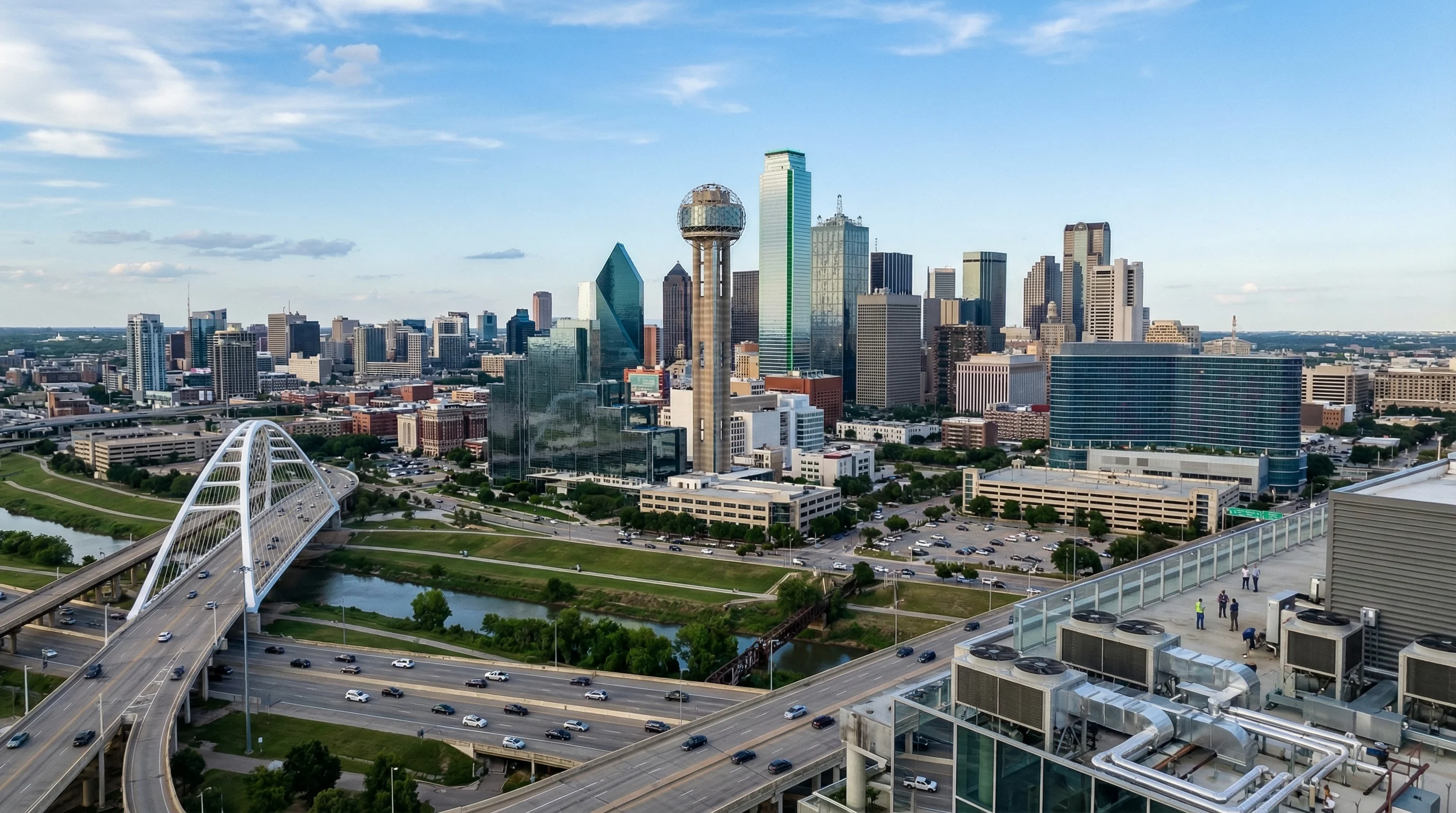
Dallas
Dallas serves as a major logistics hub in the southwestern United States, offering unparalleled access to national freight networks. The city's strategic location at the intersection of major interstate highways (I-20, I-30, I-35E, and I-45) makes it an ideal origin point for freight distribution. Dallas's robust infrastructure includes DFW International Airport, one of the busiest cargo airports in the country, and extensive rail connections through Union Pacific and BNSF rail lines. The region's pro-business environment and central location within a day's drive of 60% of the U.S. population make it particularly attractive for logistics operations.
 Destination
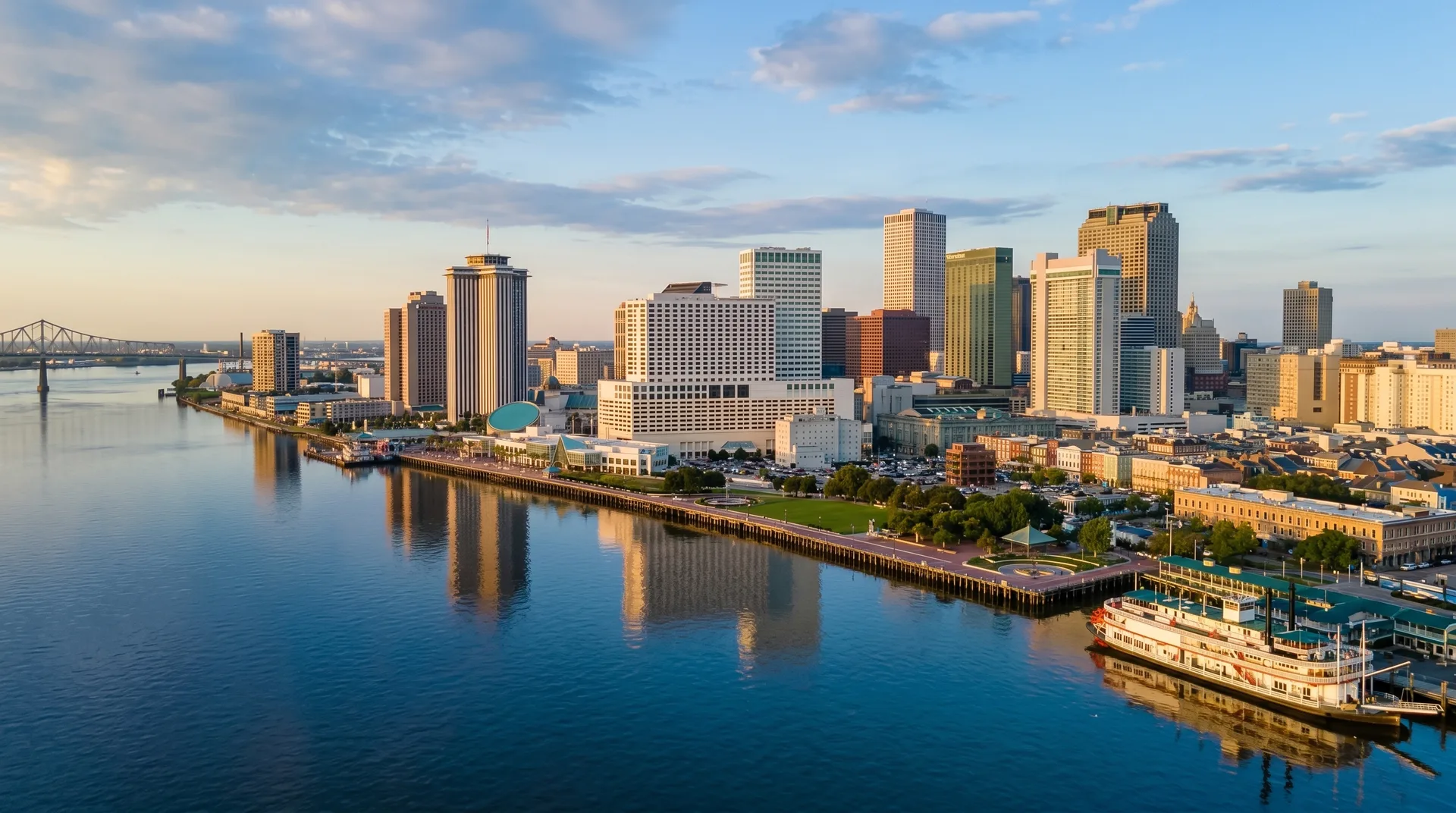
New Orleans
New Orleans stands as a critical logistics gateway to international markets, particularly through its world-class port facilities along the Mississippi River. The city's strategic location at the mouth of the Mississippi provides direct access to global shipping routes, while its extensive intermodal facilities connect ocean freight with inland transportation networks. New Orleans's infrastructure includes the Port of New Orleans, one of the largest ports in the United States by tonnage, and Louis Armstrong New Orleans International Airport for air cargo operations. The city's unique position as a cultural and economic crossroads enhances its importance in regional supply chains.










