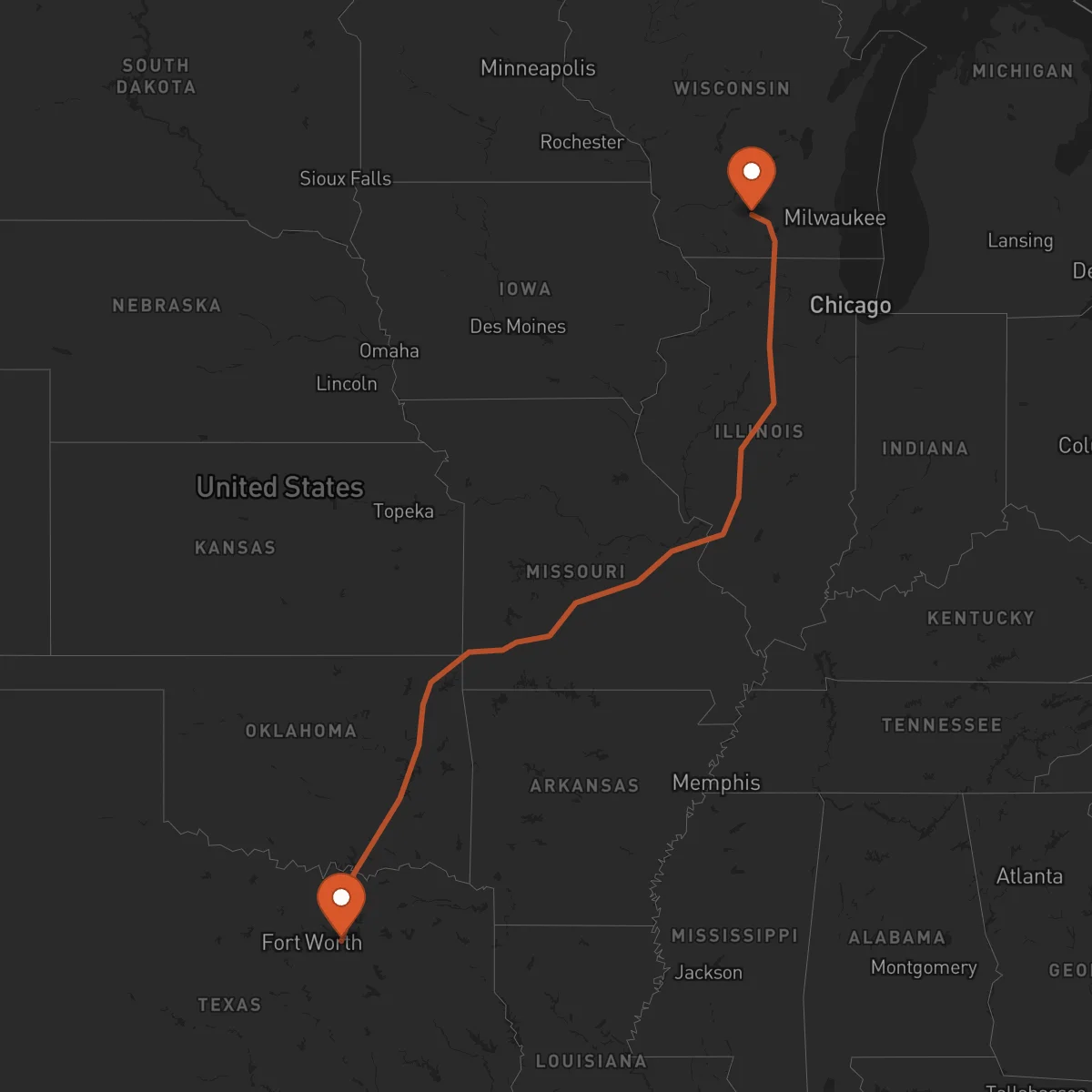
Dallas to Madison
Madison → DallasFTL freight transportation service between Dallas and Madison. Reliable logistics solutions for your business.
Route Description
Everything you need to know about the corridor Dallas - Madison
The Dallas to Madison corridor represents a vital freight transportation route connecting the economic powerhouse of Texas with the industrial and agricultural hub of Wisconsin. This 1315 km domestic route traverses the heart of the United States, facilitating the movement of goods between two major economic regions. The corridor links the Dallas-Fort Worth metroplex, one of the fastest-growing metropolitan areas in the nation, with Madison, Wisconsin's capital and a center for innovation and manufacturing.
The route serves as a critical supply chain link for numerous industries, particularly automotive, technology, food processing, and manufacturing sectors. Companies operating along this corridor benefit from the strategic positioning that allows for efficient distribution across both the southern and northern United States. The transportation infrastructure includes major interstate highways such as I-35, I-30, I-40, and I-90, providing multiple routing options to optimize transit times and costs.
Control Terrestre specializes in full truckload (FTL) freight transportation along this corridor, offering dedicated services that ensure your cargo moves directly from origin to destination without intermediate stops. Our experienced network of carriers and strategic partnerships enable us to provide reliable, efficient transportation solutions tailored to your specific needs. Whether you're shipping industrial equipment from Dallas or agricultural products from Madison, we have the capacity and expertise to handle your full truckload requirements with the utmost professionalism and care.
Services for this Route
Available services for the corridor Dallas - Madison
 Origin
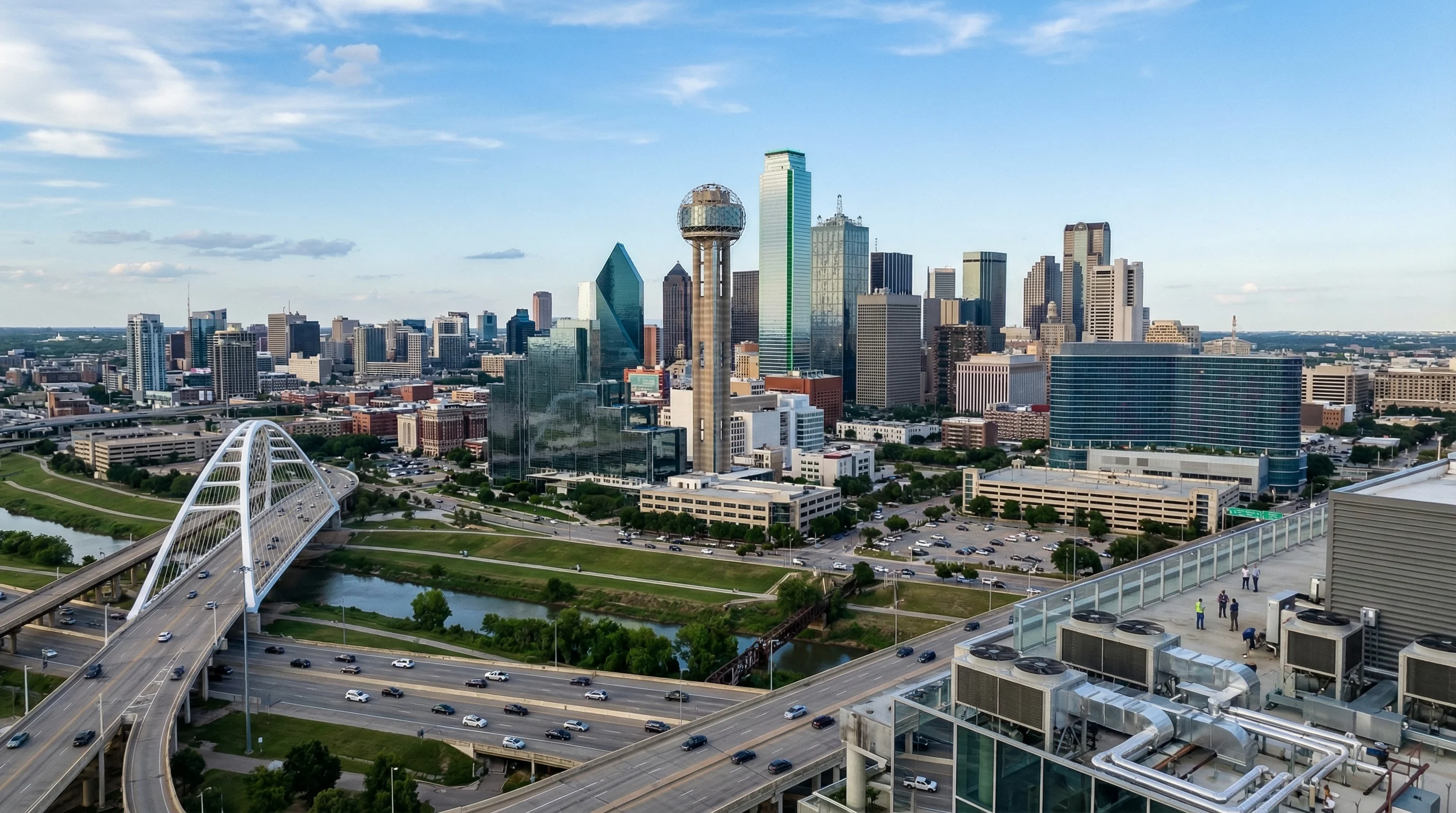
Dallas
Dallas, Texas stands as a strategic logistics hub in the southern United States, offering exceptional connectivity and infrastructure for freight transportation. The Dallas-Fort Worth metroplex serves as a major distribution center, with its central location providing access to 98% of the U.S. population within a 48-hour drive. The region boasts one of the most extensive highway networks in the nation, including the convergence of I-20, I-30, I-35E, and I-45, making it an ideal origin point for nationwide freight movements.
The Dallas area is home to a diverse economic landscape, with strong presence in technology, telecommunications, healthcare, and manufacturing sectors. The region hosts numerous corporate headquarters and distribution centers, benefiting from Texas's business-friendly environment and lack of state income tax. Dallas's transportation infrastructure includes multiple airports, extensive rail networks, and one of the largest inland ports in the country, providing multimodal shipping options for businesses of all sizes.
 Destination
Madison
Madison, Wisconsin serves as a strategic logistics destination in the Upper Midwest, combining academic excellence with strong industrial and agricultural sectors. The city's location in south-central Wisconsin provides excellent access to major markets in the Midwest and beyond, with proximity to Chicago and Minneapolis enhancing its distribution capabilities. Madison's transportation infrastructure includes I-90/94, which connects the city to both coasts and major northern markets, making it an ideal destination for freight distribution.
The Madison area is known for its diverse economy, with strengths in manufacturing, information technology, healthcare, and education. The University of Wisconsin-Madison drives innovation and research, while the surrounding agricultural region contributes to food processing and distribution activities. The city's commitment to sustainable development and green initiatives aligns with modern logistics practices, offering companies environmentally conscious transportation solutions. Madison's growing population and economic development continue to drive demand for efficient freight transportation services.










