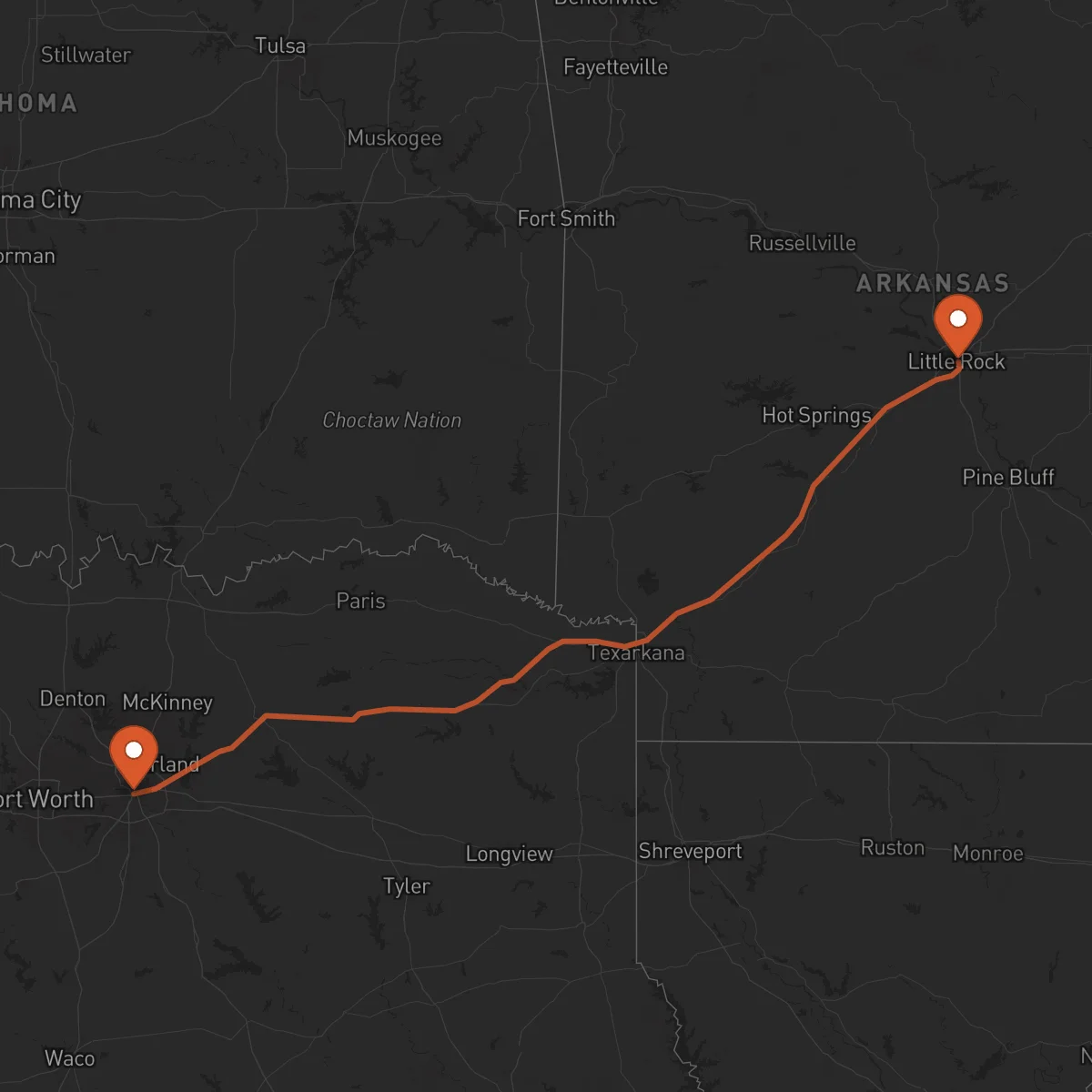
Dallas to Little Rock
Little Rock → DallasFTL freight transportation service between Dallas and Little Rock. Reliable logistics solutions for your business.
Route Description
Everything you need to know about the corridor Dallas - Little Rock
The Dallas to Little Rock corridor represents a vital domestic freight transportation route connecting two key economic centers in the southern United States. This 472-kilometer corridor links the bustling Dallas metropolitan area with Arkansas's capital city, facilitating the movement of goods between Texas's industrial powerhouse and the growing markets of Arkansas. The route traverses diverse terrain through East Texas and into the heart of the Natural State, providing essential connectivity for businesses operating across state lines.
The economic significance of this corridor is substantial, supporting the movement of manufactured goods, agricultural products, and industrial materials between two regions with complementary economic profiles. Dallas serves as a major logistics hub with extensive warehousing and distribution capabilities, while Little Rock functions as a regional distribution center for Arkansas and surrounding states. The corridor benefits from the strong manufacturing presence in both locations, with Dallas's advanced manufacturing sector complementing Little Rock's industrial base.
This route primarily utilizes Interstate 30 and US Highway 67, providing reliable transportation infrastructure for freight movement. The corridor experiences consistent freight traffic, particularly in manufactured goods, automotive parts, and consumer products. Control Terrestre leverages this established infrastructure to provide efficient full truckload (FTL) transportation services, ensuring that cargo moves seamlessly between these strategic locations. Our network of certified transportation providers maintains the reliability and safety standards necessary for this important domestic trade route.
Services for this Route
Available services for the corridor Dallas - Little Rock
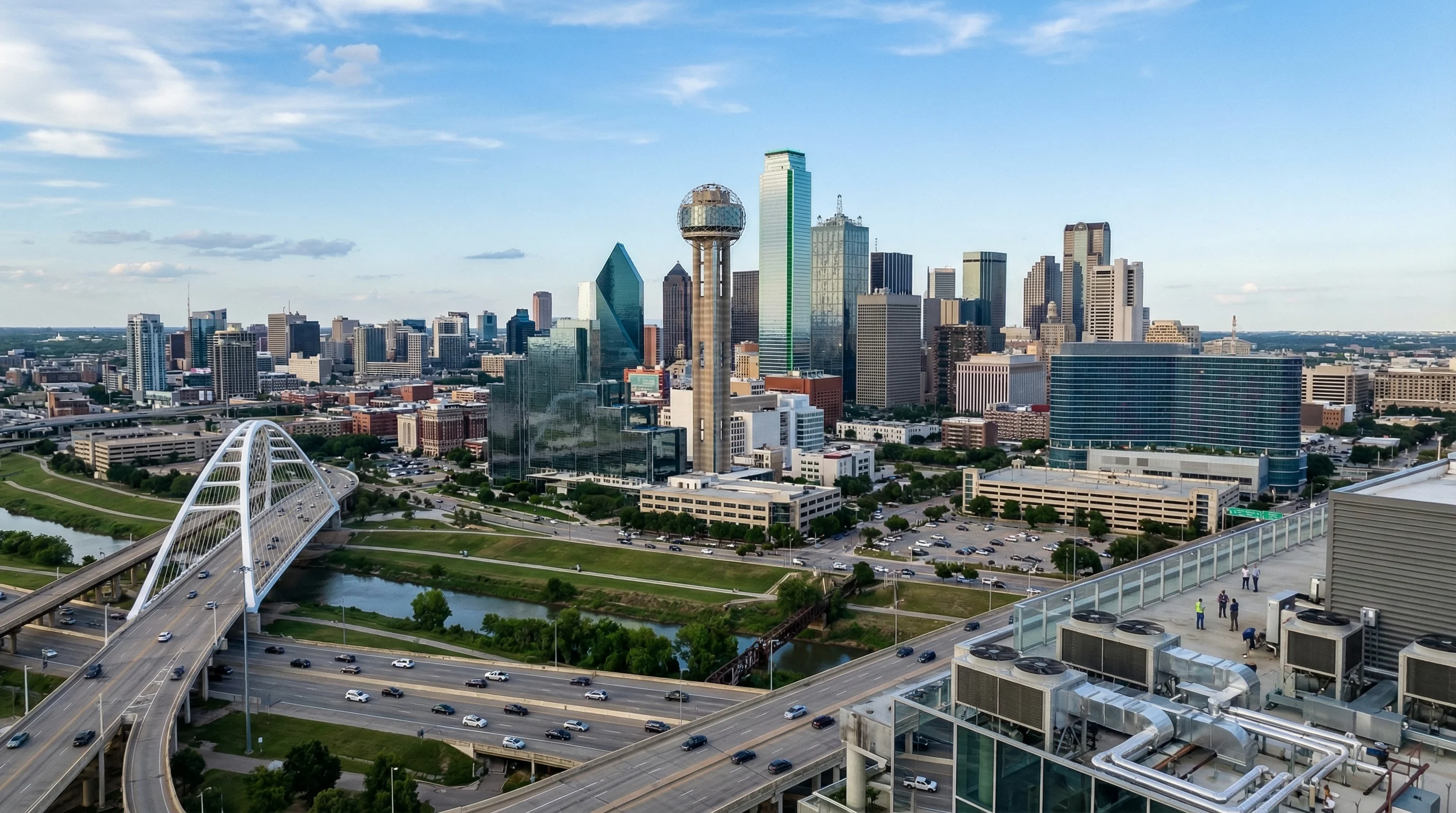 Origin
Dallas
Dallas, Texas stands as a premier logistics hub in the southern United States, offering exceptional connectivity and infrastructure for freight transportation. The city's strategic location in North Texas provides access to major interstate highways including I-20, I-30, I-35, and I-45, creating an extensive network for domestic freight movement. Dallas benefits from the presence of Dallas/Fort Worth International Airport, one of the busiest cargo airports in the country, and the Port of Houston's proximity for international freight connections.
The Dallas metropolitan area hosts a diverse industrial base, with strong representation in technology, telecommunications, manufacturing, and healthcare sectors. The region's pro-business environment and skilled workforce have attracted numerous Fortune 500 companies, creating consistent demand for freight transportation services. Dallas's extensive warehousing and distribution facilities, combined with its central location within the United States, make it an ideal origin point for full truckload shipments to markets throughout the South and Midwest.
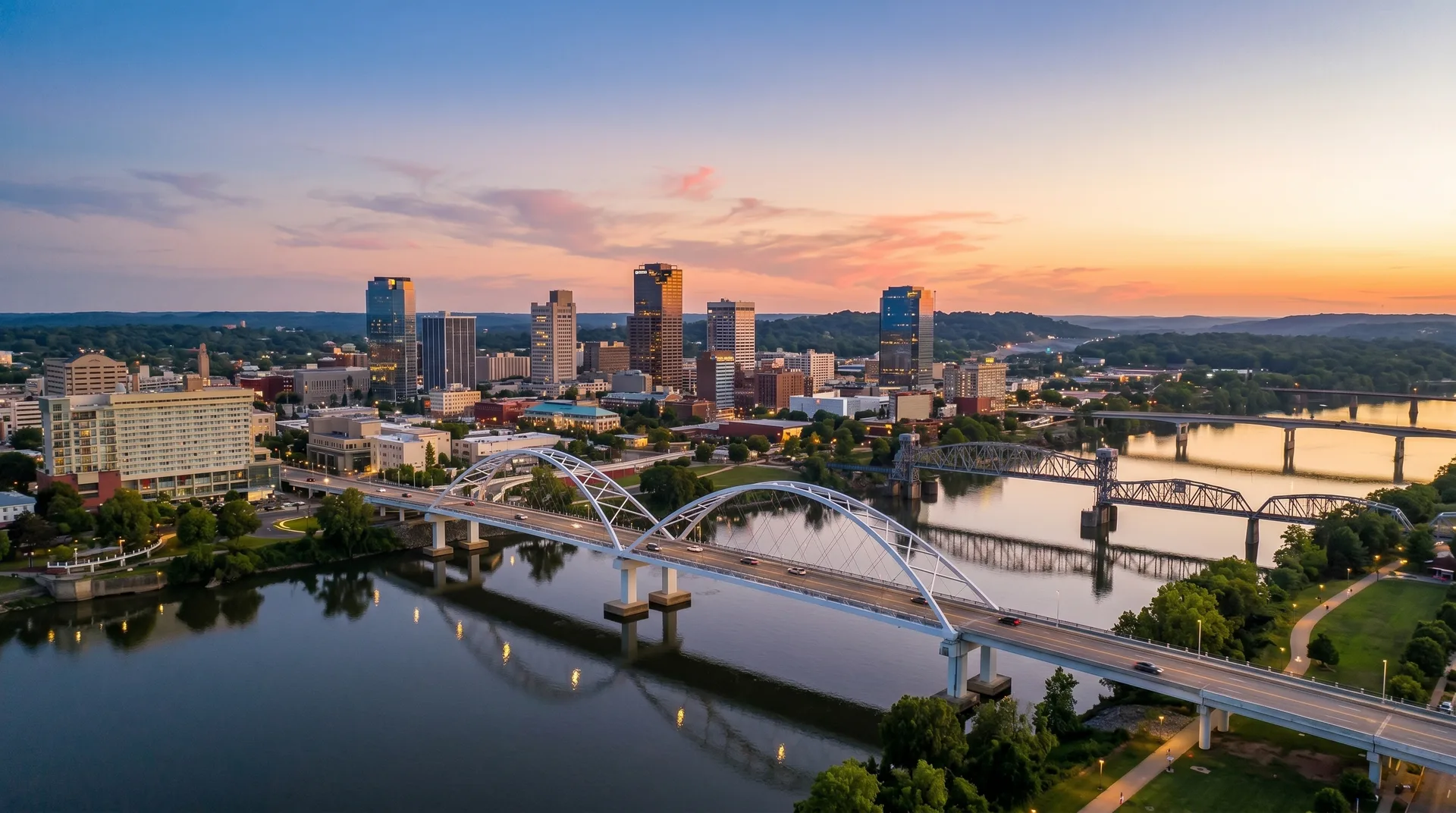 Destination
Little Rock
Little Rock, Arkansas serves as a strategic logistics center for the Natural State and surrounding regions, offering excellent connectivity for freight transportation. The city's location along the Arkansas River provides waterway access, while its proximity to major interstates including I-30 and I-40 ensures robust ground transportation options. Bill and Hillary Clinton National Airport offers air cargo services, complementing the city's multimodal transportation capabilities.
The Little Rock metropolitan area features a growing industrial sector with strengths in aerospace, automotive, and advanced manufacturing. The city has attracted significant investment from major corporations, creating a steady flow of freight traffic. Little Rock's central location within Arkansas makes it a natural distribution point for goods moving throughout the state and into neighboring regions. The city's business-friendly environment and available industrial space continue to support its development as a regional logistics hub, with consistent demand for full truckload transportation services connecting it to major markets like Dallas.










