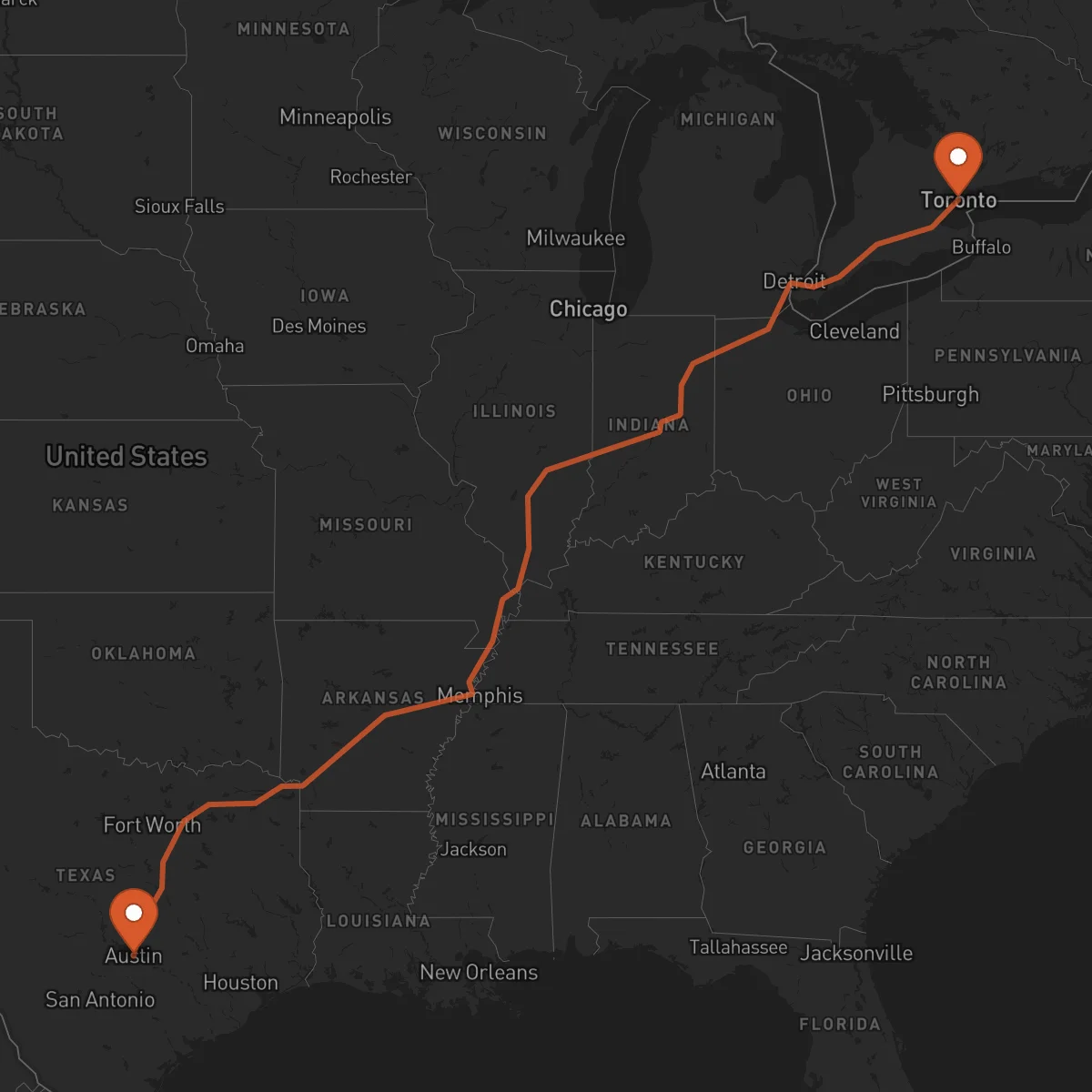
Austin to Toronto
Toronto → AustinFTL freight transportation service between Austin and Toronto. Reliable logistics solutions for your business.
Route Description
Everything you need to know about the corridor Austin - Toronto
The logistics corridor connecting Austin, Texas, to Toronto, Ontario, represents a vital cross-border freight transportation route in North America. This corridor spans approximately 2,199 kilometers and serves as a crucial link between the central United States and Canada's largest economic hub. The route traverses diverse terrain and crosses multiple states and provinces, making it an essential artery for trade between these two major economies.
The economic significance of this corridor cannot be overstated. Austin, known as a technology and innovation center, produces high-value electronics, automotive components, and advanced manufacturing goods that flow northward. Toronto, as Canada's financial and industrial capital, serves as a major distribution point for goods throughout the country and for export to global markets. This creates a dynamic two-way flow of specialized freight that requires reliable, full truckload transportation services.
Key industries utilizing this corridor include technology, automotive, aerospace, pharmaceuticals, and consumer goods. The route primarily follows major interstate highways through the United States before transitioning to Canadian highways, with key border crossings at locations such as Detroit-Windsor or Buffalo-Fort Erie. Control Terrestre's expertise in cross-border operations ensures seamless customs clearance and regulatory compliance, while our strategic partnerships with certified carriers provide the capacity and reliability needed for this demanding route.
Services for this Route
Available services for the corridor Austin - Toronto
 Origin
Austin
Austin, Texas, serves as a strategic logistics hub in the central United States, offering excellent connectivity to major freight corridors. Located in the heart of Texas, Austin benefits from proximity to major highways including I-35, which runs north-south through the city, connecting to major freight routes. The city's central location provides efficient access to both coastal ports and inland destinations across the country.
The economic landscape of Austin is diverse and growing, with technology and innovation driving much of the freight movement. Major industries include semiconductor manufacturing, computer systems design, aerospace and defense, and advanced electronics production. The presence of major tech companies and numerous startups creates consistent demand for specialized freight transportation, particularly for high-value, time-sensitive shipments that require dedicated full truckload services.
 Destination
Toronto, Ontario, stands as Canada's premier logistics and economic center, offering unparalleled connectivity to national and international markets. The city's strategic location on Lake Ontario provides access to maritime shipping routes, while its extensive highway network, including the 400-series highways, ensures efficient ground transportation throughout the country. Toronto's Pearson International Airport further enhances its position as a major freight hub.
The economic diversity of Toronto creates substantial freight transportation demand across multiple sectors. As Canada's financial capital, it hosts numerous corporate headquarters and financial institutions. The city's manufacturing sector, particularly automotive and aerospace, generates significant industrial freight. Additionally, Toronto's role as a major distribution center for consumer goods, pharmaceuticals, and high-tech products creates consistent demand for reliable full truckload transportation services to and from the United States.










