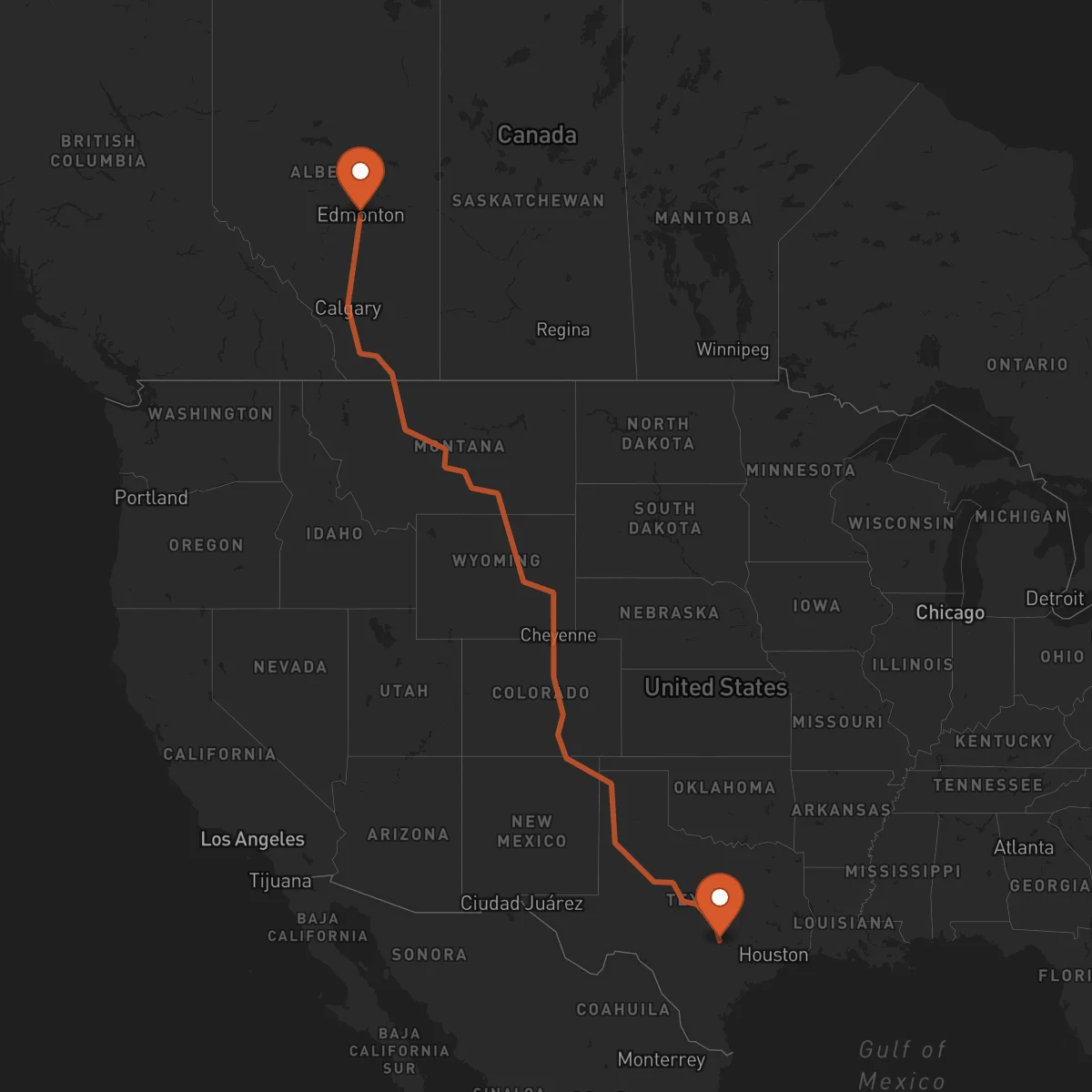
Austin to Edmonton
Edmonton → AustinFTL freight transportation service between Austin and Edmonton. Reliable logistics solutions for your business.
Route Description
Everything you need to know about the corridor Austin - Edmonton
The logistics corridor between Austin, Texas, and Edmonton, Alberta, represents a vital cross-border connection between the United States and Canada. This extensive route spans approximately 2,883 kilometers, traversing diverse landscapes and connecting two major economic hubs. The corridor facilitates the movement of goods across international borders, supporting trade relationships and supply chain efficiency between North American partners.
The economic significance of this corridor is substantial, linking Austin's thriving technology and manufacturing sectors with Edmonton's energy and resource-based industries. Austin serves as a major center for tech companies, automotive manufacturing, and research institutions, while Edmonton is known for its oil and gas operations, agricultural products, and emerging technology initiatives. This complementary economic structure creates a robust demand for freight transportation services moving in both directions.
Key transportation infrastructure along this corridor includes major highways such as I-35 North from Austin, connecting to I-29 and I-94 through the United States before crossing into Canada via the Saskatchewan-Alberta border. The route continues on the Yellowhead Highway (Highway 16) to Edmonton. Border crossings at locations like Portal, North Dakota, or other designated commercial ports of entry require careful coordination for customs clearance, documentation, and compliance with both US and Canadian regulations.
Control Terrestre facilitates seamless operations on this corridor by providing dedicated full truckload (FTL) services with experienced drivers familiar with cross-border requirements. Our team manages all necessary customs documentation, ensures compliance with C-TPAT and FAST program requirements, and coordinates timely border crossings. We maintain constant communication throughout the journey, providing real-time tracking and updates to ensure your freight arrives safely and efficiently at its destination.
Services for this Route
Available services for the corridor Austin - Edmonton
 Origin
Austin
Austin, Texas, serves as a strategic logistics hub in the southern United States, offering exceptional connectivity for freight transportation. Located in central Texas, Austin provides access to major transportation networks including Interstate 35, which runs north-south through the city, connecting to major markets throughout the country. The city's international airport and proximity to the Port of Houston further enhance its logistics capabilities.
The economic landscape of Austin is diverse and dynamic, with technology companies, semiconductor manufacturers, and automotive industries forming the backbone of the local economy. Companies like Dell, Apple, Tesla, and numerous tech startups have established significant operations in the area. Additionally, Austin's healthcare sector, educational institutions, and creative industries contribute to a robust and growing economy that generates substantial freight transportation needs.
 Destination
Edmonton, Alberta, occupies a strategic position in western Canada as the northernmost major city with significant transportation infrastructure. Located on the North Saskatchewan River, Edmonton serves as a gateway to northern Canada and Alaska, with extensive highway networks including the Yellowhead Highway (Highway 16) and proximity to major rail lines. The city's international airport and port facilities on the North Saskatchewan River further enhance its logistics capabilities.
The economy of Edmonton is anchored by the energy sector, with oil and gas operations driving much of the industrial activity in the region. The city is also a center for agriculture, forestry, and emerging technology industries. Edmonton's role as the capital of Alberta brings government services and related industries, while its educational institutions and healthcare facilities contribute to a diverse economic base that creates consistent demand for freight transportation services.










