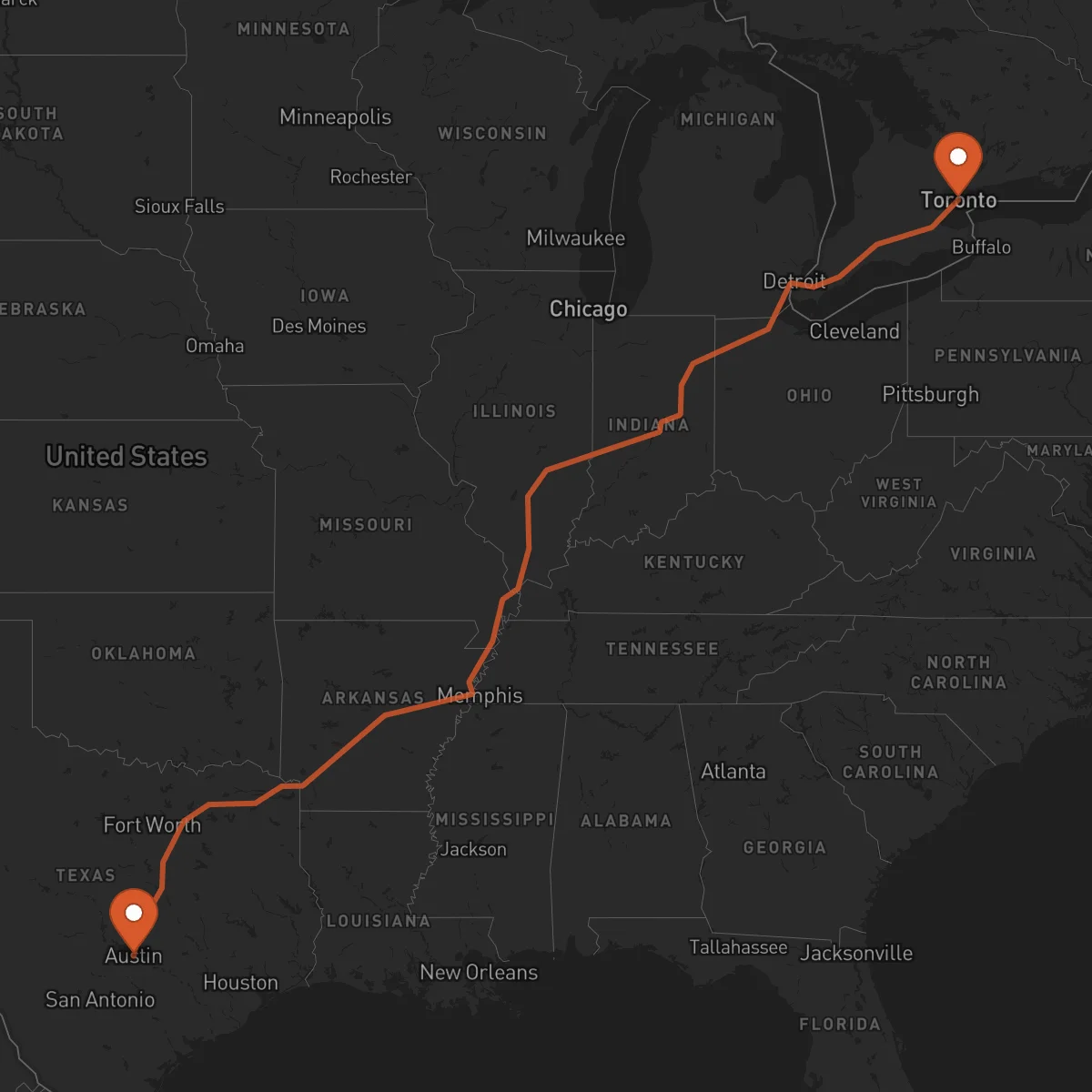
Toronto to Austin
Austin → TorontoFTL freight transportation service between Toronto and Austin. Reliable logistics solutions for your business.
Route Description
Everything you need to know about the corridor Toronto - Austin
The Toronto to Austin corridor represents a vital cross-border logistics route connecting Canada's economic powerhouse with one of the United States' fastest-growing technology hubs. This 2,199 km route traverses diverse landscapes and economic regions, facilitating the movement of goods between two dynamic markets. The corridor serves as a critical link for companies operating in both countries, enabling efficient supply chain operations across North America.
The economic significance of this corridor extends beyond its geographical span. Toronto, as Canada's financial capital and largest city, generates substantial industrial output and technological innovation. Meanwhile, Austin has emerged as a major center for technology, manufacturing, and creative industries. This complementary economic relationship creates consistent freight demand along the route, with technology components, automotive parts, and consumer goods flowing in both directions.
Transportation infrastructure along this corridor includes major highways such as I-35, which runs directly from Laredo through San Antonio to Austin, and connecting routes through the Midwest. The corridor crosses the Canada-US border at key points like Detroit-Windsor or Buffalo-Niagara Falls, before connecting to central US routes. Control Terrestre's expertise in cross-border operations ensures seamless freight movement through customs procedures, regulatory compliance, and efficient border crossing management. Our strategic partnerships with certified carriers provide reliable full truckload (FTL) service throughout this important North American trade route.
Services for this Route
Available services for the corridor Toronto - Austin
 Origin
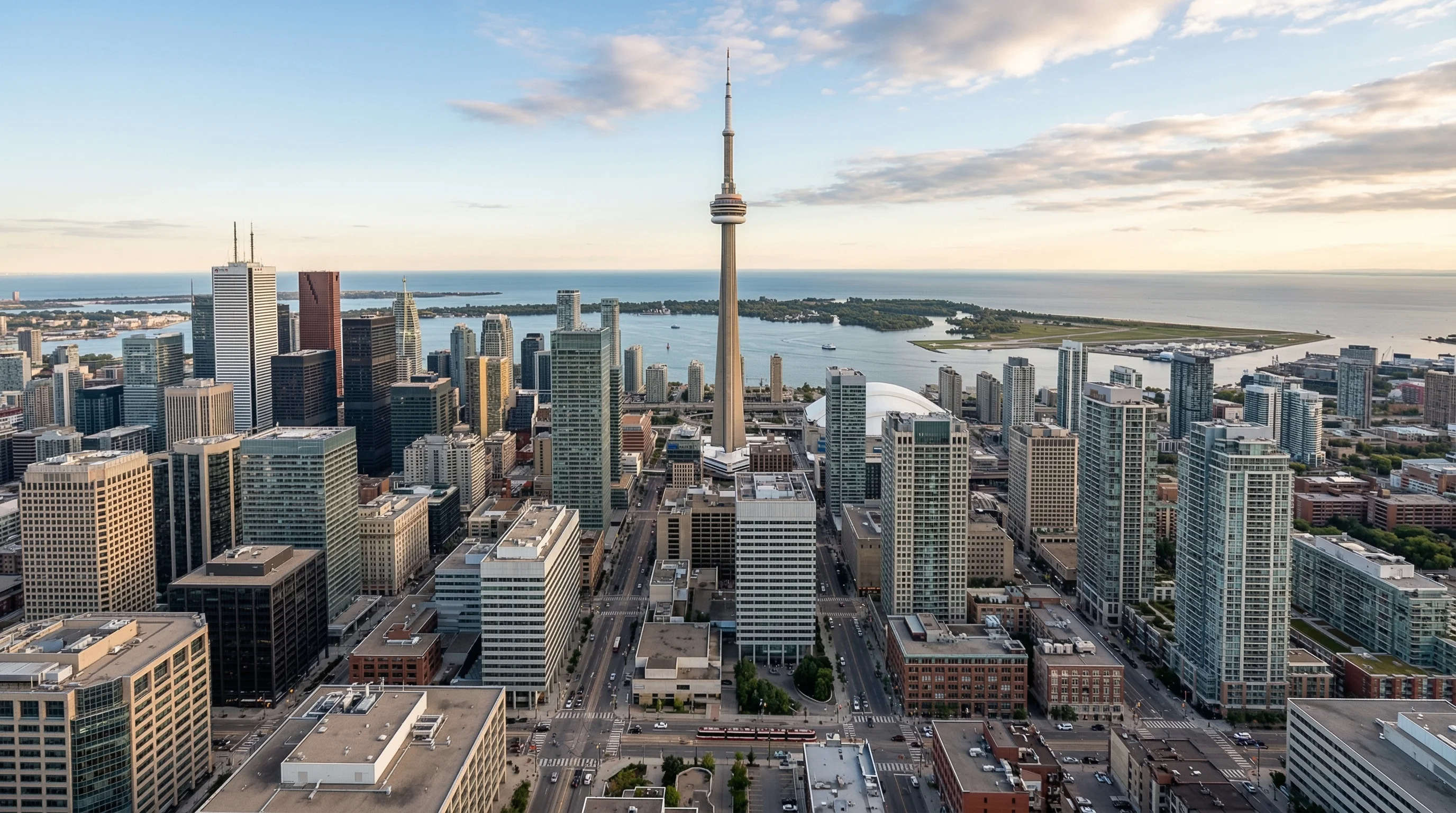
Toronto stands as Canada's premier logistics hub, strategically positioned on the northwestern shore of Lake Ontario. The city's location provides exceptional access to both domestic Canadian markets and international shipping routes via the St. Lawrence Seaway and major international airports. Toronto's extensive transportation network includes the 400-series highways, rail connections, and Pearson International Airport, creating multiple options for freight movement. The city's robust infrastructure supports high-volume logistics operations, making it an ideal origin point for cross-border freight to the United States.
The Greater Toronto Area (GTA) hosts diverse industries including automotive manufacturing, technology, financial services, and consumer goods production. This industrial diversity generates consistent freight demand and provides opportunities for backhaul movements. Toronto's position as Canada's financial center also means regular movement of high-value goods requiring specialized handling. The region's cold climate necessitates reliable refrigerated transportation for certain cargo types, particularly during winter months.
 Destination
Austin
Austin has rapidly evolved into a major logistics destination in the southern United States, driven by its booming technology sector and strategic location in Texas. The city's proximity to major Texas markets like San Antonio and Houston, combined with its own growing industrial base, creates significant freight demand. Austin-Bergstrom International Airport and the nearby Port of Houston provide multimodal transportation options, while major highways including I-35 and US-290 ensure excellent ground transportation connectivity.
The Austin metropolitan area has become a magnet for technology companies, earning its reputation as "Silicon Hills." This tech concentration drives demand for specialized freight services, including the transportation of sensitive electronic equipment and components. Additionally, Austin's manufacturing sector, particularly in semiconductors and advanced electronics, creates consistent full truckload shipping requirements. The city's rapid population growth also generates substantial consumer goods distribution needs, making it a dynamic destination for logistics operations.










