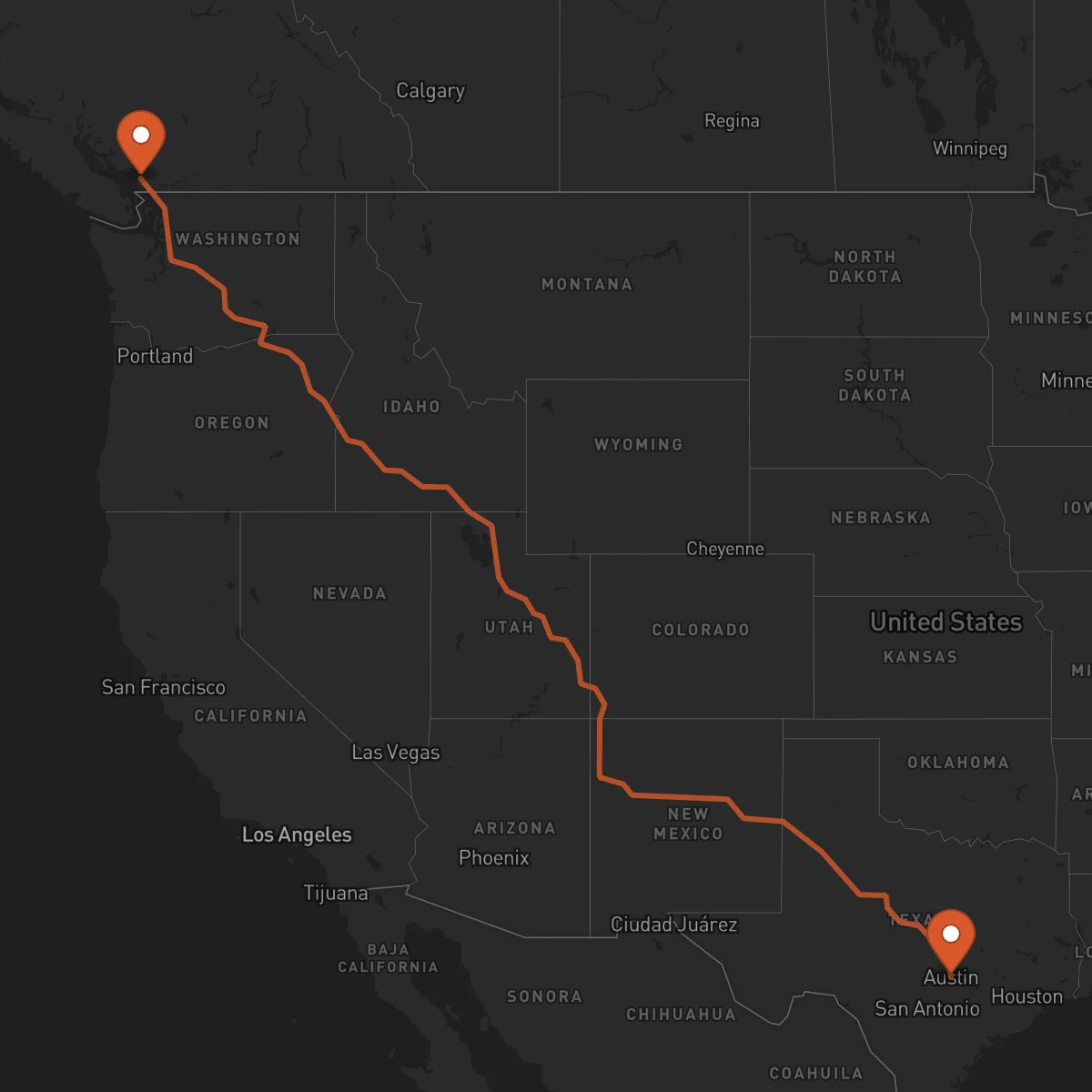
Austin to Vancouver
Vancouver → AustinFTL freight transportation service between Austin and Vancouver. Reliable logistics solutions for your business.
Route Description
Everything you need to know about the corridor Austin - Vancouver
The Austin to Vancouver corridor represents a vital cross-border freight route connecting the heart of Texas to Canada's Pacific gateway. This 3,001-kilometer journey traverses diverse landscapes and economic regions, facilitating the movement of goods between two major North American markets. The corridor serves as a critical link in the supply chain for companies operating across the United States, Canada, and international markets.
The route primarily follows major interstate highways including I-35 northbound from Austin, transitioning to I-29 and I-94 through the Midwest, before connecting to I-90 and finally reaching Vancouver via I-5 and BC-99. This well-established transportation network ensures reliable transit times for full truckload shipments. The corridor passes through key economic hubs including Kansas City, Minneapolis, and Seattle, offering opportunities for efficient distribution along the way.
Major industries utilizing this corridor include technology and electronics from Austin's Silicon Hills, automotive components, agricultural products, and industrial machinery. Vancouver's port facilities and growing tech sector create demand for inbound freight from Texas and beyond. The corridor is particularly important for time-sensitive shipments requiring expedited cross-border service between the NAFTA/USMCA partner nations.
Control Terrestre provides comprehensive FTL transportation solutions along this corridor, leveraging our strategic alliances with certified carriers. Our expertise in cross-border operations ensures smooth customs clearance at key points such as the Peace Arch and Pacific Highway crossings. We coordinate all aspects of the journey, from pickup in Austin to final delivery in Vancouver, offering dedicated services that maintain shipment integrity throughout the entire route.
Services for this Route
Available services for the corridor Austin - Vancouver
 Origin
Austin
Austin serves as a strategic logistics hub in Central Texas, combining technological innovation with robust transportation infrastructure. The city's location at the intersection of major highways I-35 and US-290 provides excellent connectivity to both national and international markets. Austin-Bergstrom International Airport and nearby ports of entry facilitate multimodal transportation options for freight forwarders and shippers.
The Austin metropolitan area is home to a diverse economic base, with technology and semiconductor manufacturing leading the way, followed by government services, education, and healthcare. The region's growing advanced manufacturing sector, particularly in electronics and aerospace, generates significant demand for reliable freight transportation. Austin's pro-business environment and skilled workforce continue to attract companies requiring sophisticated logistics solutions.
 Destination
Vancouver
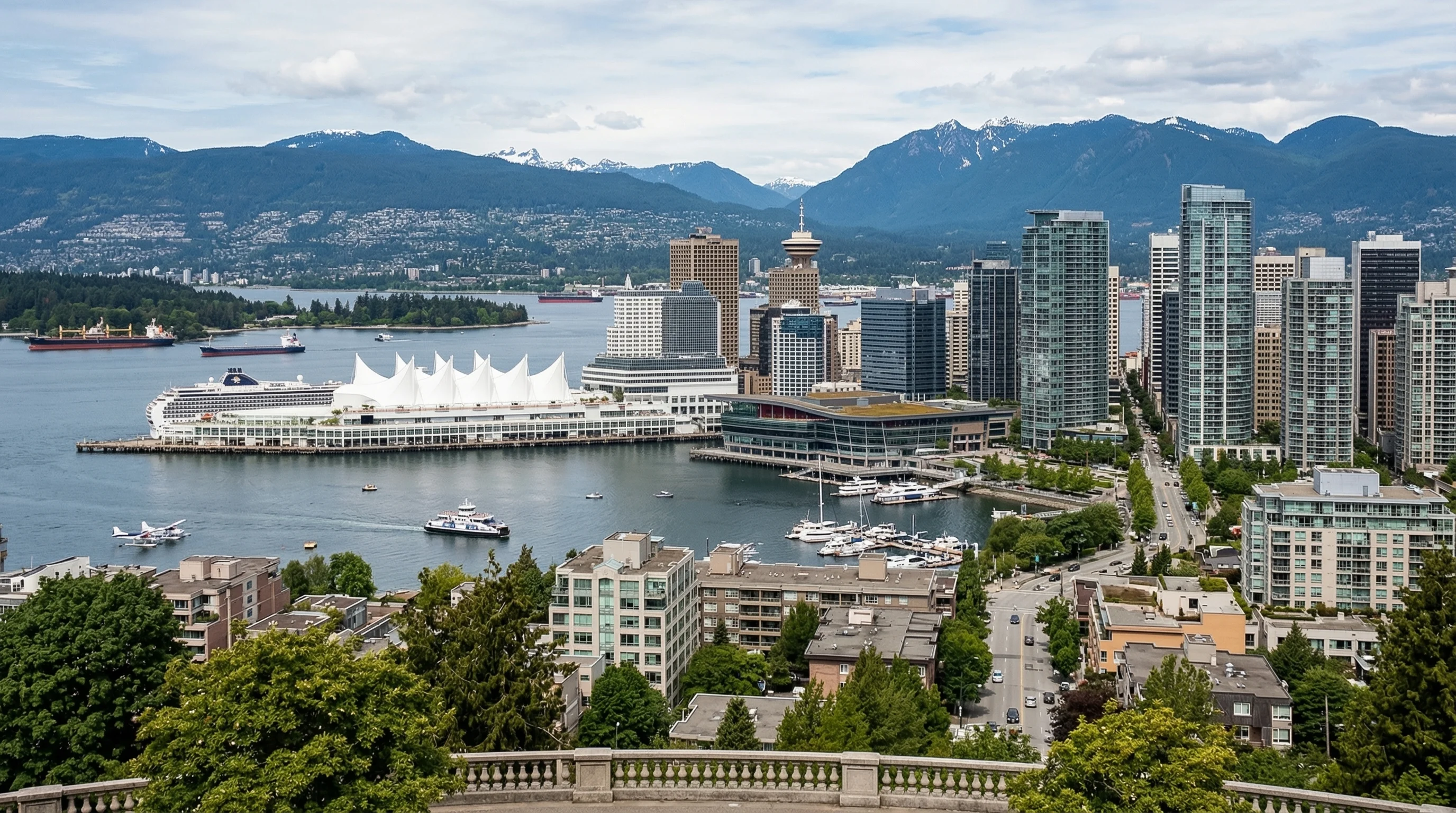
Vancouver stands as Canada's primary Pacific gateway and a crucial logistics center for international trade. The city's strategic coastal location provides direct access to Asian markets, while its proximity to the United States border facilitates efficient cross-border operations. Vancouver's extensive transportation network includes the Port of Vancouver, Vancouver International Airport, and major highways connecting to the rest of Canada and the United States.
The Vancouver metropolitan area boasts a diverse economy centered around international trade, technology, film and television production, and natural resources. The Port of Vancouver handles billions of dollars in cargo annually, making it essential for import/export activities. The region's growing tech sector, particularly in areas like software development and clean technology, creates demand for specialized freight services. Vancouver's commitment to sustainable development also influences logistics operations, with increasing emphasis on environmentally responsible transportation solutions.










