Austin to Brampton
Brampton → AustinFTL freight transportation service between Austin and Brampton. Reliable logistics solutions for your business.
Route Description
Everything you need to know about the corridor Austin - Brampton
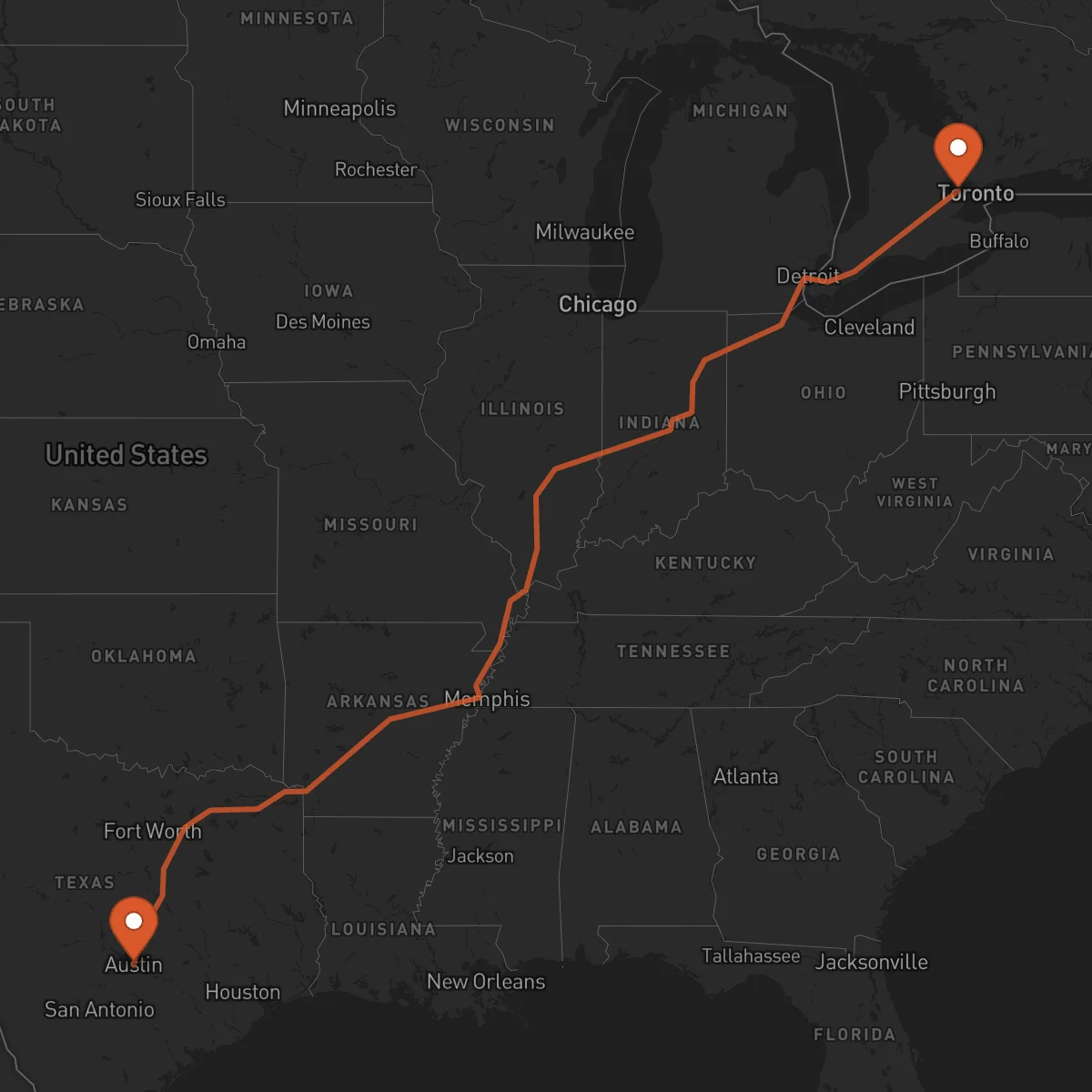
The Austin-Brampton corridor connects the thriving technology hub of Texas with Canada's major manufacturing center, covering approximately 2,177 kilometers through a critical North American trade route. This cross-border corridor represents a vital link between the United States and Canada, facilitating the movement of goods between two major economic powerhouses. The route traverses diverse landscapes and crosses international borders, requiring specialized logistics expertise to ensure seamless operations.
The corridor serves as a backbone for various industries, with technology and automotive sectors playing particularly significant roles. Austin's growing tech ecosystem produces high-value electronics and components, while Brampton's manufacturing facilities require consistent supply of parts and materials. The route also supports the movement of industrial equipment, consumer goods, and raw materials between these two dynamic markets.
Key transportation infrastructure along this corridor includes major highways such as I-35, I-29, and the 401 in Canada. The primary border crossing at Detroit-Windsor serves as the main gateway for cross-border freight, though alternative crossings are available depending on specific needs. Control Terrestre's expertise in managing cross-border operations ensures compliance with customs regulations, proper documentation, and efficient transit times for all shipments along this crucial trade corridor.
Services for this Route
Available services for the corridor Austin - Brampton
 Origin
Austin
Austin serves as a strategic logistics hub in central Texas, offering excellent connectivity through multiple interstate highways including I-35, which runs north-south through the city. The city's location provides access to major ports and distribution centers throughout Texas and the southern United States. Austin's international airport and expanding rail connections further enhance its position as a logistics center.
The city's economy is driven by technology, manufacturing, and healthcare sectors, with numerous tech companies establishing headquarters or major operations in the area. Austin's growing automotive industry, including Tesla's Gigafactory, contributes significantly to freight volumes. The presence of major universities and research institutions also supports a robust logistics ecosystem focused on high-tech and specialized cargo.
 Destination
Brampton stands as one of Canada's most important logistics and manufacturing centers, strategically located in the Greater Toronto Area near major international transportation hubs. The city's proximity to Toronto Pearson International Airport and its extensive network of highways, including the 401 and 410, provide exceptional connectivity for freight movement across Canada and into the United States.
The city's economy is heavily focused on advanced manufacturing, with numerous automotive parts suppliers, food processing facilities, and technology companies operating in the region. Brampton's industrial parks are home to major international corporations, creating consistent demand for reliable freight transportation services. The city's diverse industrial base requires specialized logistics solutions for various cargo types, from temperature-controlled food products to sensitive electronic components.










