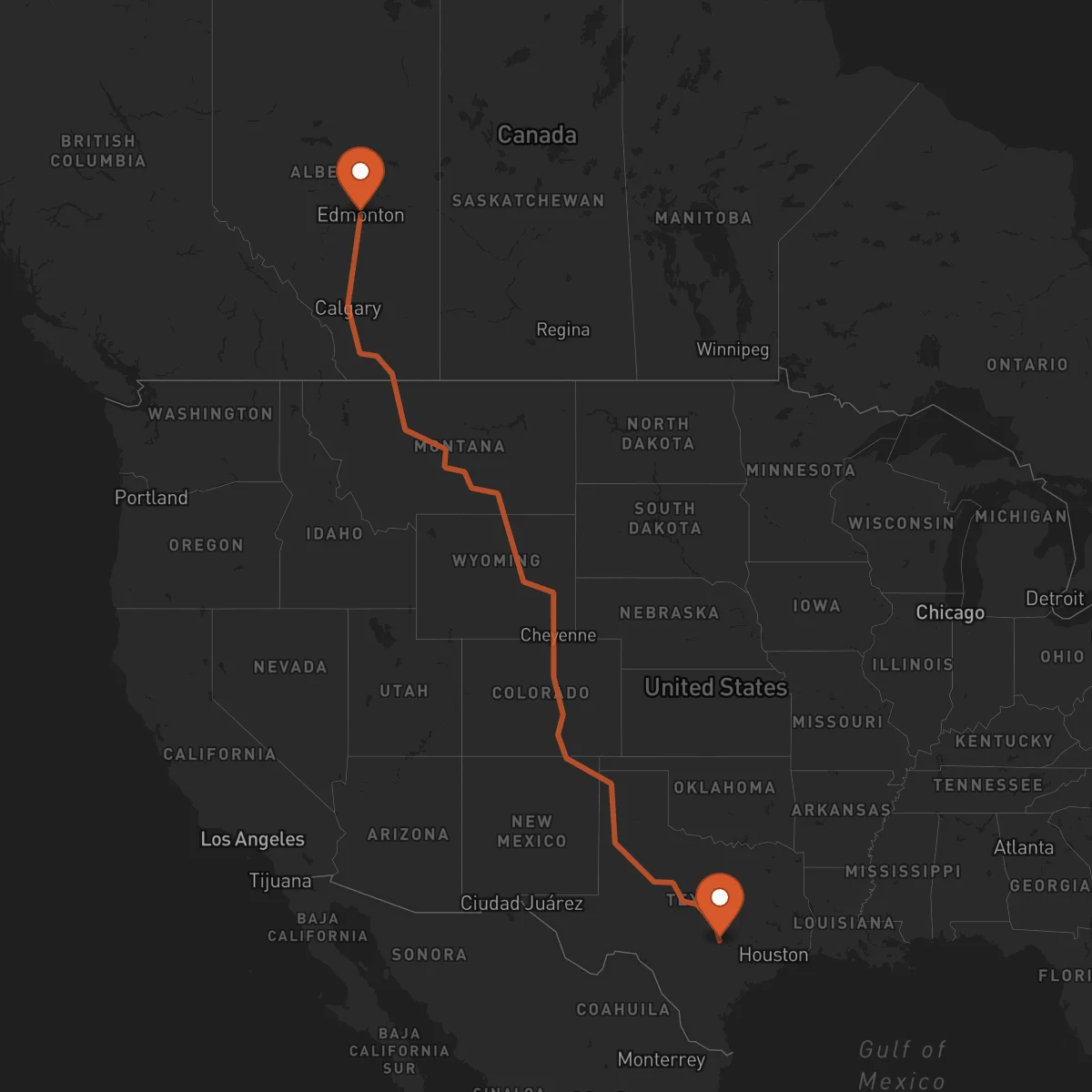
Edmonton to Austin
Austin → EdmontonFTL freight transportation service between Edmonton and Austin. Reliable logistics solutions for your business.
Route Description
Everything you need to know about the corridor Edmonton - Austin
The Edmonton to Austin corridor represents a vital cross-border freight route connecting Canada's Alberta province with the heart of Texas. This 2,883 km transportation link serves as a strategic artery for North American trade, facilitating the movement of goods between Canada's energy-rich northern region and Texas's diverse industrial base. The corridor traverses major economic zones, connecting key manufacturing centers with distribution hubs across both countries.
The route's significance stems from the complementary economic activities in both regions. Edmonton serves as a major logistics hub for Alberta's oil and gas sector, while Austin has emerged as a technology and manufacturing powerhouse. This corridor enables the seamless flow of specialized equipment, industrial machinery, and raw materials essential for both economies. The transportation infrastructure includes major highways such as I-35 and connecting routes through the central United States, providing reliable access for freight operations.
Control Terrestre specializes in managing cross-border freight movements along this corridor, offering comprehensive solutions that address the complexities of international shipping. Our expertise includes navigating customs requirements, managing documentation, and ensuring compliance with both Canadian and US regulations. We provide dedicated truckload services that maintain cargo integrity throughout the journey, with real-time tracking and professional handling of specialized freight needs. Our strategic partnerships with certified carriers ensure consistent service quality and reliable transit times for shipments between Edmonton and Austin.
Services for this Route
Available services for the corridor Edmonton - Austin
 Origin
Edmonton stands as a strategic logistics center in western Canada, serving as the primary gateway to Alberta's vast natural resources and industrial activities. Located along the North Saskatchewan River, Edmonton benefits from its position as a major transportation hub with extensive road networks connecting to northern Canada and the United States. The city's infrastructure includes major highways, rail connections, and proximity to Edmonton International Airport, facilitating multimodal freight operations.
The region's economy centers on energy production, with Alberta's oil sands operations requiring specialized logistics support for equipment and materials. Edmonton also hosts significant manufacturing, technology, and agricultural sectors, creating diverse freight transportation needs. The city's industrial parks and warehousing facilities provide robust infrastructure for distribution operations, while the Yellowhead Highway and other major routes offer direct connections to cross-border transportation networks.
 Destination
Austin
Austin has established itself as a dynamic logistics and economic center in central Texas, combining technology innovation with manufacturing and distribution capabilities. The city's strategic location in the Texas Triangle provides access to major markets across the southern United States, while its growing infrastructure supports expanding freight operations. Austin-Bergstrom International Airport and the Port of Houston's proximity enhance the region's multimodal transportation options.
The Austin metropolitan area has experienced rapid growth in technology, semiconductor manufacturing, and advanced industries, creating substantial demand for specialized freight services. The region's diverse economy includes healthcare, education, and creative sectors, requiring flexible logistics solutions. Austin's highway system, including I-35 and State Highway 130, provides efficient connections to major distribution centers and cross-border routes, supporting both domestic and international trade flows.










