Exporting to the United States sounds like the next natural step for a Mexican company that already has its local market consolidated. And it is. But between the first meeting with an American buyer and the first shipment that arrives without problems on the other side, there is a distance that very few explain to you honestly before you travel it.
What they do tell you
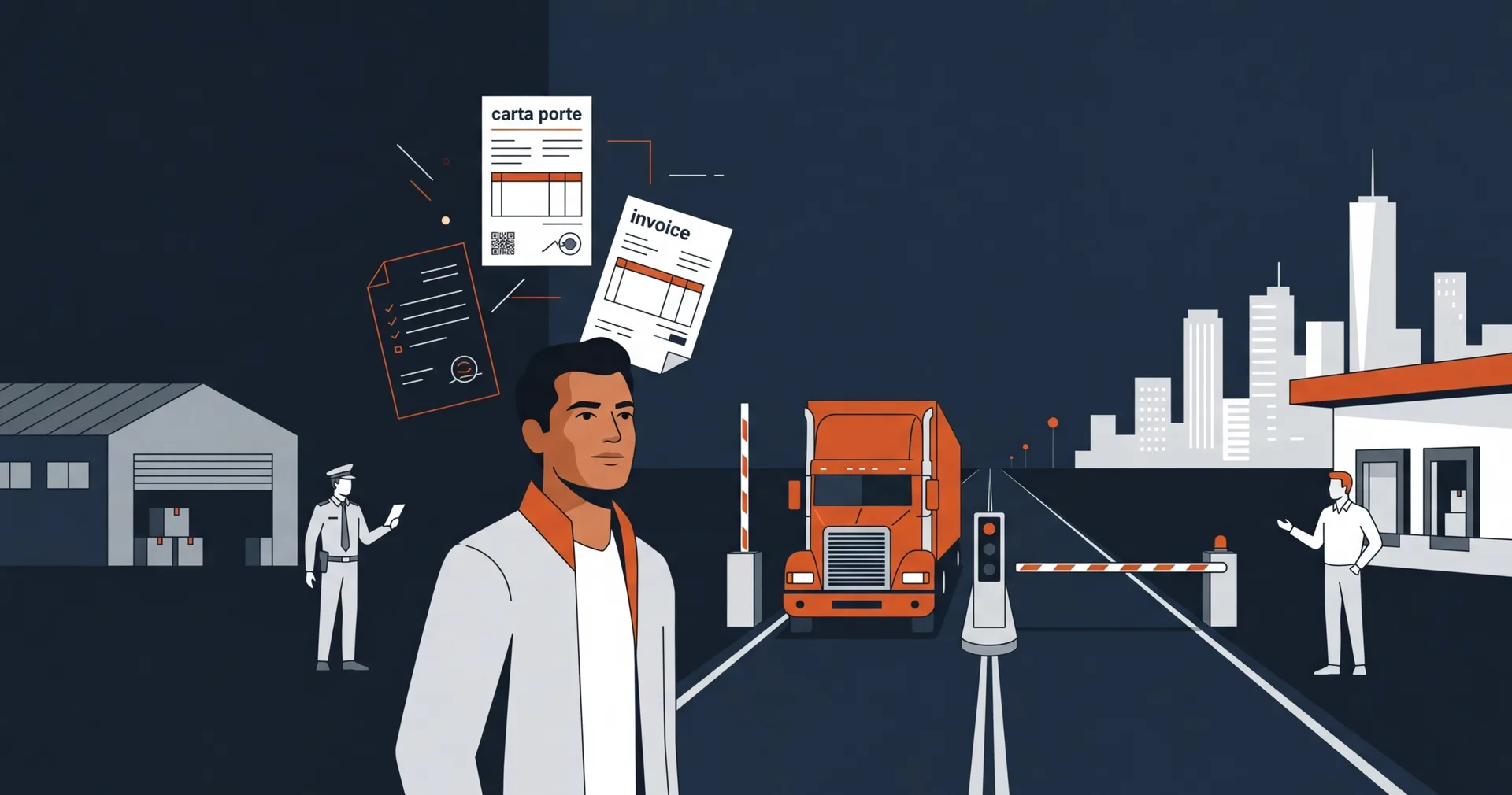
They tell you that you need a customs broker. They tell you that you have to comply with the regulations of the SAT and CBP. They tell you that the USMCA can give you tariff advantages if your product qualifies. They tell you that you need a commercial invoice, packing list, certificate of origin, and bill of lading.
All of that is true. And none of those things is what is going to cost you the most in the first few months.
What no one tells you
Your first shipment is going to have documentation errors
Not because you are careless. But because export documentation has a real learning curve and mistakes are only discovered when you are already at the border crossing.
An RFC captured incorrectly on the bill of lading, a merchandise description that does not exactly match the pedimento, a tariff code that your customs broker interprets differently than the CBP official — any of those errors can stop your shipment for hours or days. And that delay not only has a direct cost. It has a cost with your American buyer, who already promised that merchandise to their own customer.
The way to reduce this risk is not to be more careful — it is to do a test shipment before committing large volumes, and work with a customs broker who knows specifically your product category and your crossing point.
Your American buyer has delivery standards that are not in the contract
American buyers — especially those who buy for retail or manufacturing — have very specific delivery windows. Not "the week of the 15th." But "Tuesday the 15th between 8am and 11am at dock 4 with an appointment confirmed 48 hours in advance."
If you arrive outside that window, they can reject the delivery. If they reject it, you pay the return cost, the warehousing cost, and the cost of a second delivery — plus the damage to the commercial relationship you just started.
Before your first shipment, ask exactly what your buyer's delivery requirements are. Do not assume that "arriving that day" is enough.
The exchange rate is going to affect your margin more than you calculated
You quoted in dollars at a reference exchange rate. By the time you get paid — which in export can be 30, 60, or even 90 days later depending on the terms — the exchange rate may have changed enough to significantly affect your margin.
This is not a logistics problem, but it is a problem that logistics can make worse. If your shipment also had delays and your buyer applied a penalty, the impact on the real margin of that first sale can be very different from what you projected in Excel.
The Incoterm you choose changes everything
Many Mexican companies that export for the first time agree to EXW terms — the buyer picks up at your warehouse and takes care of everything. It seems like the most comfortable option because you reduce your responsibility.
The problem is that with EXW you lose control over the logistics process. If something goes wrong — the buyer's customs broker makes an error, the carrier they hired does not have the correct permits, there is a problem at the crossing — the impact reaches your commercial relationship even though it is not technically your responsibility.
Understanding Incoterms 2020 before negotiating your first export contract is not a technical detail — it is a strategic decision that affects your margin, your risk, and your relationship with the buyer.
Your cold chain or your special requirements get complicated at the border
If your product requires temperature control, special handling, or health documentation — such as food, pharmaceuticals, cosmetics, or agricultural products — the border crossing adds a layer of complexity that does not appear in any basic export guide.
The FDA has labeling, registration, and prior notice requirements for many product categories. The USDA regulates the entry of agricultural products. A product that perfectly complies with Mexican regulations can be stopped at the American border for a requirement that no one mentioned to you.
Before exporting any product with special regulatory requirements, you need to verify the entry requirements in the U.S. — not just the exit requirements in Mexico.
International freight pricing is more volatile than it seems
You quote the freight today. You close the contract with your buyer with a price that includes that cost. Three weeks later, when you go to dispatch, the freight went up 20% because there is saturation on your route or because the carrier no longer has availability on that date.
Volatility in international land transport rates is real and not always predictable. The way to reduce that risk is to work with carriers that offer rates with defined validity and that have guaranteed capacity on your main routes — not quote spot every time you have a shipment.
What you can control from the beginning
Make your first shipment small and with time to spare. Do not debut your export operation with the largest order you have ever had. Use the first shipment to learn the process, identify friction points, and adjust before volume makes every error more costly.
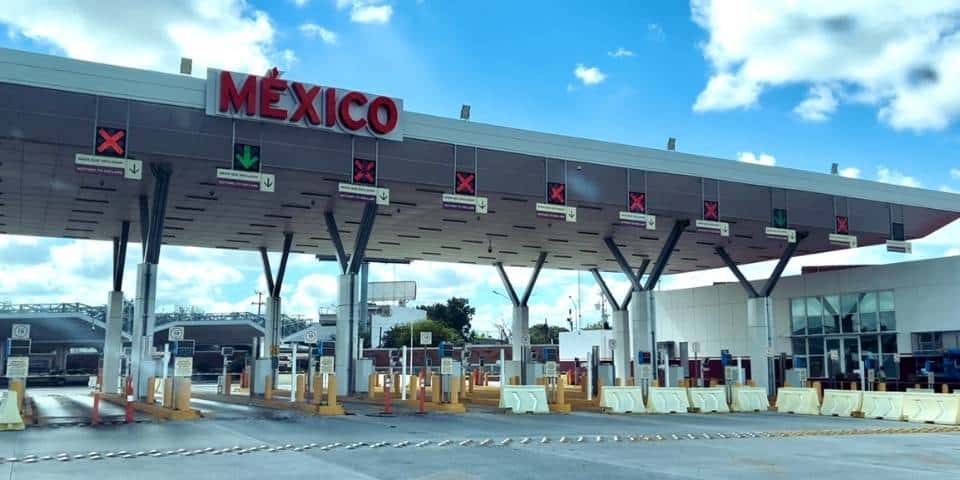
Choose your crossing point wisely. Nuevo Laredo, Ciudad Juárez, Tijuana, Nogales, Reynosa — each crossing has different characteristics in terms of volume, wait times, cargo type specialization, and service availability. The crossing closest to your warehouse is not always the most efficient for your type of product.
Work with a customs broker who knows your product. Not the cheapest one or the one someone from another industry recommended. One who has specific experience with your tariff category and can anticipate regulatory requirements before they stop you at the border.
Define your Incoterms before quoting, not after. The term you choose determines who pays what, who hires who, and who is responsible when something goes wrong. That has to be clear before the buyer receives your proposal.
Choose a carrier with real cross-border experience. Not one that "also does crossings." One whose core business is border operations, who has certified units, operators with verified backgrounds, and a documented process for each stage of the crossing.
Exporting is not difficult — but it is not just opening another market
The companies that export well to the U.S. are not necessarily the largest or the ones with the most resources. They are the ones that understand that exporting is a different operation than selling in Mexico — with its own rules, its own timelines, and its own risks — and that they prepare for that before the first order arrives.
The first shipment that arrives well builds trust. The first shipment that fails can cost much more than the value of that load.
At Control Terrestre, we support cross-border operations with documentation in order, real-time tracking, and knowledge of the process on both sides of the border. Request a quote or subscribe to our newsletter to receive practical content on export and logistics every week.