There is a number that came out in April that very few people in logistics are reading with the attention it deserves. Mexico climbed six positions in Kearney's Foreign Direct Investment Confidence Index — from 25th to 19th — one of the largest jumps globally this cycle. What that means for supply chains and for those moving freight in the Mexico–U.S. corridor is worth understanding well.
What the Kearney FDI Index is and why it matters
Kearney's FDI Confidence Index is an annual survey that measures the level of confidence of global executives to invest in different countries. It does not measure past investment — it measures future intent. It is, in that sense, a leading indicator of what is going to happen in manufacturing, infrastructure, and supply chains in the coming years.
Mexico rose from 25th to 19th place in the 2026 Kearney FDI Index, marking one of the biggest global jumps alongside Singapore, as investors increasingly target production centers closer to end markets. Alcaldes de México
The jump reflects growing confidence in Mexico's role as a key manufacturing and supply chain partner for the U.S., even as global capital flows become more selective amid tariffs, shifts in industrial policy, and geopolitical risk. Alcaldes de México
To put this in context: we are not talking about a minor move. Rising six positions in an index where the top twenty spots are contested by economies like Germany, Japan, South Korea, and the Gulf nations is a signal of real repositioning in the global perception of Mexico as an industrial investment destination.
What's behind the number
Investors are prioritizing technological capabilities and innovation, alignment with industrial policy — cited as critical by 84% of executives — and supply chain resilience and diversification. At the same time, 88% of surveyed executives said they plan to increase foreign direct investment over the next three years. Alcaldes de México
What these figures say in practical terms is that global companies are not waiting for all uncertainties to resolve before committing investment. They are betting that Mexico will remain a central piece of North American manufacturing — and they are moving before the space fills up.
The context of the USMCA review in July also matters here. Despite strong nearshoring interest, companies are adopting a wait-and-see stance as negotiations unfold, delaying major capital commitments. That means a portion of the investment that is already committed in intent has not yet materialized in concrete announcements — and that when the USMCA is resolved, we are likely to see a wave of plant announcements, expansions, and supplier relocations concentrated in a relatively short period. Transporte.mx
What this means for industrial logistics in Mexico
When foreign direct investment in manufacturing rises, what follows is very predictable for those of us operating in logistics: more plants, more suppliers, more freight volume, more demand for industrial transportation, and more pressure on corridors that are already tight.
For logistics providers, that could mean a new wave of plant announcements and supplier relocations, increased border congestion and capacity constraints, and a greater need for cross-border compliance and customs expertise. Alcaldes de México
The geography of that growth is not uniform either. The states that already concentrate industrial activity — Nuevo León, Coahuila, Tamaulipas, Jalisco, Guanajuato, Querétaro — will see the most direct impact. But growth is also reaching states that historically were not major industrial destinations, creating demand for transportation in corridors where infrastructure and specialized carrier capacity are still developing.
The risks that investors are also seeing
The optimism of the index does not mean there are no real concerns about Mexico. Investors continue to flag risks that could affect Mexico's trajectory, including competition from industrial policies across countries, political and regulatory volatility, and concerns about security and rule of law. Alcaldes de México
These risks are not abstract for day-to-day logistics operations. Highway security remains a real variable in certain corridors. Regulatory volatility — such as the 2026 customs regulation changes — generates compliance costs that disproportionately affect smaller operators. And uncertainty around the USMCA is creating a strange duality in the market: high investment intent, contained execution while clarity on the rules is awaited.
For companies moving freight in this environment, that translates into a market where demand is growing structurally but where operational risks are also elevated. This is not a time to operate with wide error margins.
What this tells us about the corridor ahead
We have been hearing for years that Mexico has a historic opportunity with the reorganization of global supply chains. What the Kearney index confirms is that this opportunity is not being ignored by global investors — they are voting with their capital intent.
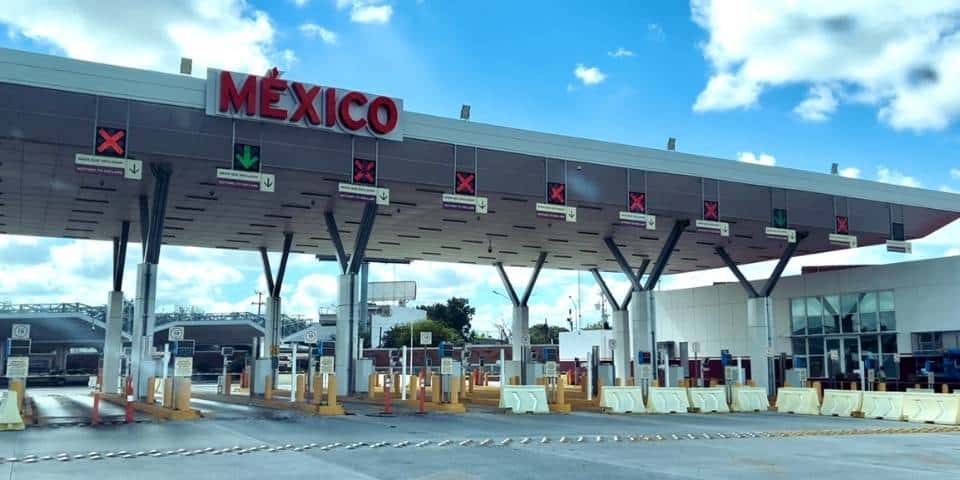
For carriers, brokers, and shippers, this could mean sustained growth in Mexico–U.S. cross-border freight volumes, increased importance of Laredo, Texas and other key border crossings, and greater exposure to policy-driven volatility, including tariffs and regulatory changes. Alcaldes de México
At Control Terrestre, we see this moment for what it is: a signal that the corridor in which we have been operating for years will continue to grow in importance and volume. For us, that means continuing to invest in capacity, in verified carriers, and in processes that allow us to move industrial freight with the reliability that this growth will demand.
If your company is in the middle of this process — evaluating expansion, supplier relocation, or growth in import and export volumes — let's talk. Request a quote or subscribe to our newsletter to receive practical content on industrial logistics and foreign trade every week.