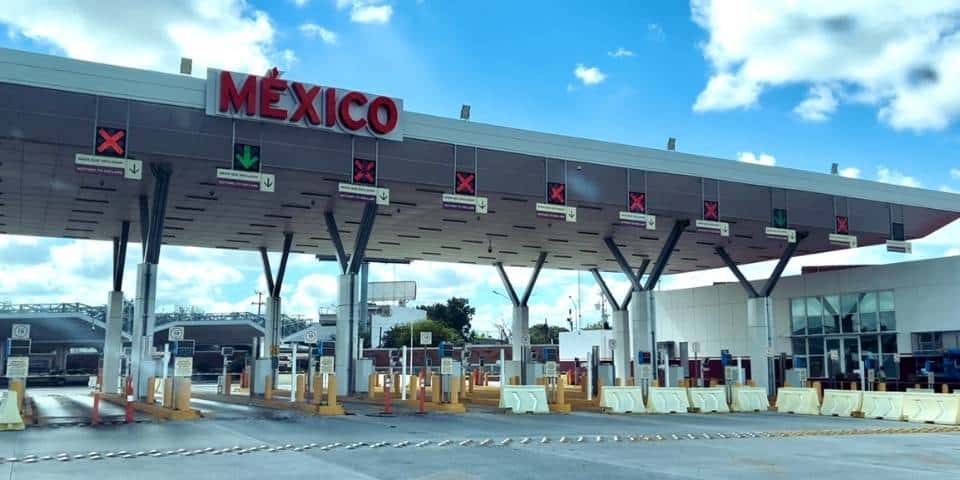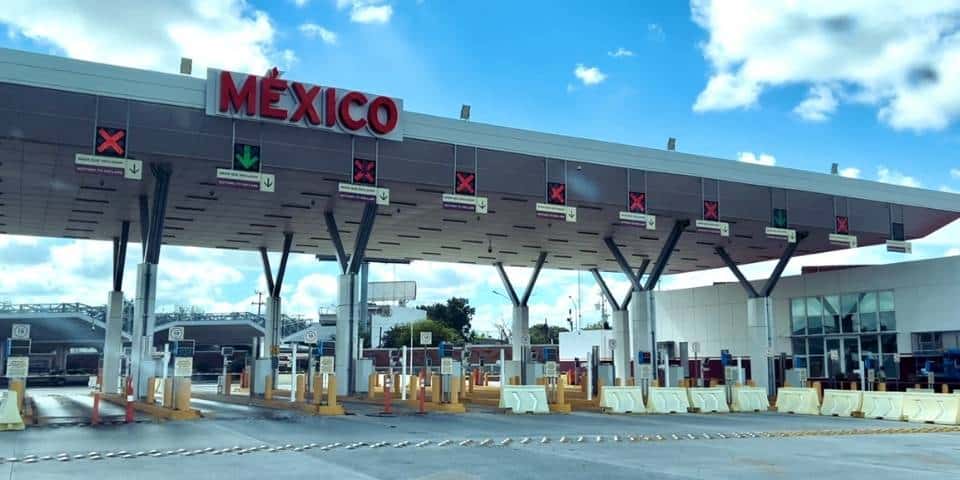
Between 12,000 and 14,000 commercial trailers cross the World Trade Bridge in Laredo every day. On peak days, that number climbs higher. It is the busiest land port in the United States, handling more than 40% of bilateral Mexico–U.S. trade, and it is processing a volume that grew 28% between 2019 and 2024. Infrastructure has not kept pace. And that gap already has real operational consequences for any company moving freight through that corridor.
What Is Happening in Laredo Today
Bilateral Mexico–U.S. trade grew 3.9% in 2025 to reach $872.8 billion, according to the Bureau of Transportation Statistics. Nearshoring commitments in automotive, electronics, and pharmaceutical manufacturing ensure sustained freight growth throughout 2026 and beyond. Laredo's share of that trade — currently estimated at over 40% according to BTS data — may shift marginally as alternative crossings expand, but its infrastructure advantages and the density of its carrier network will maintain its leadership position. The Logistics World
Despite warehouse developments exceeding $100 million and the expansion of carrier networks, the pace of construction cannot match the rate of trade growth. Manufacturers should expect continued congestion pressure, particularly during Q4 peak periods and following any policy-driven increase in inspections. The Logistics World
Put another way: trade growth is outpacing the capacity of available infrastructure. And that equation has no quick fix.
Why Laredo Concentrates So Much Volume
Laredo is not the only border crossing between Mexico and the United States, but it has a combination of advantages that others do not easily replicate. Its location connects directly to the main industrial corridors of northern Mexico — Monterrey, Saltillo, the Bajío region — and to the interstate highways that distribute to Chicago, Dallas, Houston, and the rest of the American market. It has the densest network of customs brokers, freight brokers, and logistics operators of any land crossing on the continent. And it has the combination of bridges — the World Trade Bridge for commercial cargo, the Colombia-Solidarity Bridge, and the international rail bridge — that allows it to handle volumes that no other land port in North America processes.
The corridor handles the highest-value manufactured goods flowing between the two countries: auto parts, vehicles, computers, cell phones, electronics, and commercial vehicles. When a single border crossing processes this volume of high-value, time-sensitive cargo, any disruption — whether from weather, policy changes, or infrastructure failures — has cascading effects on supply chains across the continent. Agenciaaduanal
The World Trade Bridge Expansion: Necessary but Not Sufficient
Laredo, in coordination with the Texas Department of Transportation and the Federal Highway Administration, released a preliminary environmental assessment for the expansion of the World Trade Bridge — the city's busiest commercial crossing. The project would add a new eight-lane northbound bridge and expand the existing span with two additional southbound lanes to improve traffic flow and capacity. The CBP port director noted that the current configuration disrupts traffic flow when trucks move into inspection areas, contributing to congestion during peak periods. MexicoIndustry
This expansion is the most visible response to the capacity problem in Laredo — and it is good news. But it has two important limitations that logistics operators need to understand. The first is that infrastructure projects at international border ports take years, not months. Between the environmental assessment, approval processes, financing, and construction, we are talking about a multi-year horizon before the additional capacity is operational. The second is that the bridge expansion solves part of the problem — the crossing lanes — but does not resolve the bottlenecks in CBP inspection areas, in the processing capacity of customs brokers during periods of high demand, or in the road infrastructure providing access to the bridge within the city of Laredo.
Meanwhile, volume keeps growing.
What This Means for Your Operation Today
The concentration of high-value, time-sensitive goods through a single corridor creates both efficiency and vulnerability. Manufacturers benefit from established broker networks, frequent carrier routes, and competitive drayage pricing. They also face systemic risk when congestion, inspections, or policy changes disrupt the flow. Agenciaaduanal
For companies that move freight through Laredo on a regular basis, there are concrete decisions that can be made today to reduce exposure to that vulnerability.
The first is C-TPAT certification. The World Trade Bridge expansion added four new inspection booths, bringing the total to 15 and increasing capacity by 36%. The approximately 2,000 FAST trucks that cross the World Trade Bridge each day have their own dedicated lane. Carriers without FAST access compete for the remaining capacity alongside all of the corridor's spot volume. In a crossing that is already under pressure, that difference in transit time is real and growing. The Logistics World
The second is crossing diversification. While Laredo dominates Mexico–U.S. land freight, alternative crossings in Eagle Pass, El Paso, and Pharr offer overflow capacity. For operations with some flexibility in the crossing point, having a documented diversification strategy — with time and cost analysis by alternative crossing — is an operational asset that many companies do not have until they urgently need it. Agenciaaduanal
The third is documentation preparation. Reducing dwell time at the border starts with paperwork. Shippers who invest in electronic pre-clearance, C-TPAT certification, and advance manifest filing can move through inspection faster and more predictably than those who rely on manual processes. Agenciaaduanal
The Bigger Picture
Nearshoring has transformed Laredo from an active border crossing into a logistics bottleneck under active reconstruction. That transformation is not temporary — it is the new state of the corridor. Infrastructure will improve, but always lagging behind volume growth. The Logistics World
Companies that understand this do not wait for the problem to resolve itself. They invest in the certifications that give them preferential access, diversify their crossing points, work with carriers who know the corridor in depth, and maintain documentation at a level that minimizes processing time at every crossing.
At Control Terrestre, we operate in Laredo with C-TPAT-certified carriers and up-to-date knowledge of corridor conditions, because the difference between crossing in 2 hours or 8 hours at the busiest land port in North America starts long before you reach the toll booth. Request a quote or subscribe to our newsletter to receive practical logistics and foreign trade content every week.