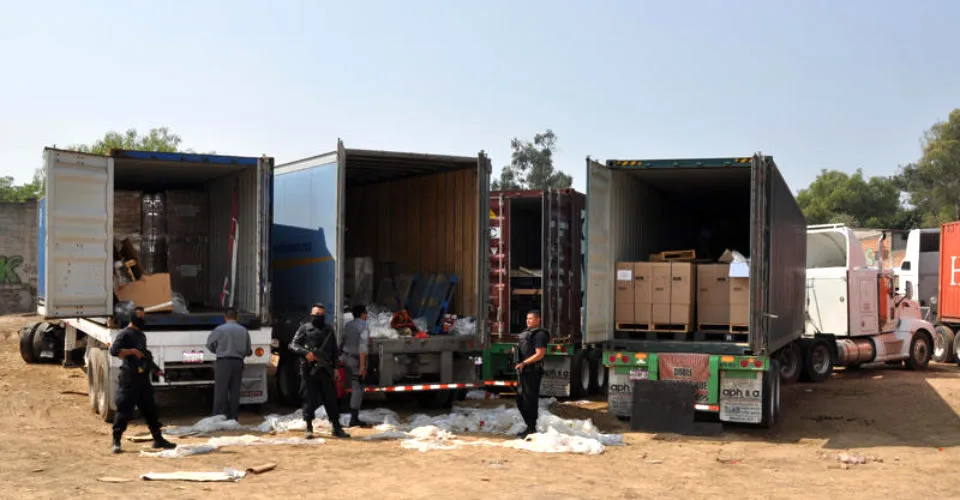
The Port of Lázaro Cárdenas, the second most important on the Mexican Pacific coast in container movement and a leader in the import of new automobiles, is currently facing a critical situation. Since the early hours of September 4th, a small group of carriers has blocked access to the fiscal enclosure in protest of long wait times, which they claim exceed 36 hours.
The main reason appears to be the tightening of customs inspections, which has caused significant delays in loading and unloading goods. This situation is aggravated by the lack of adequate infrastructure for waiting, such as restrooms, food, or sheltered spaces from the sun and rain, complicating the operation of carriers and directly affecting their economy.
Impact on land logistics
For transportation companies and freight forwarders, fast trip rotation is essential to maintain stable income. Each prolonged delay not only generates economic losses, but also affects the entire logistics chain, from dispatch at the port to final delivery.
In this context, Control Terrestre works closely with clients and logistics partners to minimize risks and delays, through:
Planning alternative routes when port congestion is anticipated.
Coordination with customs agents to expedite procedures.
Constant communication with carriers to anticipate potential delays.
Negotiation and dialogue with authorities
The Administration of the National Port System (Asipona) Lázaro Cárdenas acknowledged the protest, but assured that the flow of goods leaving the port remains operational. They are also coordinating with customs and terminals to establish a dialogue and restore full access to the port, reducing the impact on logistics.
This type of situation highlights the importance of planning and resilience in the supply chain, as even a limited blockade can affect multiple actors, from carriers to companies that depend on timely deliveries.
Practical example
Imagine a Mexican company expecting to receive a shipment of auto parts in Lázaro Cárdenas under the port-to-plant modality. The blockade causes a delay of 36 hours:
Without coordination, the goods could accumulate additional delays in land transportation and distribution.
With the intervention of a logistics partner like Control Terrestre, alternative routes can be planned, carriers can be informed about schedules, and unloading can be coordinated to minimize the impact on production.
This example demonstrates how proactive land logistics management can make a difference in the face of unexpected problems at ports.
What to consider?
The blockade in Lázaro Cárdenas shows that logistics does not depend only on port operation, but also on planning, communication, and adaptation to unforeseen events. For companies that depend on punctual deliveries, having a strategic ally in land transportation is crucial to guarantee efficiency and minimize losses.
At Control Terrestre, we are ready to optimize your operations, adapt to changes in real time, and ensure that your goods arrive on time, even in unexpected situations at ports.
📩 Subscribe to our weekly newsletter to receive news, analysis, and advice on logistics, transportation, and international trade.