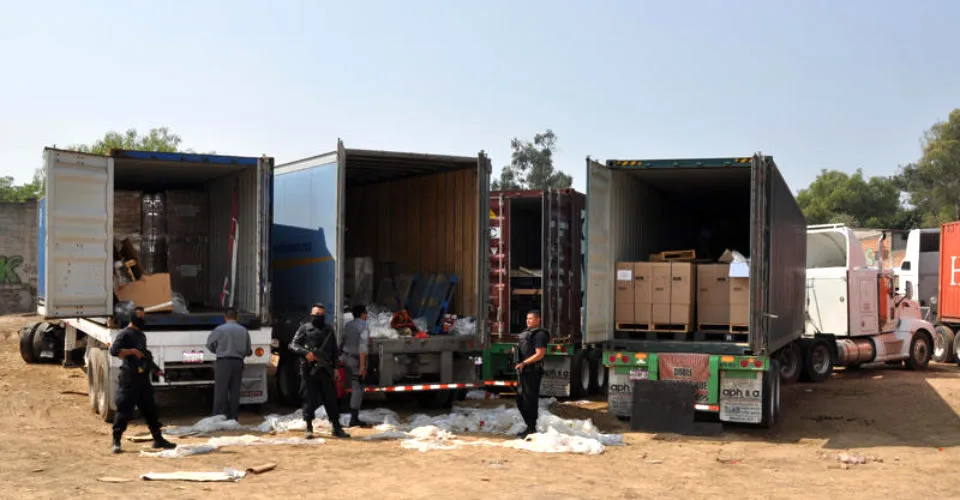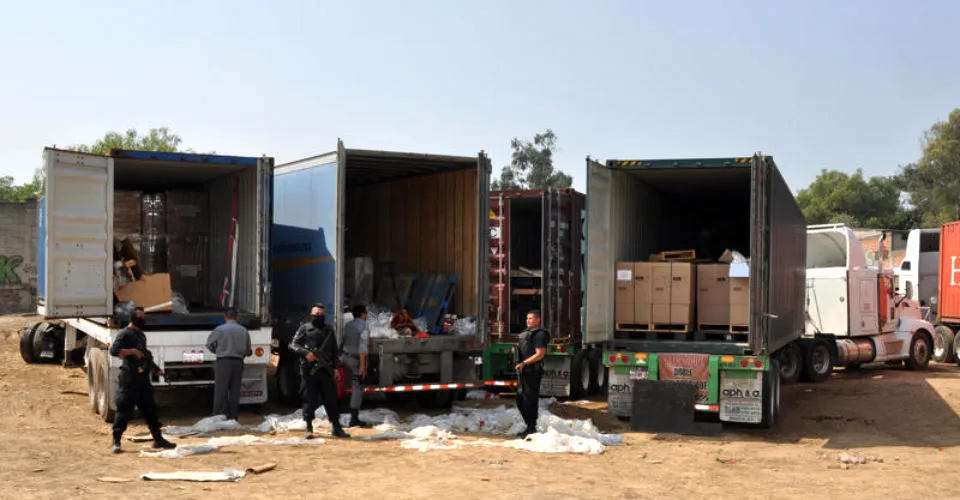
Cargo theft in Mexico is not a new problem. What is changing is the gap between companies that manage it as a real operational risk and those that still treat it as bad luck. That gap is measured in losses, canceled policies, and clients who stop trusting.
The scale of the problem
Mexico is one of the countries with the highest incidence of cargo theft globally. Figures vary depending on the source and methodology, but they all point in the same direction: stolen merchandise in transit represents billions of pesos in annual losses for the trucking industry and for companies that move cargo.
What makes this problem especially complex is that it is not a single type of incident. There is theft with direct violence against the driver, there is theft through deception where someone assumes a false identity to take the cargo without physical confrontation, there are route diversions where the unit appears in a location different from the one programmed, and there are cases where the theft occurs with participation from within the chain — whether from the driver, the origin warehouse, or the destination point.
Each modality requires a different response. And the companies that are reducing their incidents are the ones that understand that distinction.
Why certain routes and types of cargo concentrate risk
Not all of Mexican territory has the same level of risk for cargo transportation. There are corridors that historically concentrate a disproportionate share of incidents — certain federal highways in the Bajío, specific stretches in the northeast, and some areas near ports and border crossings.
The type of cargo also matters enormously. Electronics, cigarettes, alcohol, pharmaceuticals, branded apparel, and high-value food products are categories that account for a much larger percentage of thefts than their share of total transported cargo volume. It is no coincidence — these are products that can be sold quickly in informal markets with relatively little risk to the thief.
Companies that regularly move these categories and do not have specific security protocols for them are operating with a level of risk that is not reflected in their freight rate or their loss budget.
How companies with fewer incidents operate differently
Years of operating on the Mexico–U.S. corridor reveal a clear pattern: companies with lower theft incidence are not necessarily the largest or those with the highest security budget. They are the ones that have turned prevention into a daily operational process, not a reactive response.
The first thing that sets these companies apart is driver verification. Not as a hiring formality — as an ongoing process. The driver's criminal record is a starting point, but what really makes the difference is follow-up: what the driver does during downtime on long routes, whether their behavior patterns change, whether there are signs of contact with people outside the normal operational circle. Companies with C-TPAT and OEA certification have formal protocols for this — but good companies do it regardless of whether or not they hold the certification.
The second is active route monitoring, not just passive tracking. There is a significant difference between having GPS on the unit and having someone actively monitoring route deviations, unscheduled stop times, and unusual movement patterns. GPS records. Active monitoring detects. And in cargo theft, detection speed is what determines whether the cargo is recovered or not.
The third is route design with a security mindset. This does not mean completely avoiding risk zones — in many cases that is impossible given the origin and destination of operations. It means not making unnecessary stops in high-risk areas, not scheduling nighttime arrivals at delivery points without security, not using the same schedules and routes in a predictable and repetitive way, and having documented alternative routes for when there is risk information on the main corridor.
The fourth is information management. Companies with fewer incidents are very careful about who knows what cargo is on which unit, what time it leaves, and by which route. Information about high-value shipments circulates within a very small circle. Not because of generalized distrust — but because thefts involving internal complicity almost always start with an information leak that someone inside the chain considered harmless.
C-TPAT and OEA certification: more than a stamp
Many companies see C-TPAT certification on the U.S. side and its OEA equivalent in Mexico as an advantage in crossing times — and it is, FAST lanes significantly reduce dwell time. But what is less mentioned is that the certification process forces companies to document and verify their security procedures in a way that, on its own, already reduces the risk of incidents.
To obtain and maintain C-TPAT, a transportation company must demonstrate that it verifies its drivers' backgrounds, has unit inspection protocols, controls physical access to its facilities, has procedures for reporting incidents, and trains its personnel in cargo security on a regular basis. These are not arbitrary requirements — they are exactly the controls that separate companies with low incidence from those with high incidence.
What to do when a theft occurs
Despite all controls, thefts happen. What sets well-prepared companies apart is not only that they have fewer incidents — it is that when one occurs, they know exactly what to do in the first few hours.
The first step is immediate notification to all parties: the client, the insurance company, and the corresponding authorities. Notification speed has a direct impact on the likelihood of cargo recovery and on the validity of the insurance claim. Most policies have very specific notification windows — some as short as 24 hours for certain types of theft.
The second step is not to move or alter anything that could serve as evidence until the insurance adjuster arrives and the authorities have filed the corresponding report. This is the error that most frequently invalidates insurance claims — someone moves the merchandise or the vehicle with good intentions and destroys the chain of evidence.
The third is activating the client communication protocol. A cargo theft is a crisis moment in a business relationship — and how communication is managed in the first hours largely determines whether the relationship survives the incident.
The conversation you should be having with your carrier
If you move high-value cargo or high-risk categories in Mexico and have not had a specific conversation about security with your carrier, that is a blind spot in your operation.
The questions that should have clear answers: what driver verification protocol do you have? How do you monitor routes — reactively or actively? Do you have documented alternative routes for the highest-risk corridors? What is your incident history over the past 12 months on the routes you would use? Do you have C-TPAT or OEA certification?
A carrier that can answer these questions specifically and with evidence is a carrier that has turned security into a process. One that responds with generalities is probably improvising.
At Control Terrestre we operate with documented security protocols, verified drivers, and active real-time monitoring — because on the Mexico–U.S. corridor, cargo security is not an optional differentiator. It is part of the basic service. Request a quote or subscribe to our newsletter to receive practical content on ground logistics every week.