Tulsa to Sioux Falls
Sioux Falls → TulsaFTL freight transportation service between Tulsa and Sioux Falls. Reliable logistics solutions for your business.
Route Description
Everything you need to know about the corridor Tulsa - Sioux Falls
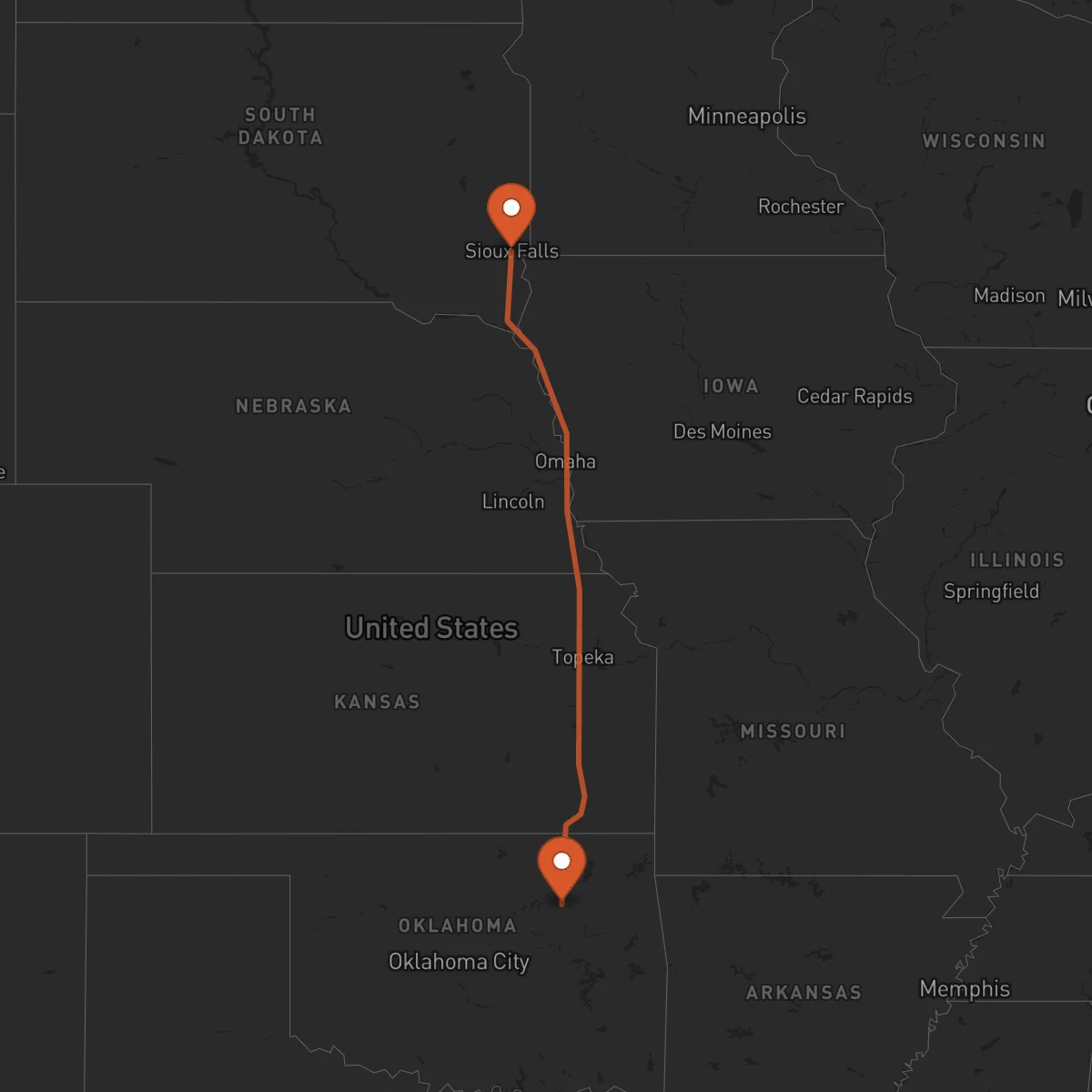
The logistics corridor between Tulsa, Oklahoma and Sioux Falls, South Dakota represents a vital connection between two dynamic economic centers in the Midwest. This 824-kilometer route traverses the heart of America's industrial and agricultural regions, facilitating the movement of goods between Oklahoma's energy and manufacturing hub and South Dakota's growing financial and healthcare sectors. The corridor's strategic importance continues to grow as both cities expand their economic influence in the region.
The region's economic landscape is characterized by complementary industries that create consistent freight demand. Tulsa's economy, historically rooted in energy and aerospace, has diversified into advanced manufacturing and logistics services. Sioux Falls, meanwhile, has emerged as a financial services center and regional healthcare hub. This economic diversity generates a steady flow of specialized freight moving between the two cities, from industrial equipment and manufacturing components to healthcare supplies and financial documents.
Major transportation infrastructure supports this corridor, with Interstate 29 and Interstate 90 forming the primary freight routes. These highways connect to secondary routes that provide access to industrial parks and distribution centers in both cities. The route passes through key economic centers including Kansas City and Omaha, offering opportunities for transloading and consolidation. Control Terrestre leverages this infrastructure to provide reliable full truckload services, ensuring your cargo moves efficiently between Tulsa and Sioux Falls regardless of seasonal weather conditions or traffic patterns.
Services for this Route
Available services for the corridor Tulsa - Sioux Falls
 Origin
Tulsa
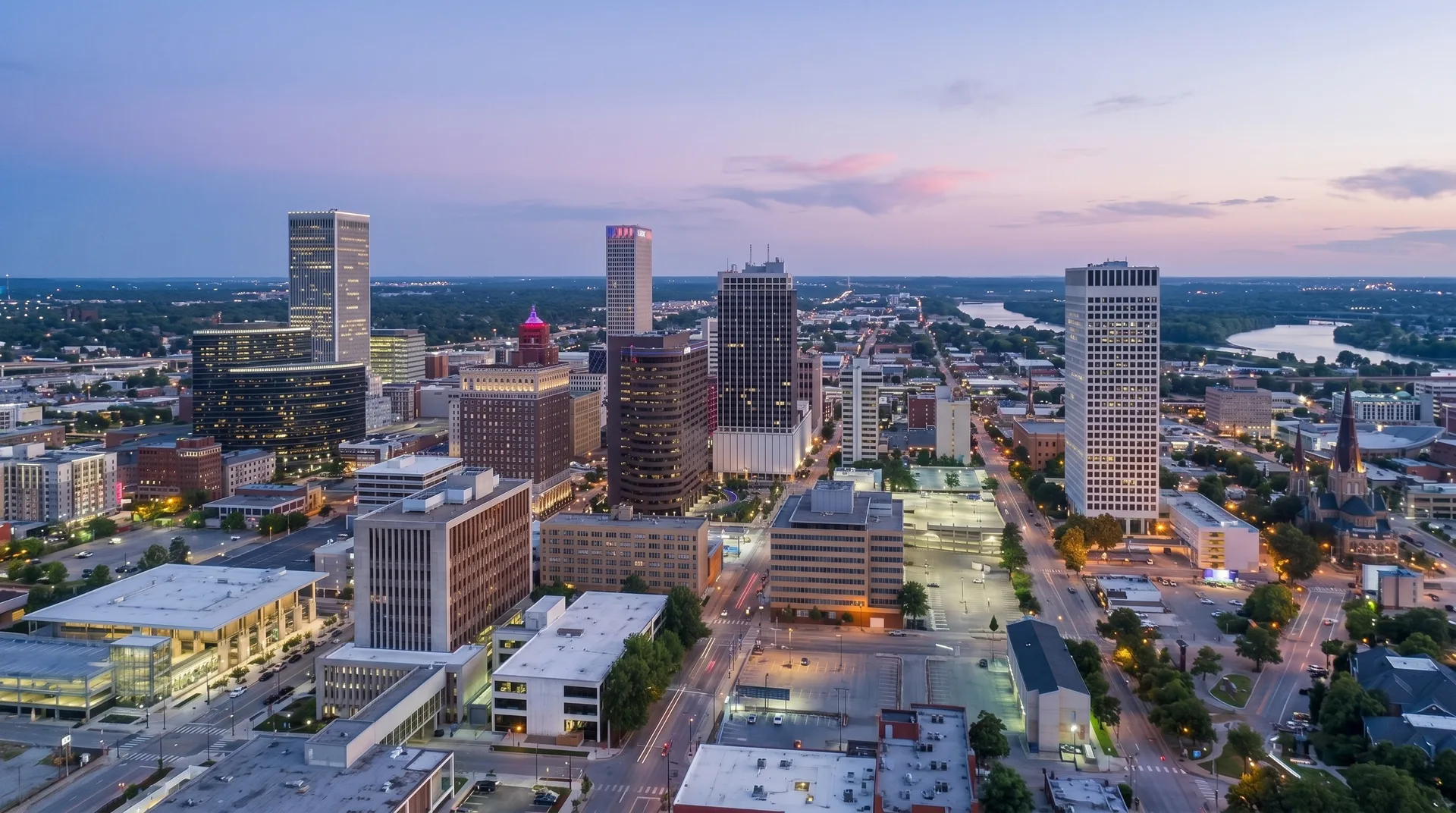
Tulsa, Oklahoma serves as a strategic logistics hub in the southern plains, benefiting from its central location and robust transportation infrastructure. The city's economy is anchored by energy, aerospace, and advanced manufacturing sectors, with major employers including American Airlines, ONEOK, and Williams Companies. Tulsa's logistics infrastructure includes the Tulsa International Airport, multiple rail terminals operated by BNSF and Union Pacific, and extensive highway connections including I-44 and I-244. The Port of Catoosa, located nearby, provides inland waterway access to the Arkansas River system, creating multimodal shipping options for businesses.
 Destination
Sioux Falls
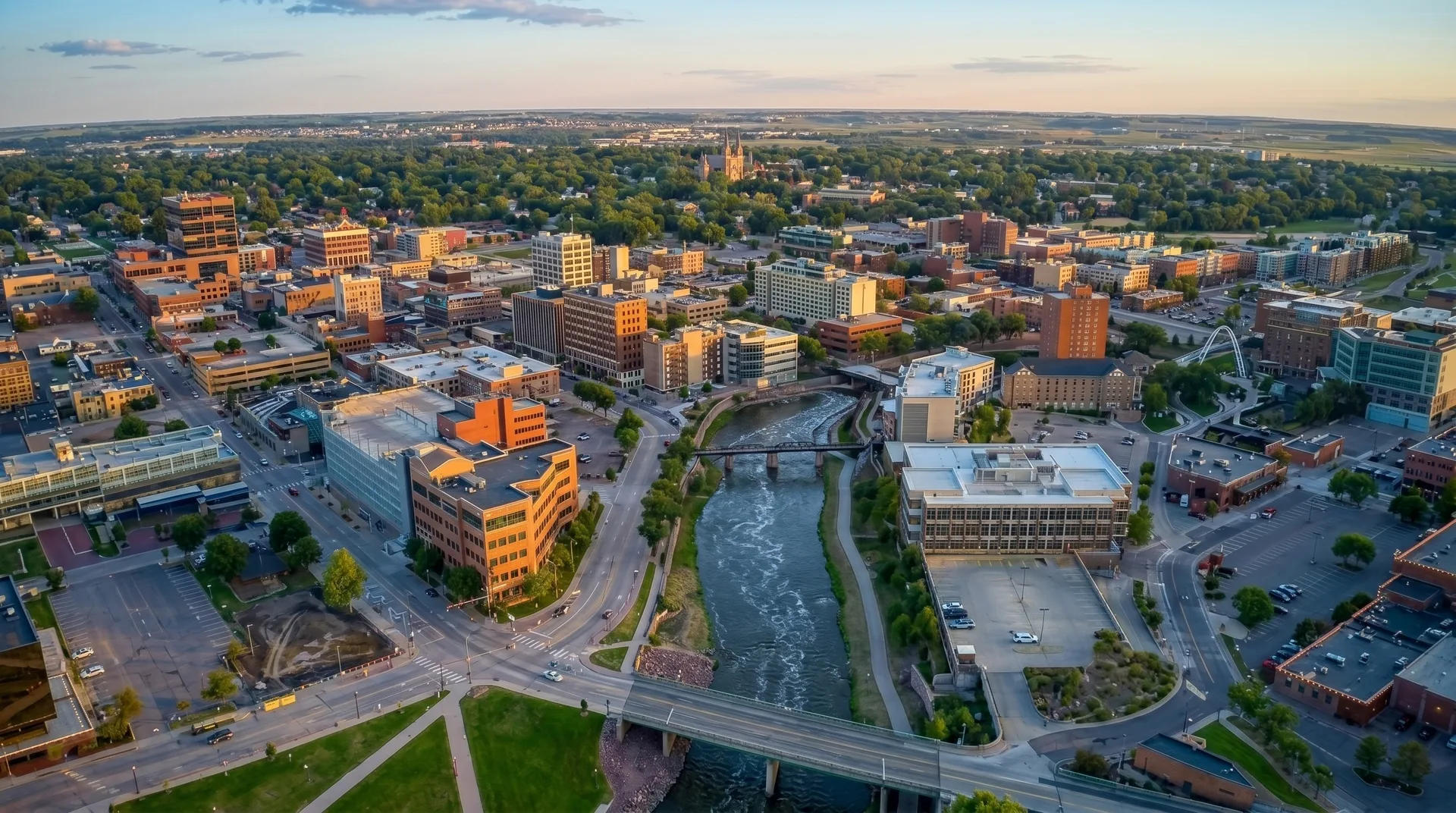
Sioux Falls, South Dakota has established itself as a strategic logistics center in the northern plains region, driven by its growing financial services and healthcare industries. The city hosts major operations for companies like Citibank, Wells Fargo, and Sanford Health, creating consistent demand for specialized freight services. Sioux Falls' transportation infrastructure includes the Sioux Falls Regional Airport, rail service from BNSF and Canadian Pacific, and excellent highway access via I-29 and I-90. The city's central location makes it an ideal distribution point for serving the upper Midwest, with proximity to major markets in Minneapolis, Omaha, and Des Moines.










