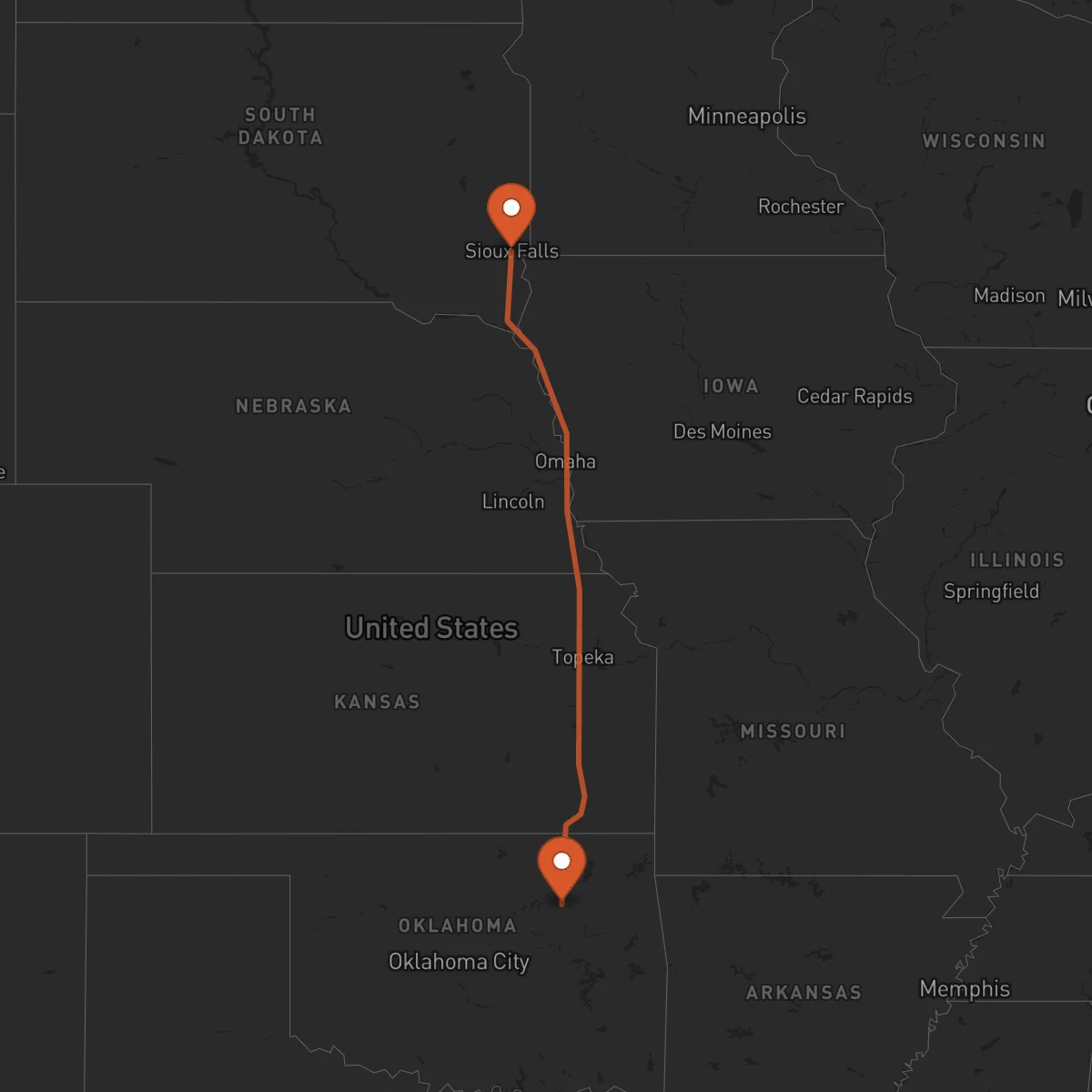
Sioux Falls to Tulsa
Tulsa → Sioux FallsFTL freight transportation service between Sioux Falls and Tulsa. Reliable logistics solutions for your business.
Route Description
Everything you need to know about the corridor Sioux Falls - Tulsa
The logistics corridor between Sioux Falls, South Dakota, and Tulsa, Oklahoma, represents a vital connection between the Upper Midwest and the South Central United States. This 824-kilometer route traverses the heart of America, linking two dynamic economic regions and facilitating the movement of goods across multiple state lines. The corridor serves as a critical artery for freight transportation, connecting the manufacturing and agricultural strengths of the Dakotas with the energy, aerospace, and logistics hub of Tulsa and the broader Oklahoma region.
The economic significance of this corridor is substantial, as it connects regions with complementary industrial profiles. Sioux Falls serves as a major financial services center for the region and benefits from its proximity to agricultural production areas, while Tulsa stands as a key player in the energy sector and has developed a diverse industrial base including aerospace manufacturing, telecommunications, and logistics services. This complementary economic structure creates substantial freight traffic moving in both directions along the corridor.
The primary industries utilizing this transportation route include agricultural products and food processing moving from the northern plains, manufacturing goods from Sioux Falls' industrial sector, energy-related equipment and materials traveling to and from Tulsa's petroleum industry, and a significant volume of consumer goods supporting retail distribution networks across both regions. The corridor also handles specialized freight including oversized equipment for energy projects and temperature-sensitive products requiring refrigerated transport.
Control Terrestre facilitates seamless operations on this corridor through our extensive network of certified carriers and specialized equipment. Our dedicated service ensures that shipments move efficiently across the 824 kilometers, with real-time tracking and professional handling throughout the journey. We understand the unique requirements of each industry served by this route and provide tailored solutions that maintain the integrity and timely delivery of freight between Sioux Falls and Tulsa.
Services for this Route
Available services for the corridor Sioux Falls - Tulsa
 Origin
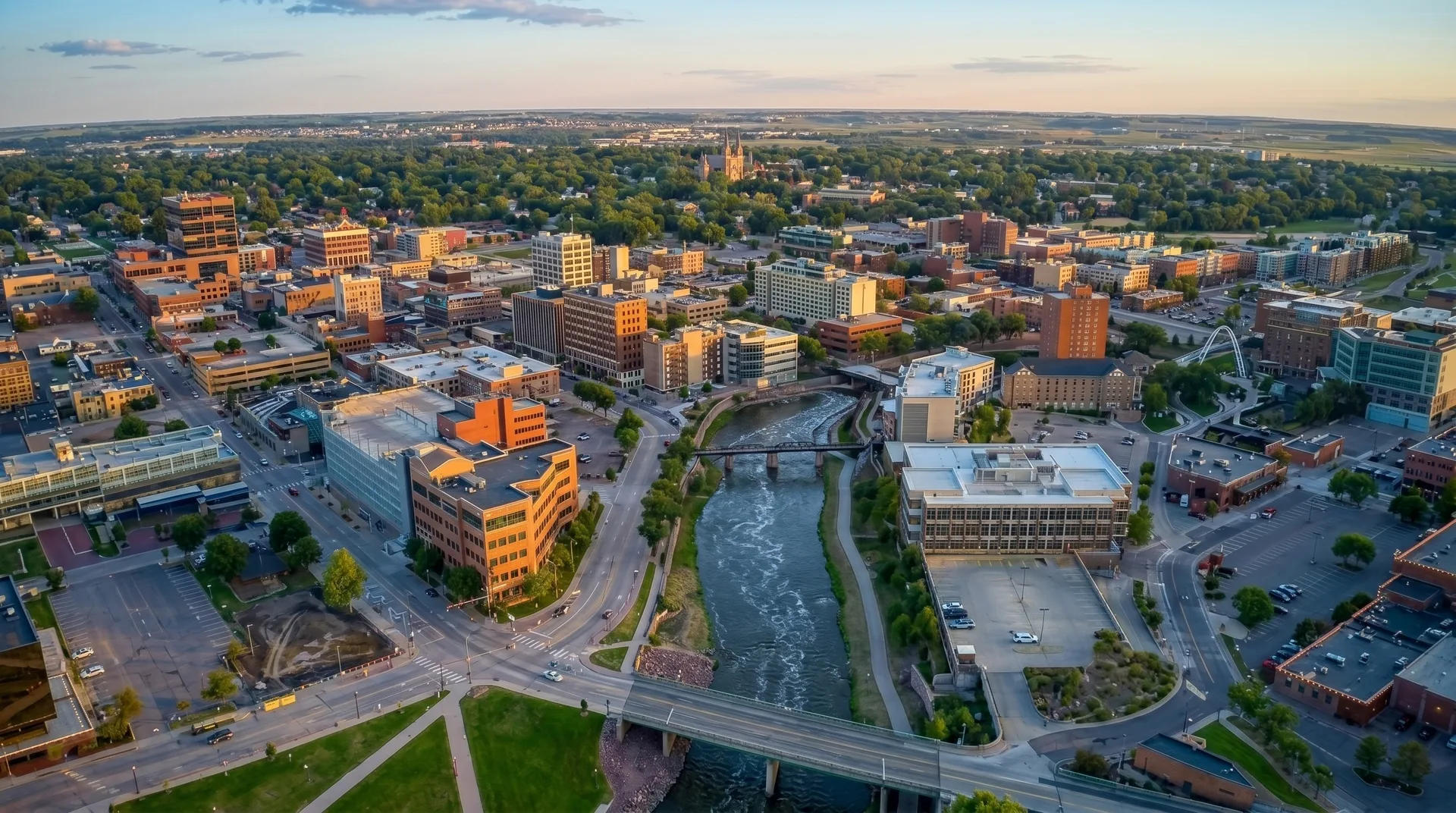
Sioux Falls
Sioux Falls, South Dakota, serves as a strategic logistics hub in the Upper Midwest, benefiting from its central location and well-developed transportation infrastructure. The city has emerged as a major financial services center for the region, hosting the headquarters of several national financial companies. Its economy also features strong healthcare, retail, and manufacturing sectors, creating diverse freight generation patterns. Sioux Falls' position near the intersection of I-29 and I-90 provides excellent connectivity to major markets across the Midwest and beyond. The city's logistics infrastructure includes multiple warehousing facilities, a growing intermodal terminal, and proximity to the Sioux Falls Regional Airport, supporting both domestic and international supply chain operations.
 Destination
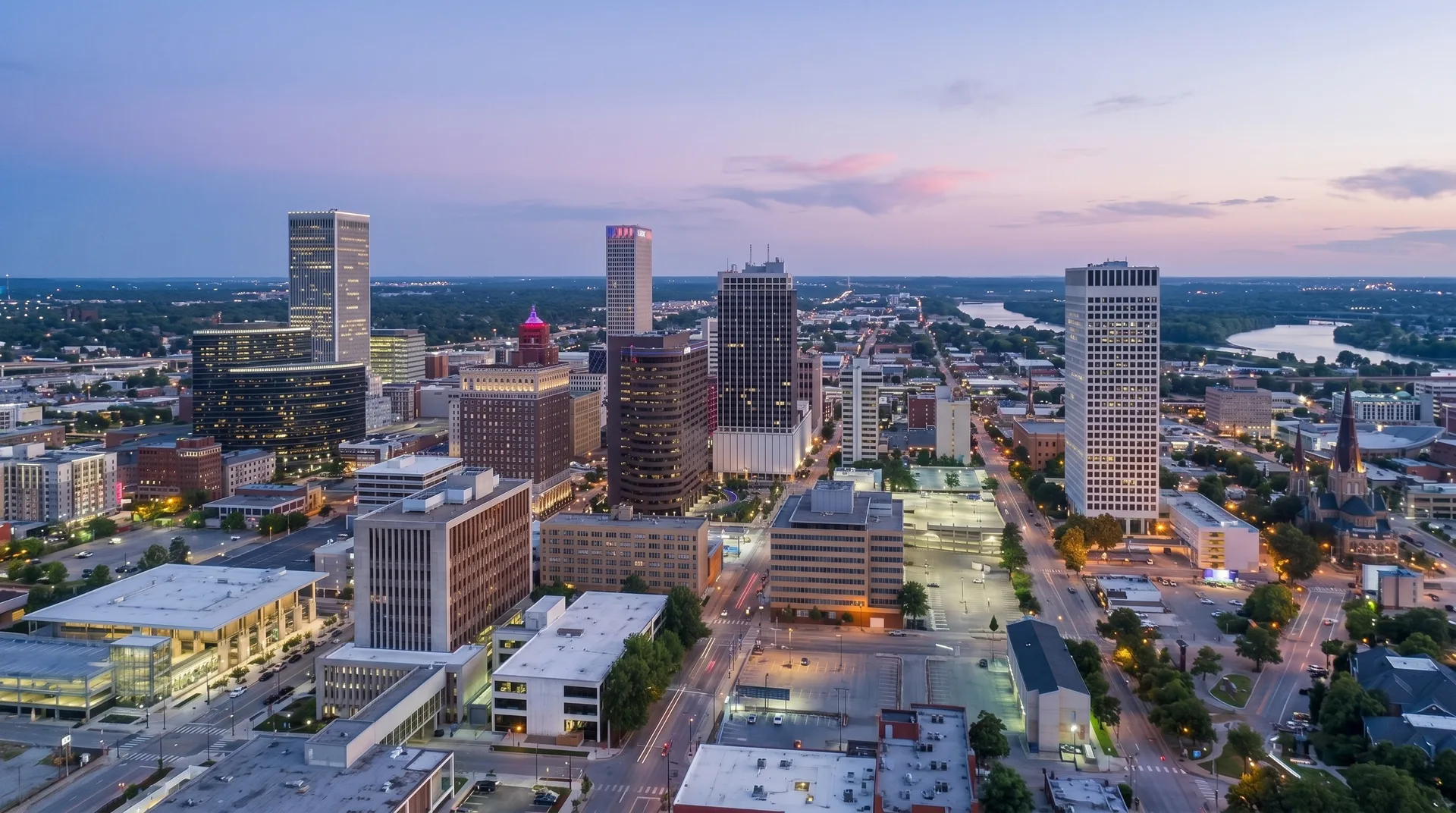
Tulsa
Tulsa, Oklahoma, stands as a strategic logistics and industrial center in the South Central United States, with a rich history in the energy sector that continues to influence its economic development. The city has successfully diversified its industrial base to include aerospace manufacturing, telecommunications, and advanced technology sectors. Tulsa's logistics advantages stem from its location at the crossroads of major transportation routes and its development as a regional distribution hub. The city benefits from extensive highway networks, including access to I-44 and I-244, as well as the Tulsa Port of Catoosa, providing multimodal transportation options. The presence of several major corporations and distribution centers in the Tulsa area generates consistent freight demand, making it a key destination for logistics operations moving through the central United States.










