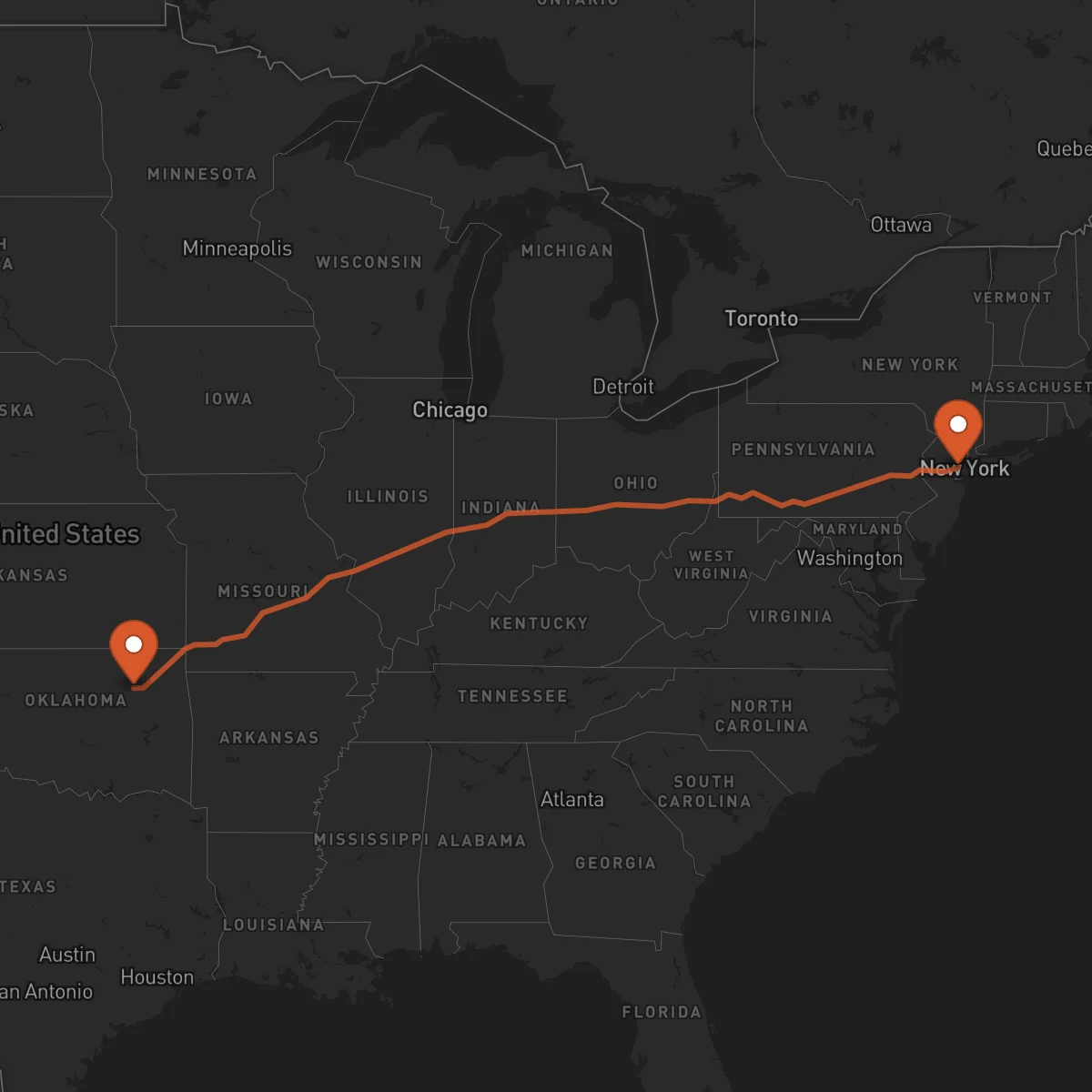
Tulsa to Newark
Newark → TulsaFTL freight transportation service between Tulsa and Newark. Reliable logistics solutions for your business.
Route Description
Everything you need to know about the corridor Tulsa - Newark
The logistics corridor between Tulsa, Oklahoma, and Newark, New Jersey, represents a vital connection across the heart of the United States, spanning approximately 1,961 kilometers. This route traverses the country from the central plains to the bustling East Coast, linking the industrial Midwest with the major ports and markets of the Northeast. The corridor is strategically significant for businesses requiring reliable transportation of goods between the central and eastern United States, facilitating commerce across multiple states and economic regions.
The economic importance of this corridor is underscored by the diverse industrial landscapes it connects. Tulsa, situated in the energy-rich state of Oklahoma, serves as a hub for the oil and gas industry, aerospace manufacturing, and logistics operations. Moving eastward, the route passes through key industrial states such as Missouri, Illinois, Indiana, and Ohio, before reaching the highly industrialized and densely populated New York-New Jersey metropolitan area. Newark, located just across the Hudson River from Manhattan, is a critical logistics and distribution center, home to the Port Newark-Elizabeth Marine Terminal, one of the largest container shipping facilities in the Port of New York and New Jersey.
This corridor primarily serves industries including energy and petrochemicals, automotive manufacturing, aerospace, consumer goods, and retail distribution. The route's significance is amplified by its connection to major consumer markets and international trade gateways on the East Coast. Control Terrestre leverages this strategic corridor to provide full truckload (FTL) transportation services, ensuring efficient and reliable freight movement from Tulsa's industrial base to Newark's distribution hubs. Our expertise in managing long-haul domestic transportation allows us to optimize routes, maintain cargo security, and deliver consistent service across this extensive cross-country journey.
Services for this Route
Available services for the corridor Tulsa - Newark
 Origin
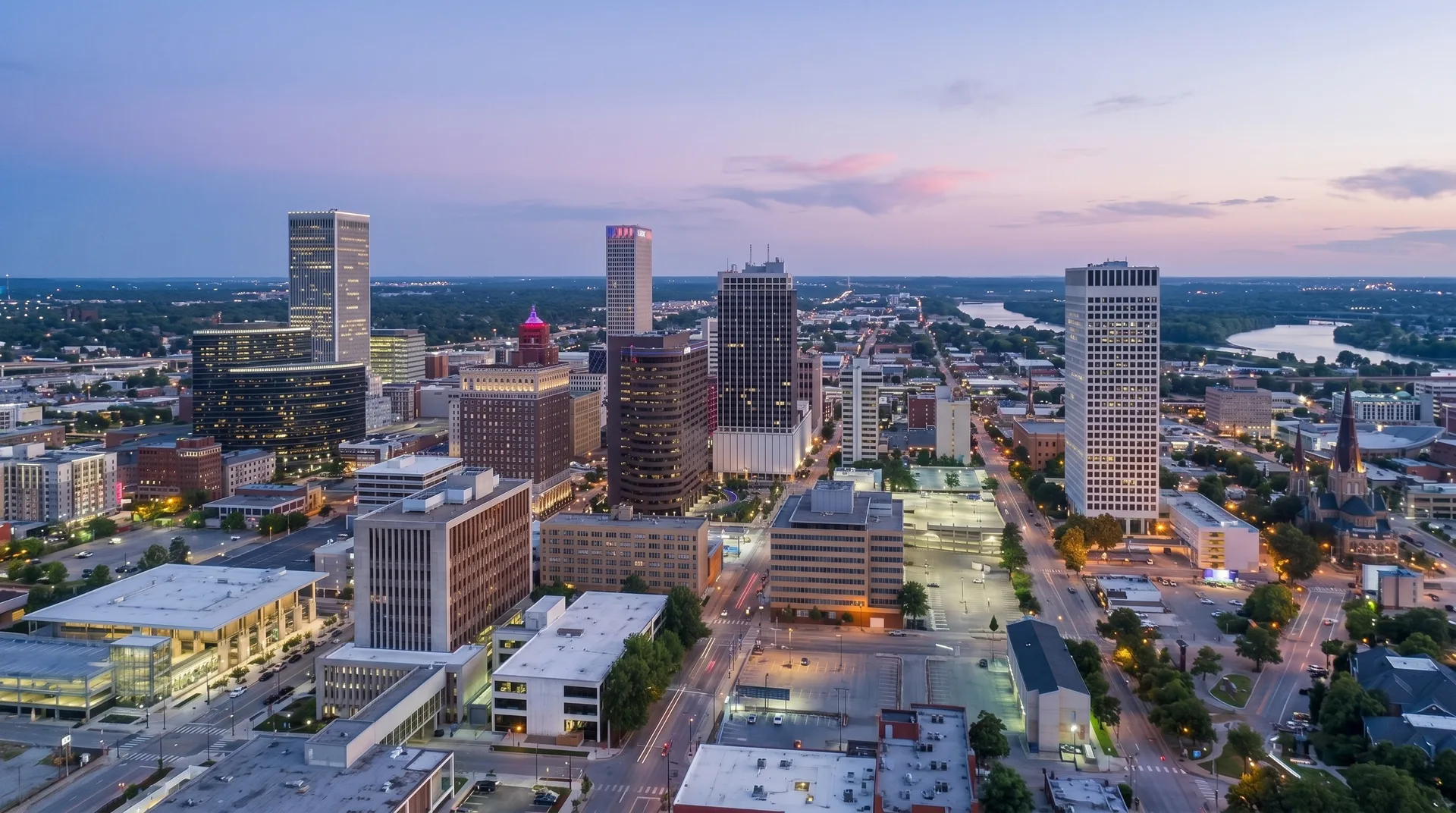
Tulsa
Tulsa, Oklahoma, stands as a strategic logistics hub in the central United States, benefiting from its location in the heart of the country's energy corridor. The city is a major center for the oil and gas industry, with numerous energy companies maintaining significant operations in the area. Beyond energy, Tulsa has diversified its economy to include aerospace manufacturing, with companies like American Airlines maintaining large maintenance facilities, and a growing presence in logistics and transportation services. The city's infrastructure supports efficient freight movement, with access to major highways including Interstate 44 (I-44) running east-west and Interstate 244 (I-244) connecting to other regional routes. Tulsa International Airport and the Tulsa Port of Catoosa on the McClellan-Kerr Arkansas River Navigation System further enhance the city's multimodal transportation capabilities, making it an ideal origin point for long-haul freight shipments across the United States.
 Destination
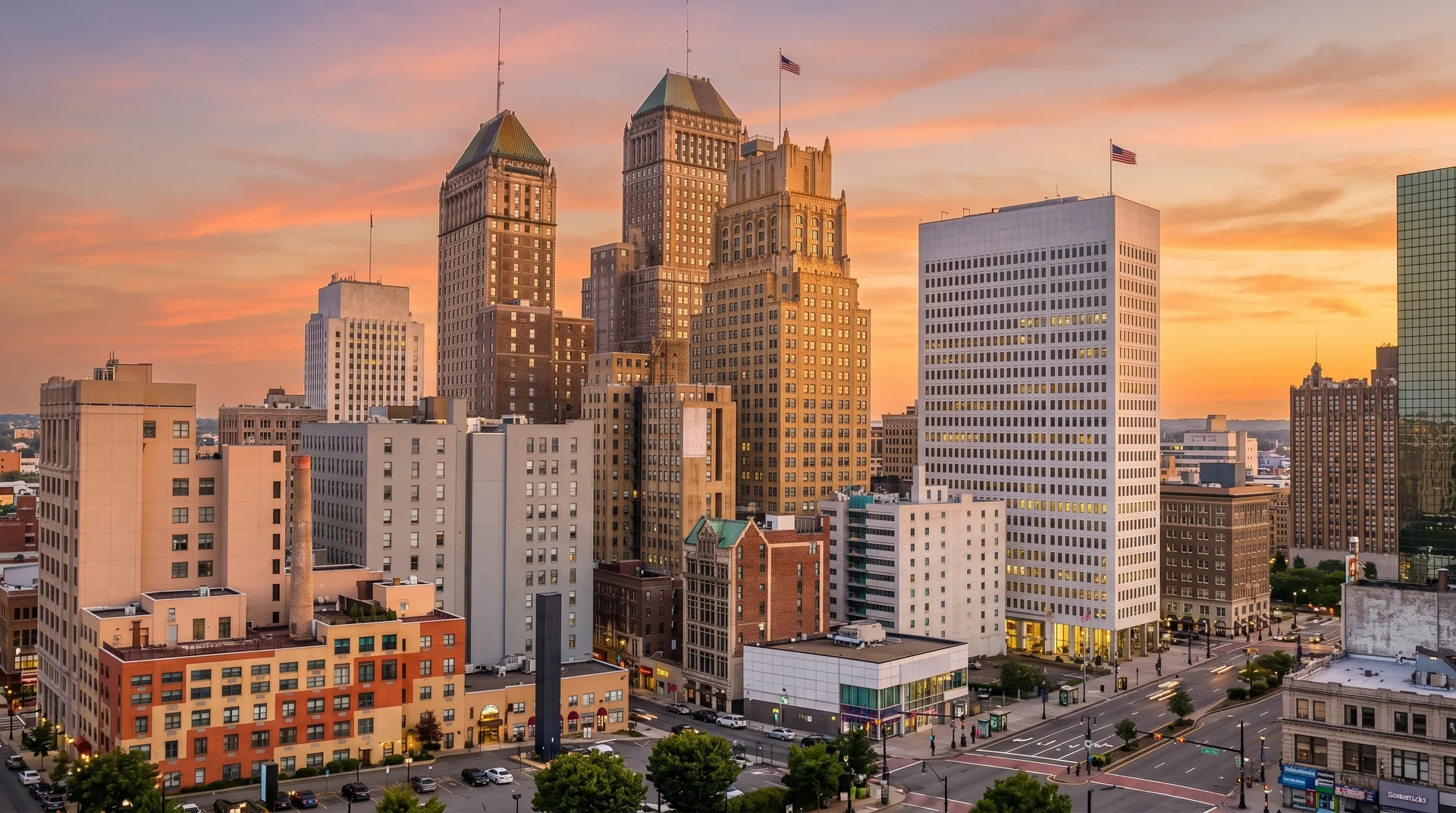
Newark
Newark, New Jersey, occupies a strategic position as a major logistics and distribution center on the East Coast of the United States. Located in the heart of the New York-New Jersey metropolitan area, Newark provides unparalleled access to one of the largest consumer markets in the country. The city is home to the Port Newark-Elizabeth Marine Terminal, the largest container port on the East Coast and a critical gateway for international trade. Newark Liberty International Airport serves as a major cargo hub, facilitating air freight operations. The region's extensive transportation infrastructure includes major highways such as the New Jersey Turnpike (I-95), I-78, and I-280, providing seamless connections to New York City, Philadelphia, and other key markets. Newark's industrial base spans manufacturing, pharmaceuticals, financial services, and retail distribution, making it a crucial destination for freight transportation and a key node in the national supply chain network.










