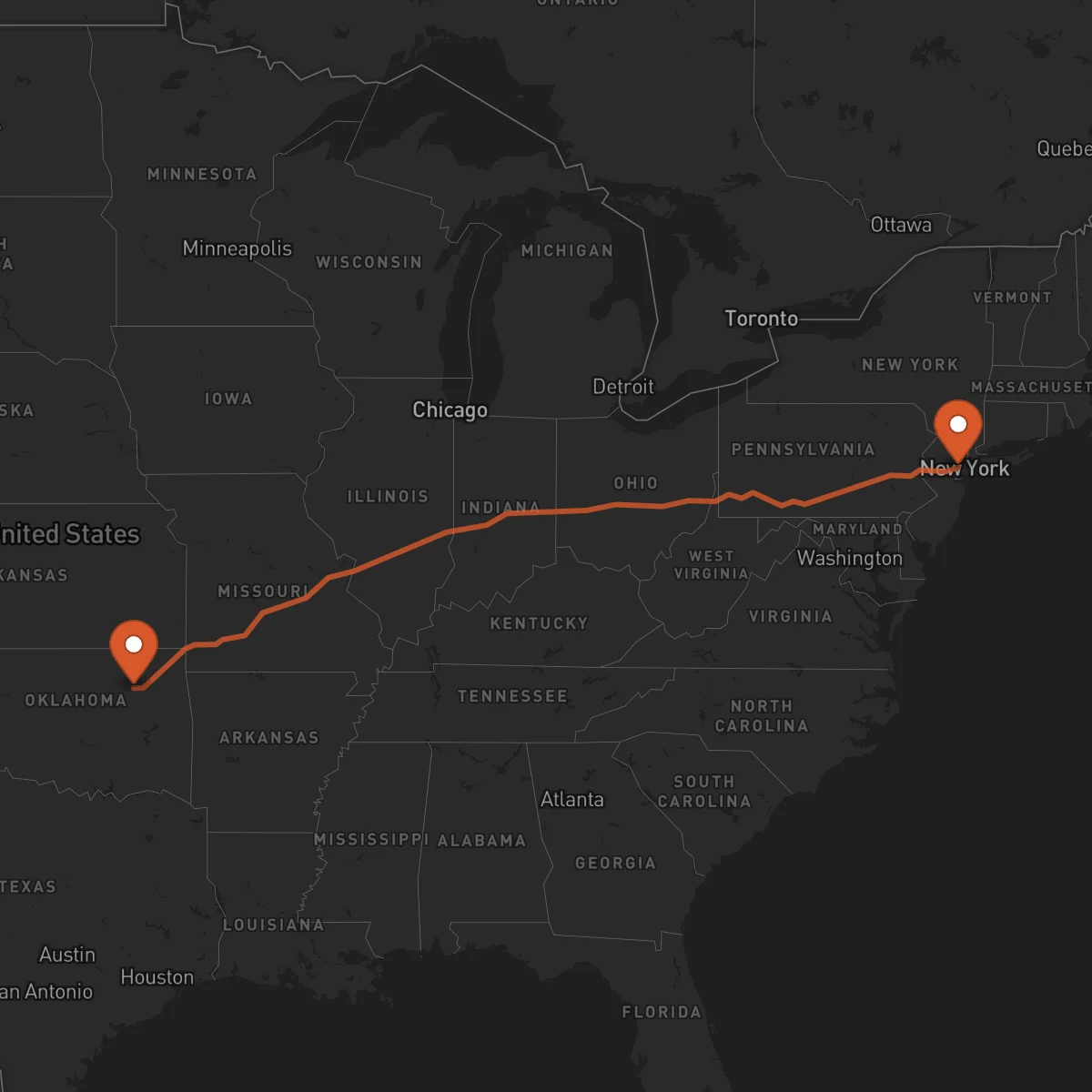
Newark to Tulsa
Tulsa → NewarkFTL freight transportation service between Newark and Tulsa. Reliable logistics solutions for your business.
Route Description
Everything you need to know about the corridor Newark - Tulsa
The logistics corridor between Newark, New Jersey, and Tulsa, Oklahoma, represents a vital connection between the Northeast's industrial hub and the energy and manufacturing center of the Central United States. This 1,961 km route traverses the heart of America, linking two of the nation's most dynamic economic regions. Control Terrestre specializes in providing full truckload (FTL) freight transportation services along this strategic corridor, ensuring efficient and reliable cargo movement between these key industrial centers.
The corridor connects Newark's major port facilities, extensive rail connections, and proximity to New York City's consumer markets with Tulsa's position as a major energy and aerospace manufacturing hub. This route serves as a crucial link in the supply chain for numerous industries, facilitating the movement of goods between the densely populated Northeast and the resource-rich Midwest and Southern Plains. The transportation infrastructure along this corridor includes major interstate highways such as I-80, I-70, and I-44, providing multiple routing options to optimize transit times and costs.
Control Terrestre leverages this robust infrastructure to offer comprehensive FTL services, including dedicated transportation, expedited freight, and specialized cargo handling. Our network of certified carriers ensures that your freight moves seamlessly from origin to destination, with options for temperature-controlled transport, hazardous materials handling, and oversized load capabilities. By focusing exclusively on full truckload shipments, we maximize efficiency and provide tailored solutions for your specific cargo requirements, whether you're shipping manufacturing components, energy equipment, or consumer goods along this critical logistics corridor.
Services for this Route
Available services for the corridor Newark - Tulsa
 Origin
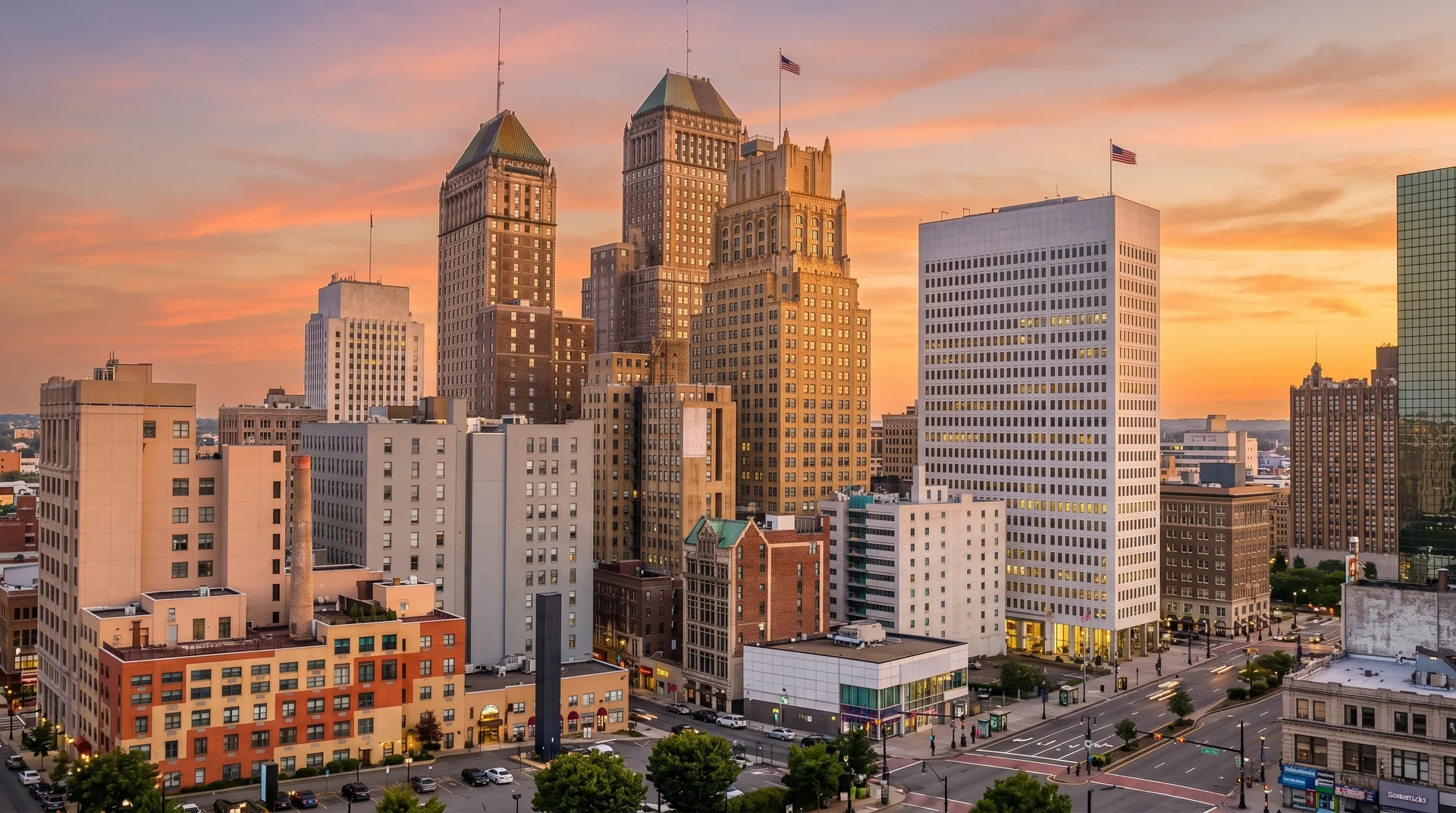
Newark
Newark, New Jersey, serves as a strategic gateway for freight entering and exiting the Northeastern United States. Located just 8 miles from Manhattan and adjacent to the Port Newark-Elizabeth Marine Terminal, one of the largest container shipping facilities on the East Coast, Newark offers unparalleled access to major consumer markets and international trade routes. The city's extensive transportation infrastructure includes Newark Liberty International Airport, major rail connections through NJ Transit and Amtrak, and direct access to the New Jersey Turnpike and I-95, facilitating efficient distribution throughout the region.
The economic landscape of Newark is diverse, with strong presence in insurance, healthcare, and manufacturing sectors. The city is home to major corporations and serves as a critical node in the pharmaceutical and biomedical industries. Additionally, Newark's proximity to New York City makes it a key logistics hub for e-commerce and retail distribution, with numerous warehouses and fulfillment centers strategically located to serve the dense Northeast population. This combination of industrial diversity and strategic location makes Newark an ideal origin point for freight shipments heading west to Tulsa and beyond.
 Destination
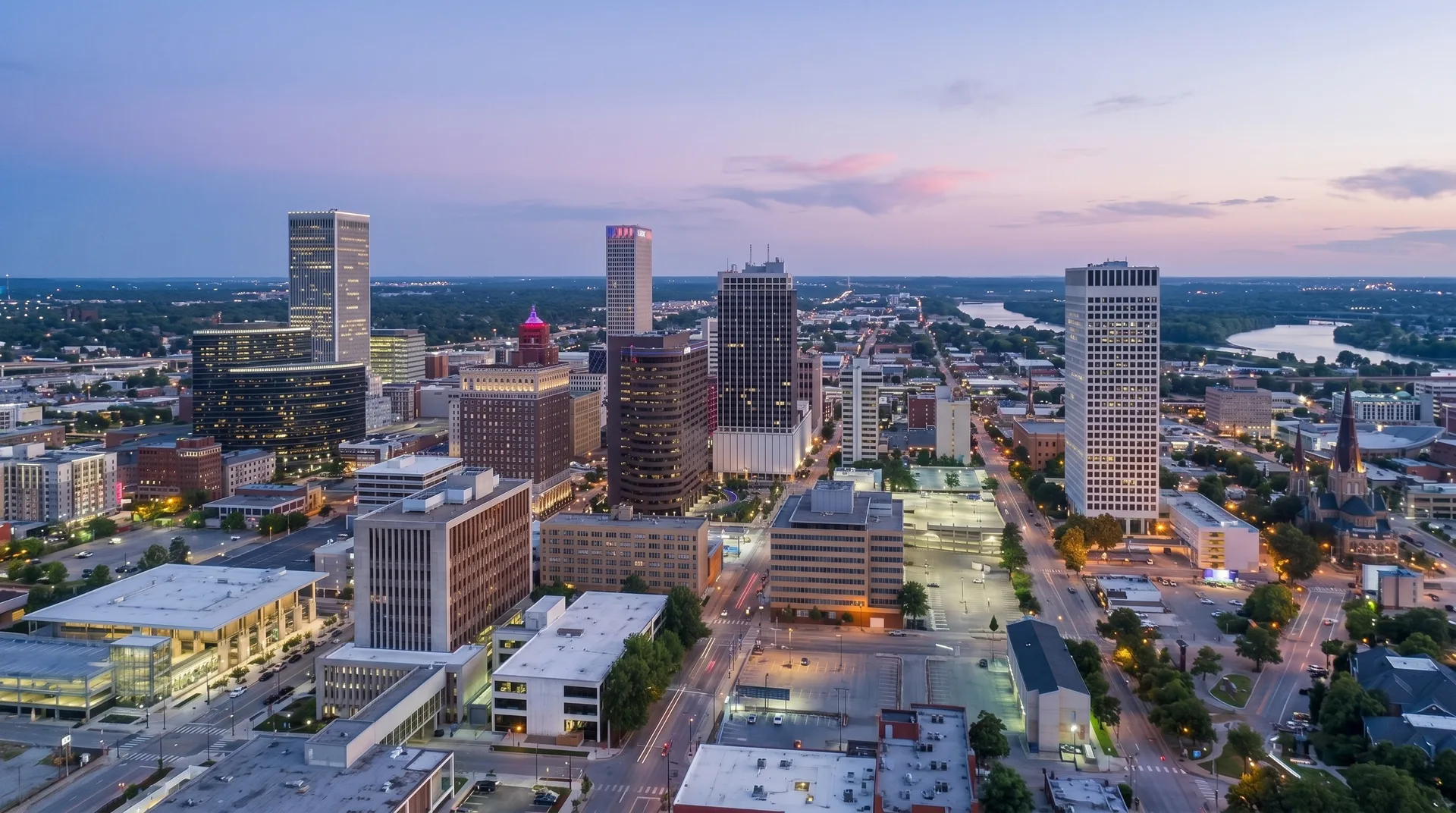
Tulsa
Tulsa, Oklahoma, stands as a major logistics and industrial center in the heart of the United States, offering strategic advantages for freight distribution across the Midwest and Southern Plains. The city's location at the intersection of major transportation corridors, including I-44 and I-244, provides excellent connectivity to regional markets. Tulsa International Airport and the Tulsa Port of Catoosa, a 445-mile inland seaport on the McClellan-Kerr Arkansas River Navigation System, further enhance the city's multimodal transportation capabilities, making it a crucial hub for both domestic and international freight movement.
The Tulsa economy is anchored by the energy sector, with numerous oil and gas companies maintaining significant operations in the area. The city has also diversified into aerospace manufacturing, with major facilities producing aircraft components and related equipment. Additionally, Tulsa's growing technology sector and strong presence in logistics and transportation services contribute to a dynamic business environment. This industrial diversity, combined with the city's central location and robust infrastructure, makes Tulsa an ideal destination for freight shipments from Newark and other East Coast origins, supporting the region's manufacturing, energy, and distribution needs.










