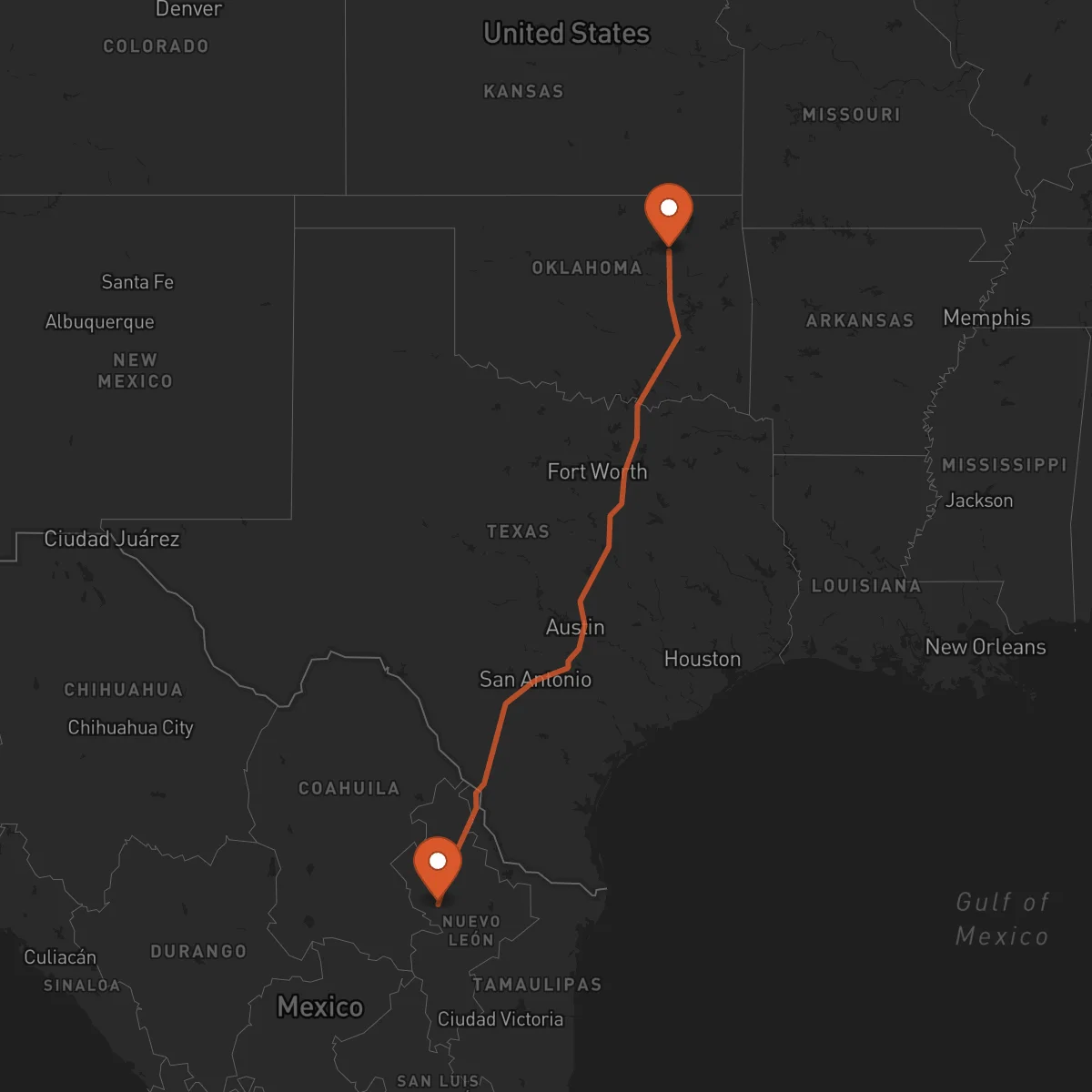
Tulsa to Monterrey
Monterrey → TulsaFTL freight transportation service between Tulsa and Monterrey. Reliable logistics solutions for your business.
Route Description
Everything you need to know about the corridor Tulsa - Monterrey
The Tulsa-Monterrey corridor represents a vital logistics connection between the industrial heart of Oklahoma and one of Mexico's most dynamic economic centers. This cross-border route spans approximately 1,235 kilometers, linking the manufacturing and energy sectors of the United States with Mexico's thriving automotive, aerospace, and electronics industries. The corridor facilitates the seamless movement of goods between two major economic regions, supporting supply chains that span North America.
This transportation route connects Tulsa's strategic location in the Midwest with Monterrey's position as the industrial capital of northeastern Mexico. The journey traverses diverse terrain and crosses the U.S.-Mexico border, requiring expertise in customs procedures and cross-border logistics. The corridor serves as a critical artery for industries including automotive manufacturing, energy equipment, industrial machinery, and consumer goods, enabling just-in-time delivery and efficient supply chain management.
Key infrastructure along this route includes major highways such as I-35 and I-44 connecting through Texas, with primary border crossings at Laredo or Pharr-Reynosa. Control Terrestre leverages our extensive network and cross-border expertise to ensure smooth operations, handling all customs documentation, regulatory compliance, and coordination between U.S. and Mexican transportation providers. Our dedicated FTL services guarantee that your cargo moves efficiently and securely from origin to destination, maintaining the integrity of your supply chain throughout this important North American trade corridor.
Services for this Route
Available services for the corridor Tulsa - Monterrey
 Origin
Tulsa
Tulsa, Oklahoma serves as a strategic logistics hub in the central United States, offering excellent connectivity to major markets across the Midwest and beyond. The city's location provides direct access to Interstate highways, including I-44 and I-35, facilitating efficient distribution throughout the region. Tulsa's economy is anchored by strong energy, aerospace, and manufacturing sectors, with numerous industrial parks and distribution centers supporting diverse supply chain operations.
The city benefits from multiple transportation infrastructure assets, including Tulsa International Airport for air freight, extensive rail connections through BNSF and Union Pacific railroads, and a network of highways that provide seamless ground transportation. Tulsa's central location makes it an ideal origin point for cross-country and cross-border shipments, with proximity to major manufacturing centers in Oklahoma, Texas, and surrounding states. The region's robust logistics infrastructure, combined with its industrial base, positions Tulsa as a key gateway for freight moving between the central United States and Mexico.
 Destination
Monterrey
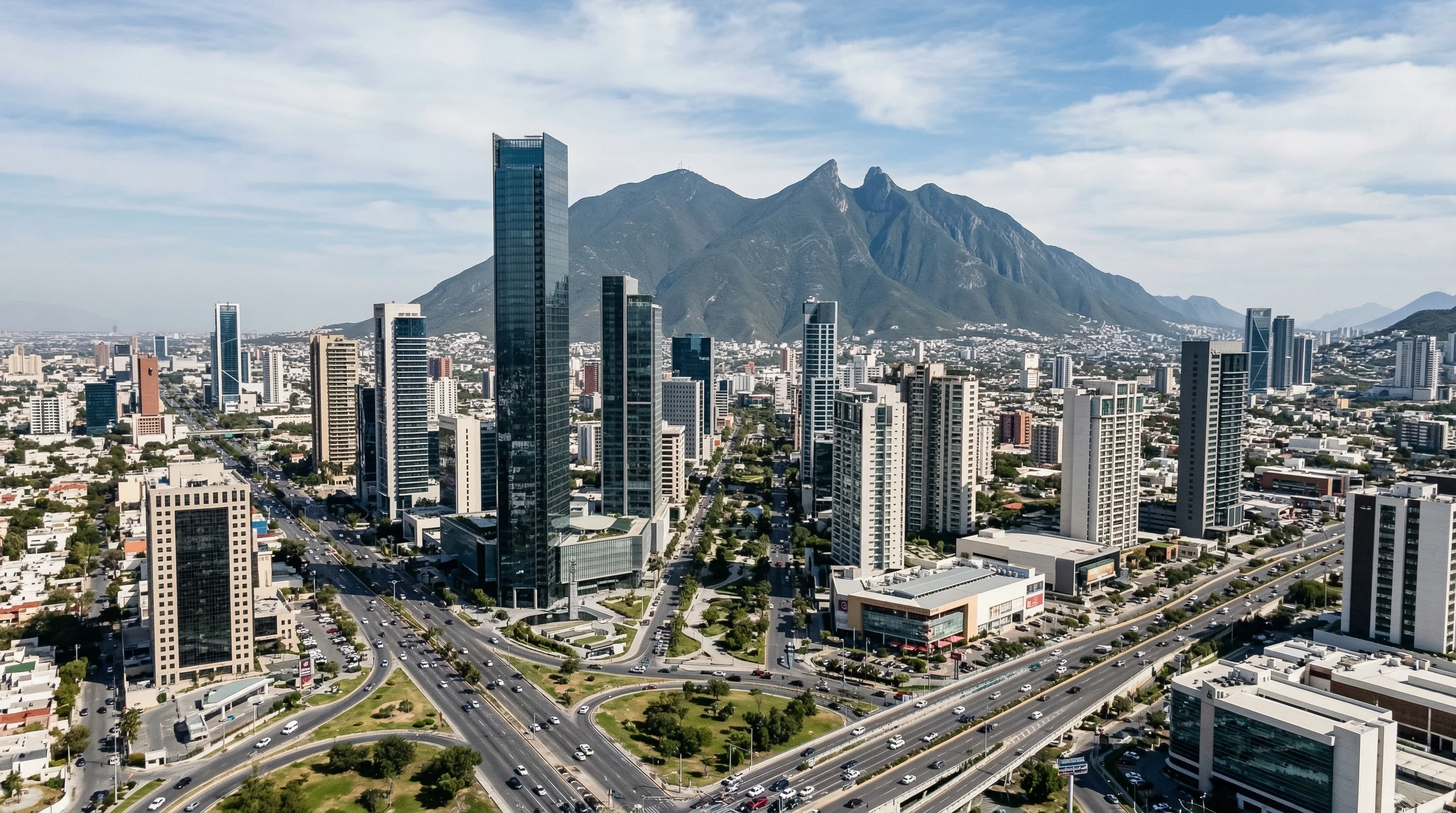
Monterrey, Nuevo León stands as Mexico's premier industrial and logistics center, strategically positioned in northeastern Mexico near the U.S. border. The city forms part of the Monterrey Metropolitan Area, which is home to numerous multinational corporations and manufacturing facilities, particularly in the automotive, aerospace, and electronics sectors. Monterrey's economic importance is reflected in its sophisticated infrastructure and its role as a major export hub for Mexican industry.
The region boasts excellent transportation connectivity, including Monterrey International Airport for air cargo, extensive highway networks connecting to major Mexican cities and the U.S. border, and rail services through Ferromex. The area features modern industrial parks, warehousing facilities, and free trade zones that support efficient logistics operations. Monterrey's proximity to the Texas border (approximately 230 kilometers from Laredo) makes it a critical destination for cross-border freight, serving as the gateway to Mexico's central and southern industrial regions while maintaining strong connections to North American supply chains.










