Monterrey to Tulsa
Tulsa → MonterreyFTL freight transportation service between Monterrey and Tulsa. Reliable logistics solutions for your business.
Route Description
Everything you need to know about the corridor Monterrey - Tulsa
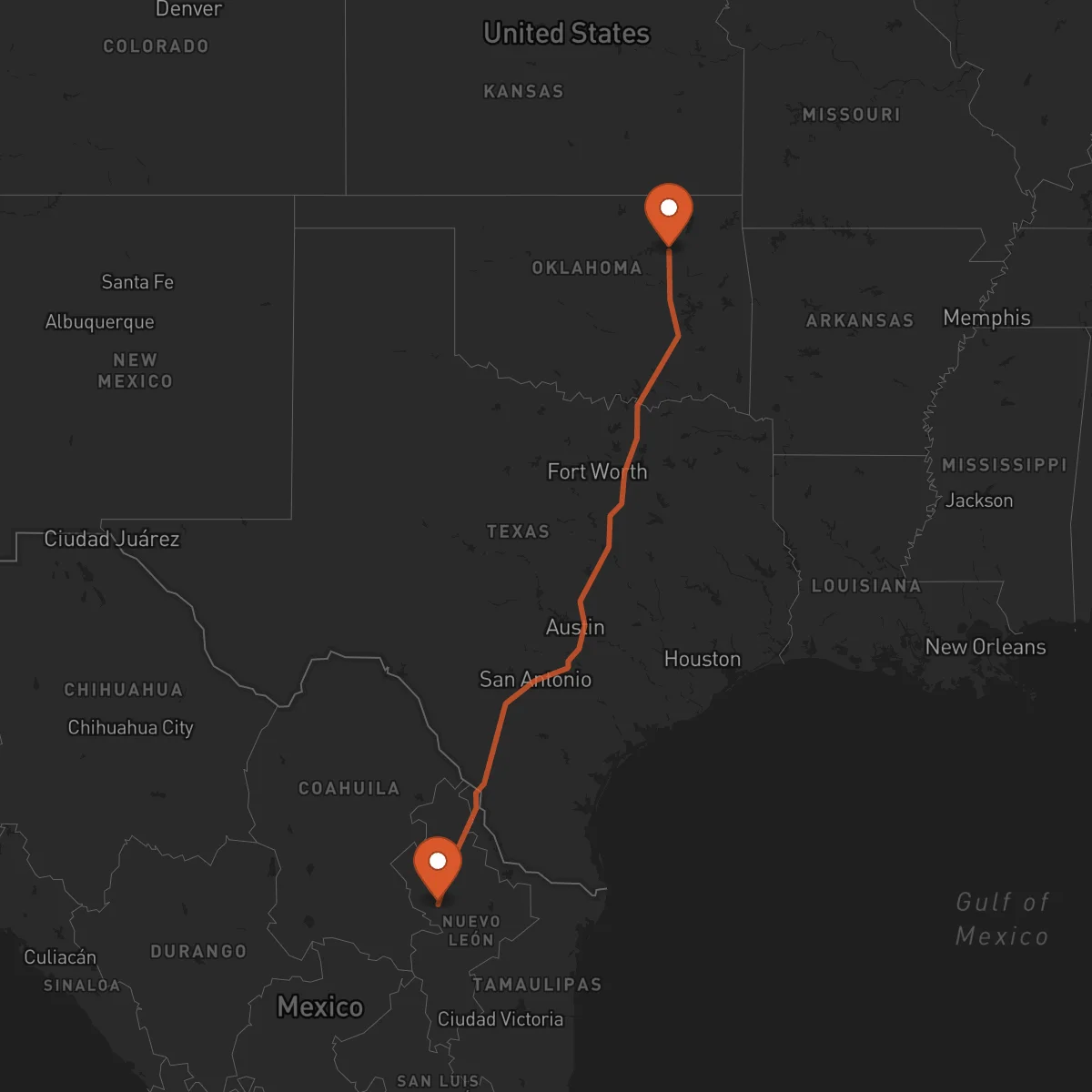
The logistics corridor between Monterrey, Nuevo León, México, and Tulsa, Oklahoma, United States, represents one of the most strategically significant cross-border trade routes in North America. Spanning approximately 1,235 kilometers, this corridor connects two major industrial hubs, facilitating the efficient movement of full truckload (FTL) freight across the northern Mexican border into the heart of the central United States. Its strategic importance lies in linking Monterrey's robust manufacturing base with Tulsa's diversified industrial economy, creating a vital artery for supply chain operations on both sides of the border.
Monterrey, as Mexico's industrial capital, serves as the origin point for a wide range of export-oriented industries, including automotive, aerospace, electronics, steel, and food and beverage. On the receiving end, Tulsa stands as a critical logistics node in Oklahoma, providing access to Midwest and Southern U.S. markets. Companies operating along this corridor benefit from reduced transit complexity when supported by a freight forwarder experienced in cross-border operations. The route primarily follows Mexican Federal Highway 85 and Interstate 35, connecting through key border crossings such as Laredo, Texas, or Nuevo Laredo, Tamaulipas, where customs processing and regulatory compliance play a pivotal role in ensuring seamless freight movement.
The main industries utilizing this corridor include automotive parts manufacturers, aerospace component suppliers, heavy machinery producers, and companies transporting hazardous materials and oversized cargo. Customs considerations at the border require proper documentation, C-TPAT and FAST certifications, and adherence to U.S. and Mexican regulatory frameworks. Control Terrestre, through its alliance of experienced transportation providers, ensures that shipments move efficiently through these critical checkpoints, minimizing delays and maintaining full visibility throughout the journey.
Control Terrestre facilitates operations on this corridor by offering dedicated FTL services, including dry van, refrigerated, flatbed, tanker, and specialized cargo solutions. Our providers hold C-TPAT, FAST, BASC, and Clean Transportation certifications, ensuring compliance with international trade standards and environmental responsibility. From expedited freight to door-to-door delivery, we connect any point between Monterrey and Tulsa with the reliability and transparency that modern supply chains demand.
Services for this Route
Available services for the corridor Monterrey - Tulsa
 Origin
Monterrey
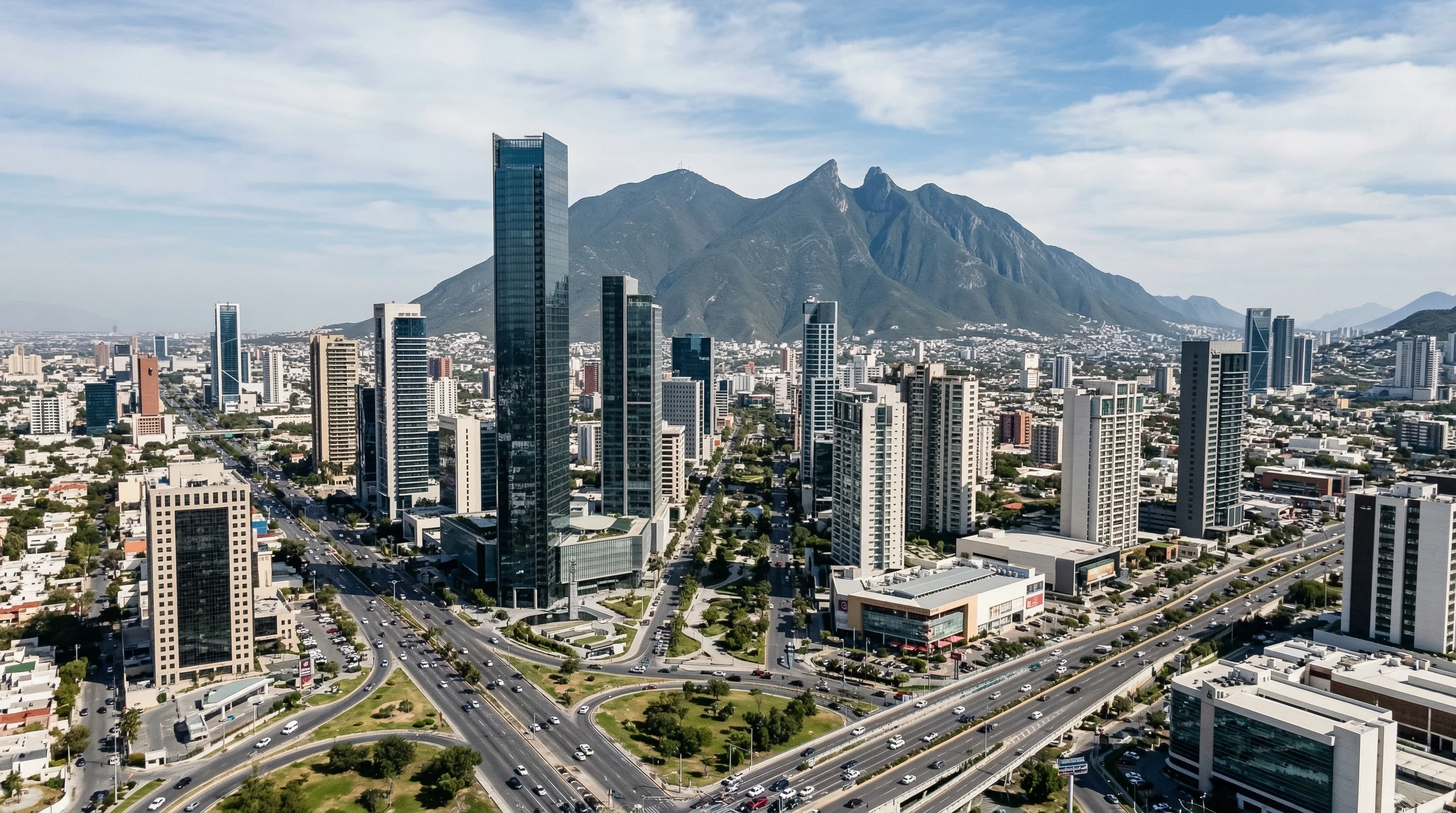
Monterrey, the capital of Nuevo León, is Mexico's premier industrial and manufacturing hub, serving as a critical origin point for cross-border freight operations. Strategically located near the U.S.-Mexico border, the city provides direct access to major international markets. Its economy is driven by the automotive, aerospace, steel, electronics, food and beverage, and chemical industries, all of which generate consistent demand for full truckload export services. Monterrey's transportation infrastructure is among the most developed in Latin America, featuring extensive highway networks connecting to key border crossings, including Laredo and Nuevo Laredo. The city's logistics ecosystem includes modern warehousing, customs brokerage services, and multimodal connectivity, making it an ideal starting point for freight destined for central and eastern United States markets.
 Destination
Tulsa
Tulsa, Oklahoma, serves as a strategically located logistics destination in the central United States, offering access to major distribution networks across the Midwest and South. The city's economy is anchored by the aerospace, energy, manufacturing, agriculture, and transportation industries, all of which rely on consistent inbound freight from Mexico and other trade partners. Tulsa's infrastructure includes Interstate 44 and Interstate 35 connectivity, providing efficient access to Dallas, Kansas City, Chicago, and beyond. The region features modern warehousing, intermodal facilities, and a growing logistics workforce, making it a reliable endpoint for cross-border shipments originating from northern Mexico.










