Tulsa to Chicago
Chicago → TulsaFTL freight transportation service between Tulsa and Chicago. Reliable logistics solutions for your business.
Route Description
Everything you need to know about the corridor Tulsa - Chicago
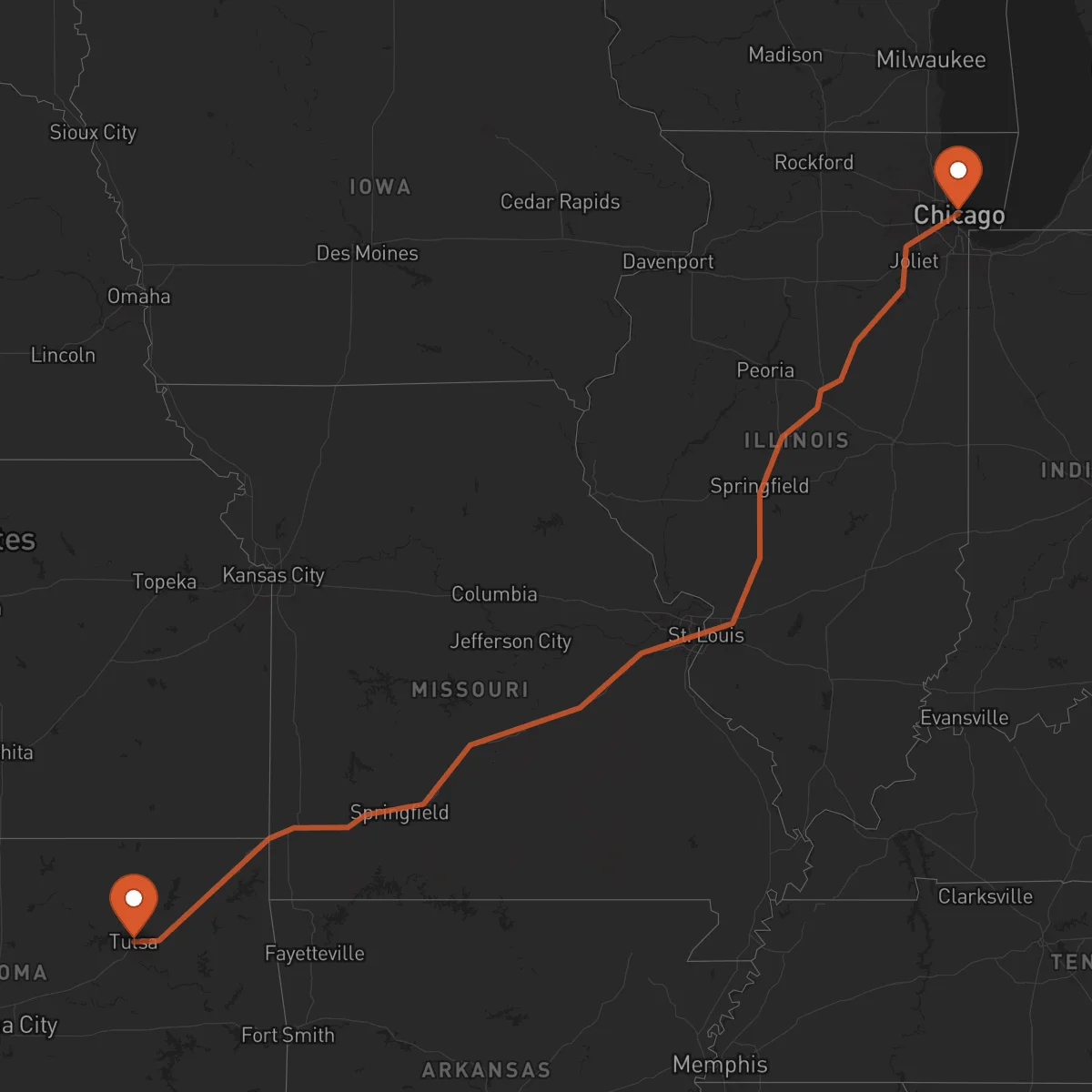
The Tulsa to Chicago corridor represents one of the most vital freight transportation routes in the Midwest, connecting Oklahoma's growing industrial hub with Chicago's global logistics network. This 962 km domestic route serves as a critical link in the North American supply chain, facilitating the movement of goods between the energy-rich plains of Oklahoma and the industrial powerhouse of Illinois.
The corridor traverses diverse economic landscapes, from Tulsa's emerging tech and energy sectors to Chicago's established manufacturing and distribution industries. Major highways including I-55 and I-44 provide reliable infrastructure for freight movement, while the route passes through key logistics centers that support just-in-time delivery operations.
Control Terrestre specializes in full truckload (FTL) transportation along this corridor, offering dedicated services that ensure your cargo moves efficiently between Tulsa and Chicago. Our experienced carriers understand the unique demands of this route, providing consistent transit times and reliable capacity for businesses that depend on seamless freight movement across the Midwest.
Services for this Route
Available services for the corridor Tulsa - Chicago
 Origin
Tulsa
Tulsa, Oklahoma serves as a strategic logistics hub in the southern plains, with its central location providing excellent access to major freight corridors. The city's economy is anchored by energy, aerospace, and manufacturing sectors, creating consistent demand for freight transportation. Tulsa's transportation infrastructure includes multiple interstate highways, a major international airport, and extensive rail connections, making it an ideal origin point for regional and national freight movements.
 Destination
Chicago
Chicago, Illinois stands as America's premier logistics and transportation hub, strategically positioned at the crossroads of the nation's freight network. The city's diverse economy encompasses manufacturing, retail, food processing, and technology sectors, all requiring reliable freight services. Chicago's world-class transportation infrastructure includes O'Hare International Airport, extensive rail yards, and a comprehensive highway system, enabling efficient distribution throughout the Midwest and beyond.










