Chicago to Tulsa
Tulsa → ChicagoFTL freight transportation service between Chicago and Tulsa. Reliable logistics solutions for your business.
Route Description
Everything you need to know about the corridor Chicago - Tulsa
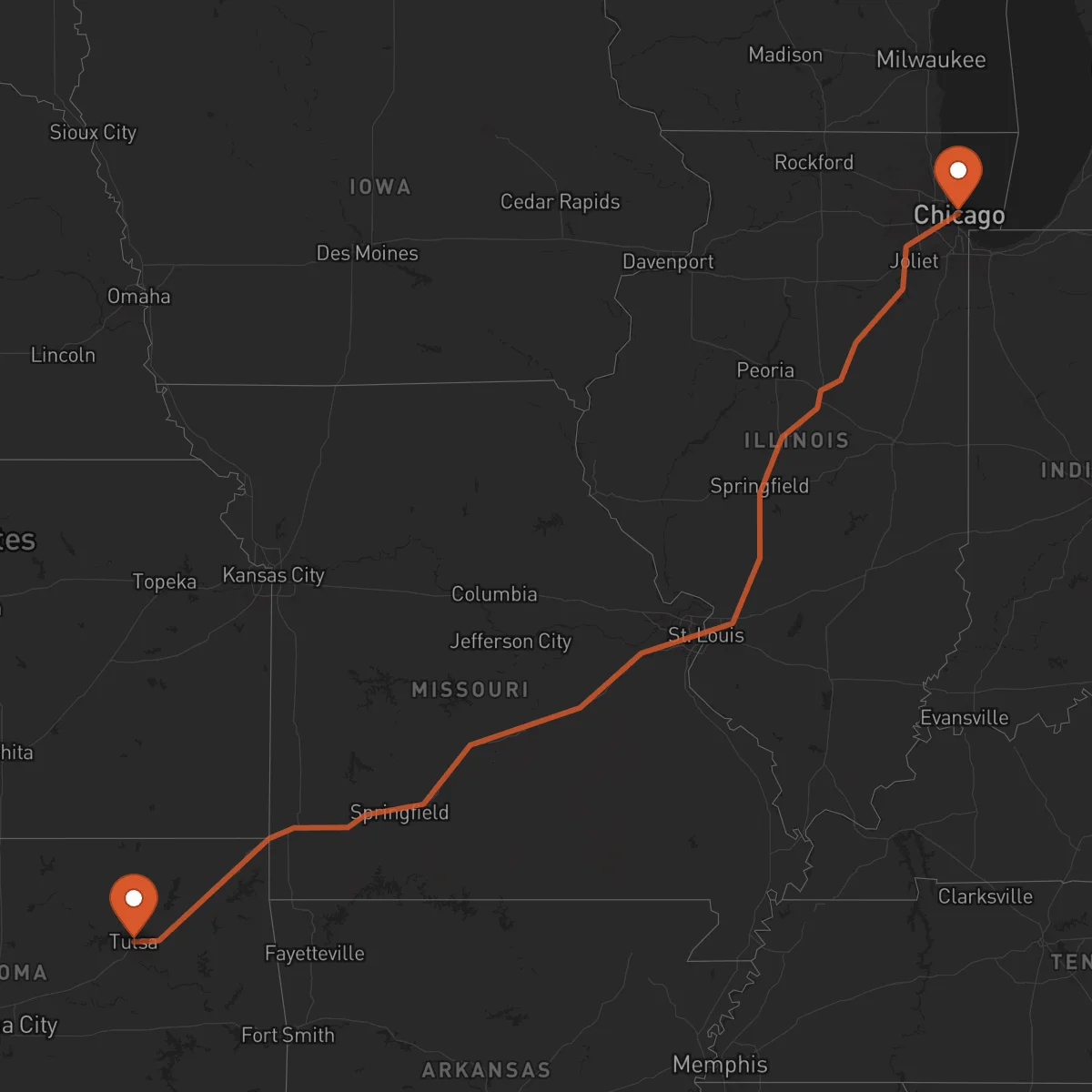
The freight transportation corridor between Chicago, Illinois, and Tulsa, Oklahoma, represents a vital link in the U.S. logistics network, connecting the economic powerhouse of the Midwest with the energy and manufacturing hub of the South-Central region. This 962 km route traverses diverse landscapes and crosses multiple state lines, facilitating the movement of goods between two major industrial centers. The corridor is particularly significant for companies looking to optimize their supply chain between the Great Lakes region and the growing markets of Oklahoma and surrounding states.
The economic importance of this route is underscored by the complementary industrial profiles of Chicago and Tulsa. Chicago serves as a major distribution center with its extensive port facilities, rail connections, and proximity to manufacturing centers, while Tulsa is renowned for its energy sector, aerospace industry, and logistics operations. This corridor enables the efficient transport of manufactured goods, industrial equipment, energy products, and consumer goods between these regions. The route also serves as a critical link for companies operating in the automotive, technology, and agricultural sectors that require reliable transportation between the Midwest and South-Central United States.
Control Terrestre facilitates seamless operations on this corridor through our extensive network of certified transportation providers and specialized equipment. Our full truckload (FTL) services ensure that your cargo moves directly from origin to destination without intermediate stops, reducing transit times and minimizing handling risks. We understand the specific requirements of industries operating along this route and provide tailored solutions that address the unique challenges of cross-state transportation, including regulatory compliance, equipment specifications, and delivery scheduling.
Services for this Route
Available services for the corridor Chicago - Tulsa
 Origin
Chicago
Chicago, Illinois, stands as one of the most strategically important logistics hubs in North America. Located on the shores of Lake Michigan, Chicago serves as a critical gateway for freight moving between the East and West Coasts, as well as between Canada and the southern United States. The city's central location and extensive infrastructure make it an ideal origin point for freight transportation. Chicago's economy is diverse and robust, with major sectors including manufacturing, finance, technology, and healthcare. The city is home to numerous Fortune 500 companies and serves as a distribution center for goods throughout the Midwest. Transportation infrastructure in Chicago is unparalleled, featuring O'Hare International Airport (one of the busiest in the world), extensive rail networks operated by major carriers, and a comprehensive highway system that includes I-90, I-94, and I-55. The Port of Chicago provides additional waterway transportation options, making the city a true multimodal logistics center.
 Destination
Tulsa
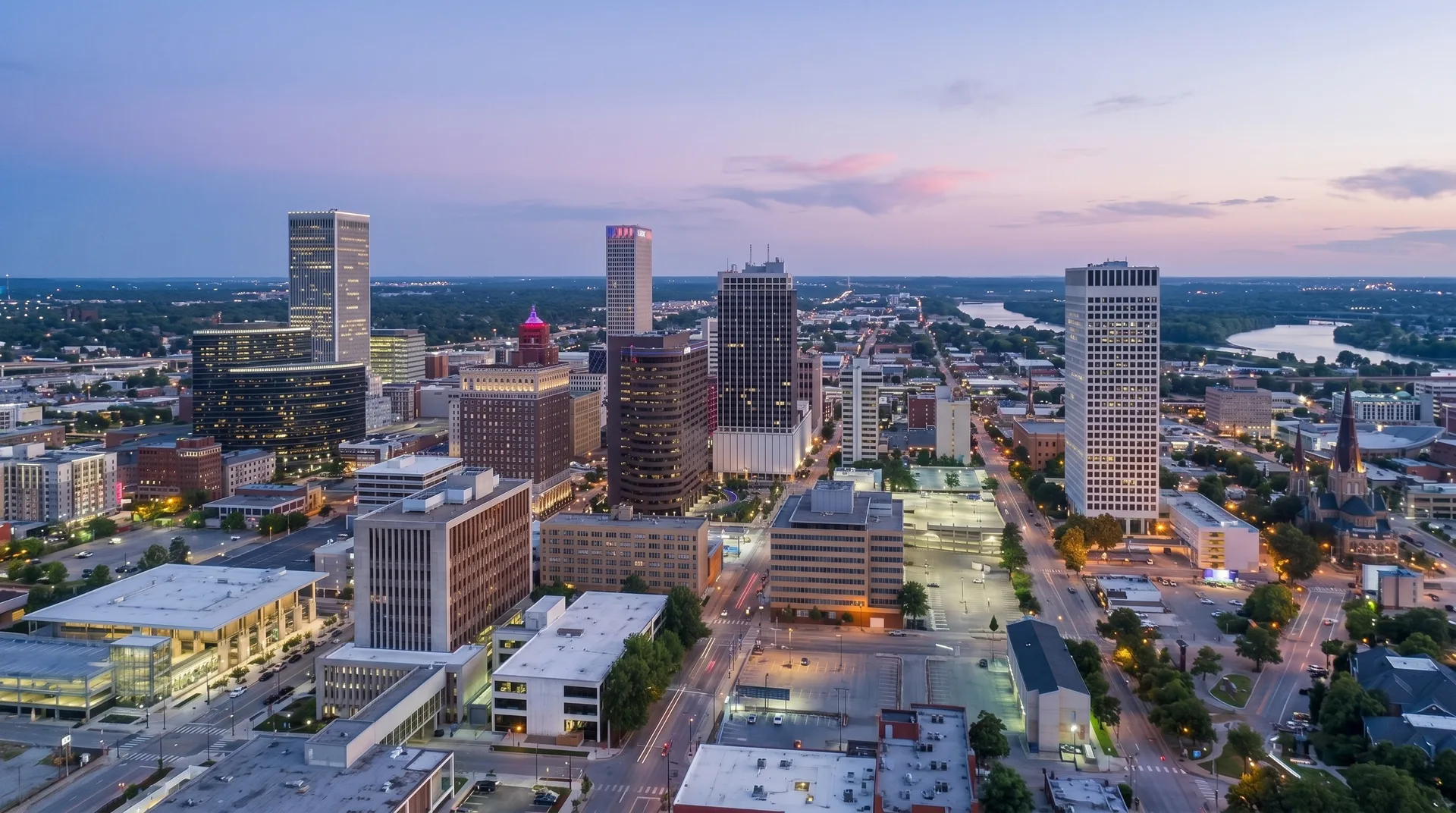
Tulsa, Oklahoma, has evolved from its historical roots in the oil industry to become a modern logistics and industrial center. Strategically located in the heart of the South-Central United States, Tulsa offers excellent connectivity to major markets across the region. The city's economy is anchored by the energy sector, aerospace and defense industries, and manufacturing, with companies like American Airlines maintaining significant operations in the area. Tulsa's logistics infrastructure includes the Tulsa International Airport, which handles substantial cargo traffic, and its proximity to major highways such as I-44 and I-244. The city's location provides easy access to markets in Texas, Kansas, Missouri, and Arkansas, making it an ideal destination for companies looking to serve the South-Central region. Tulsa's business-friendly environment and lower operational costs compared to coastal cities have attracted numerous companies to establish distribution centers and manufacturing facilities in the area.










