Tulsa to Birmingham
Birmingham → TulsaFTL freight transportation service between Tulsa and Birmingham. Reliable logistics solutions for your business.
Route Description
Everything you need to know about the corridor Tulsa - Birmingham
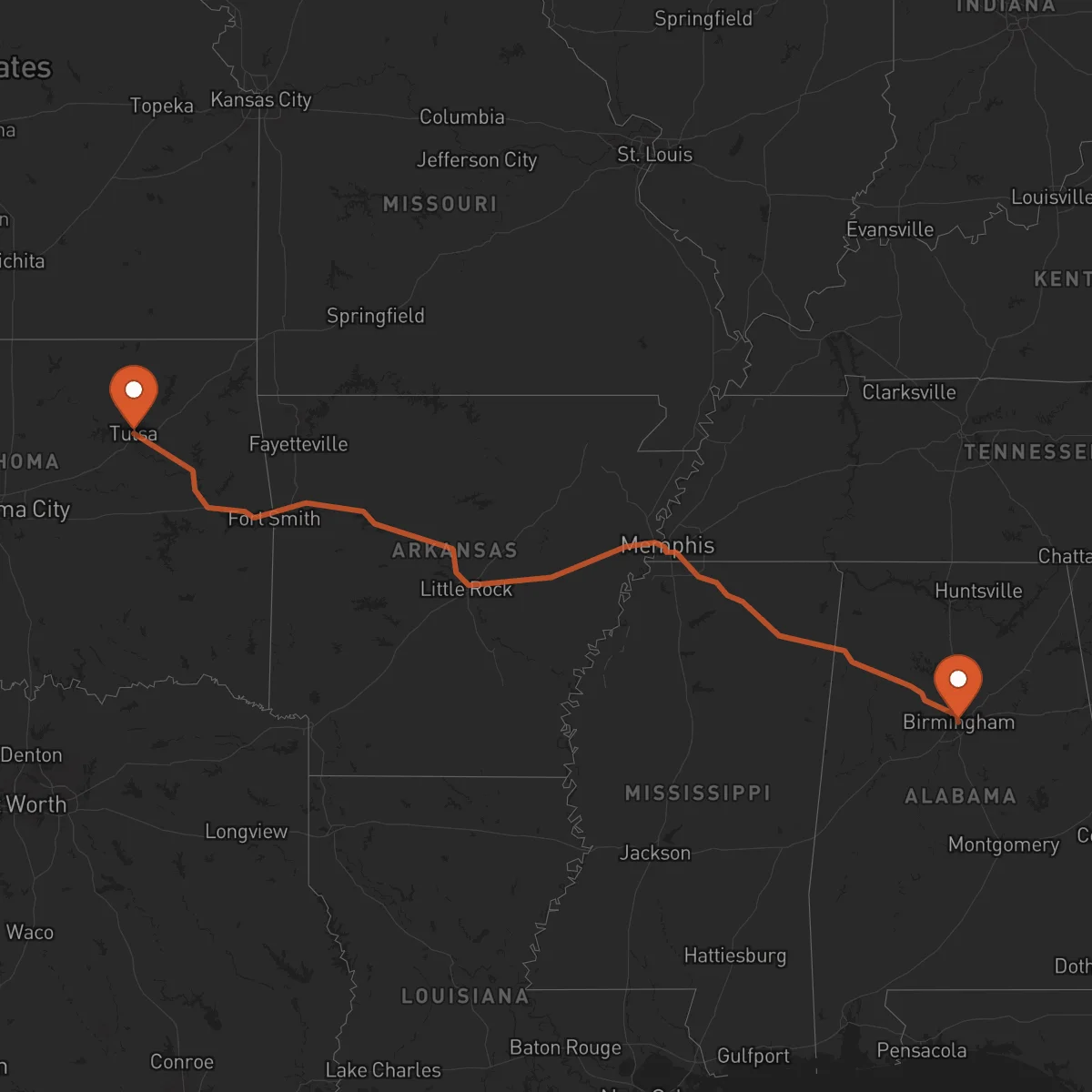
The Tulsa to Birmingham corridor represents a vital freight transportation link connecting the industrial heartland of Oklahoma with Alabama's manufacturing and logistics hub. This 887 km domestic route traverses the central United States, providing essential connectivity for businesses moving goods between the Midwest and Southeast regions.
The corridor serves as a critical artery for the transportation of industrial equipment, automotive parts, and manufactured goods. With Tulsa's strong presence in aerospace, energy, and logistics industries, and Birmingham's established manufacturing and distribution sectors, this route facilitates the movement of diverse cargo types that fuel both regional and national economies.
Transportation along this corridor primarily utilizes Interstate 44 East and Interstate 22 East, providing reliable highway infrastructure for freight movement. These major interstate routes offer consistent access and efficient transit times for full truckload shipments, making it an attractive option for businesses requiring dedicated transportation services.
Control Terrestre specializes in optimizing freight movements along this corridor, offering dedicated FTL services that ensure your cargo moves directly from origin to destination without unnecessary stops or handling. Our network of certified carriers and experienced logistics professionals provides the reliability and efficiency that businesses require for their critical supply chain operations between Tulsa and Birmingham.
Services for this Route
Available services for the corridor Tulsa - Birmingham
 Origin
Tulsa
Tulsa, Oklahoma serves as a strategic logistics hub in the central United States, benefiting from its central location and excellent transportation infrastructure. The city's proximity to major highways, including I-44, provides seamless connectivity to regional and national freight networks. Tulsa International Airport and multiple rail terminals complement the robust ground transportation options available for freight movement.
The city's economy is anchored by strong aerospace, energy, and logistics sectors, with major corporations maintaining significant operations in the area. Tulsa's industrial base includes manufacturing facilities, distribution centers, and warehousing operations that generate substantial freight volume. The presence of the Tulsa Port of Catoosa, a major inland river port, further enhances the region's multimodal transportation capabilities and freight handling capacity.
 Destination
Birmingham
Birmingham, Alabama stands as a key logistics and industrial center in the southeastern United States, offering strategic advantages for freight transportation and distribution. The city's location provides access to major transportation corridors, including I-20, I-59, and I-65, facilitating efficient movement of goods throughout the region. Birmingham-Shuttlesworth International Airport and extensive rail infrastructure support the area's robust freight handling capabilities.
The Birmingham metropolitan area hosts a diverse industrial base, with strong presence in automotive manufacturing, steel production, and logistics services. The region's economic development initiatives have attracted numerous distribution centers and warehouses, creating a dynamic freight environment. Birmingham's central location in the Southeast makes it an ideal distribution point for companies serving markets throughout the region and beyond.










