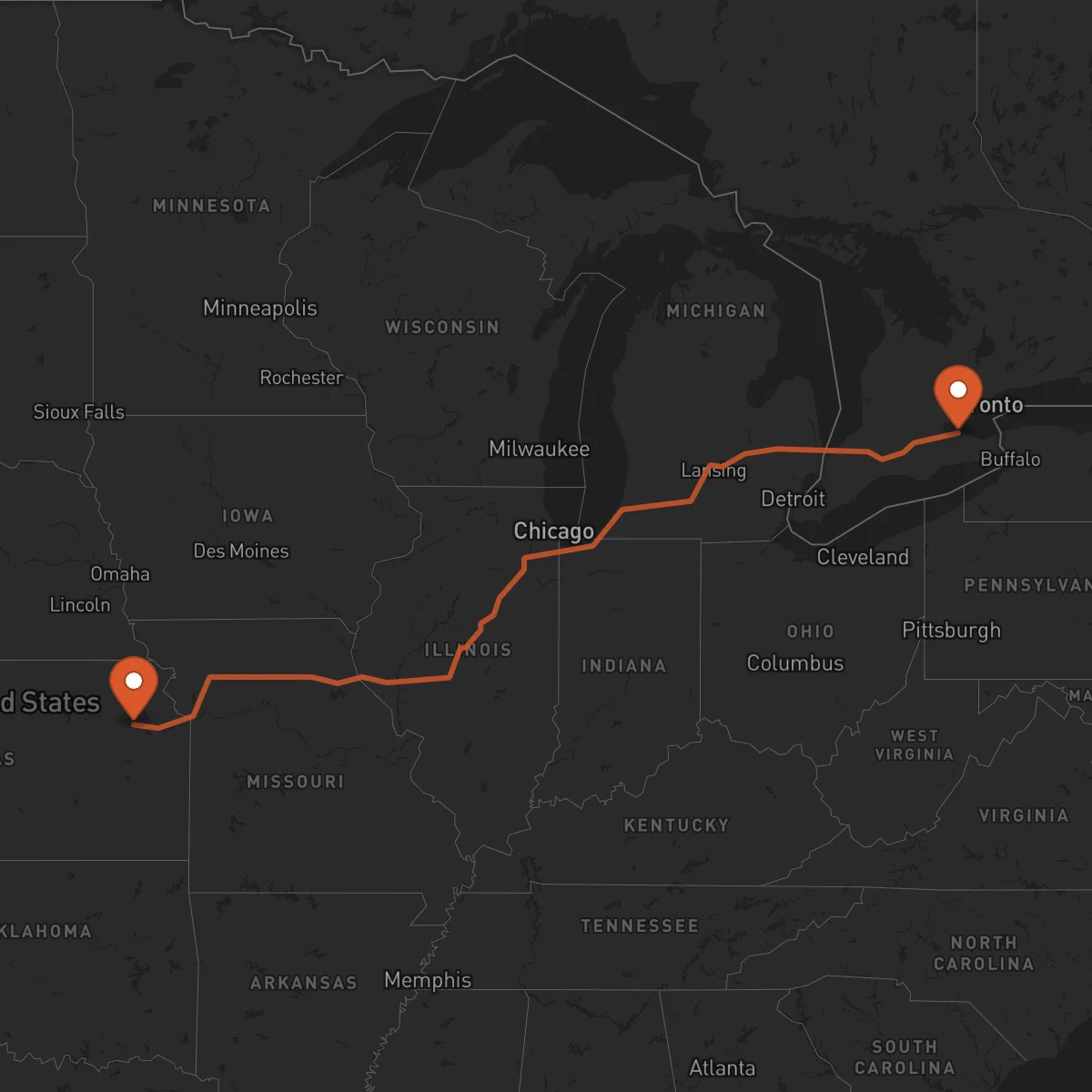
Topeka to Hamilton
Hamilton → TopekaFTL freight transportation service between Topeka and Hamilton. Reliable logistics solutions for your business.
Route Description
Everything you need to know about the corridor Topeka - Hamilton
The logistics corridor between Topeka, Kansas and Hamilton, Ontario represents a vital cross-border freight route connecting the central United States with Canada's industrial heartland. This 1,401-kilometer route traverses diverse terrain and crosses the international border at key points, facilitating the movement of goods between major manufacturing and distribution centers. The corridor serves as a critical link in the North American supply chain, supporting industries on both sides of the border with efficient transportation solutions.
The economic significance of this route is substantial, connecting Kansas's agricultural and manufacturing base with Ontario's robust industrial sector. Hamilton, known as Canada's steel capital, is home to numerous manufacturing facilities, while Topeka serves as a strategic distribution hub for the Midwest. The corridor supports the movement of raw materials, finished goods, and industrial equipment between these economic powerhouses. Key industries utilizing this route include automotive, steel production, agriculture, and consumer goods manufacturing.
Transportation infrastructure along this corridor is well-developed, with major highways including I-70, I-90, and Highway 401 providing reliable freight movement. The route crosses the Canada-US border at multiple points, with the Ambassador Bridge and Blue Water Bridge being primary crossing options. Control Terrestre's expertise in cross-border logistics ensures seamless customs clearance and compliance with all regulatory requirements. Our team of experienced professionals manages the complexities of international freight, providing real-time tracking and dedicated support throughout the journey from Topeka to Hamilton.
Services for this Route
Available services for the corridor Topeka - Hamilton
 Origin
Topeka
Topeka, Kansas serves as a strategic logistics hub in the American Midwest, offering excellent connectivity to major transportation networks. Located in the heart of the United States, Topeka provides access to key interstate highways and rail connections, making it an ideal origin point for freight distribution. The city's central location allows for efficient distribution to both coasts and the southern United States, while its proximity to major agricultural regions supports the movement of food products and agricultural equipment.
The economic landscape of Topeka is diverse, with strong presence in manufacturing, healthcare, and government sectors. The city is home to several major employers and distribution centers, supporting a robust logistics ecosystem. Topeka's industrial base includes food processing, machinery manufacturing, and printing industries, all of which contribute to the demand for reliable freight transportation services. The city's transportation infrastructure includes multiple interstate highways, rail yards, and an international airport, providing comprehensive logistics solutions for businesses operating in the region.
 Destination
Hamilton, Ontario stands as a major industrial center in Canada, strategically located on the western tip of Lake Ontario. The city's port facilities and extensive transportation network make it a crucial gateway for international trade and domestic distribution. Hamilton's position within the Greater Toronto Area provides access to one of North America's largest consumer markets, while its own industrial base creates substantial freight demand. The city's waterfront location facilitates efficient movement of goods via both road and water transportation.
The economic profile of Hamilton is dominated by manufacturing, particularly steel production, which has earned it the nickname "Steel City." Beyond steel, the city hosts a diverse range of industries including automotive manufacturing, food processing, and advanced technology. Hamilton's port handles significant cargo volumes, complementing its extensive road and rail infrastructure. The city's proximity to major Canadian markets and its role as a manufacturing hub create consistent demand for freight transportation services, particularly for heavy industrial equipment and raw materials.










