Hamilton to Topeka
Topeka → HamiltonFTL freight transportation service between Hamilton and Topeka. Reliable logistics solutions for your business.
Route Description
Everything you need to know about the corridor Hamilton - Topeka
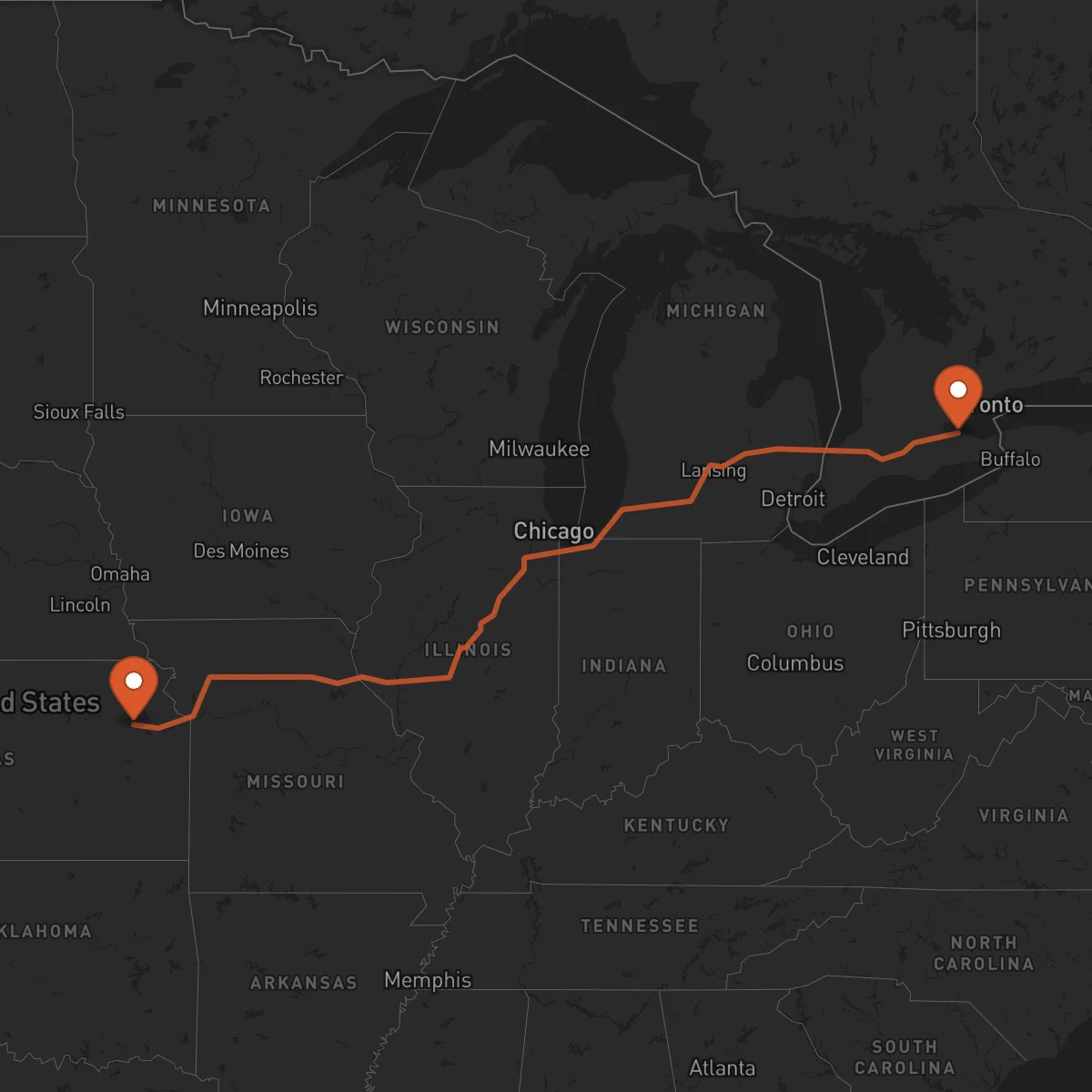
The logistics corridor connecting Hamilton, Ontario, Canada to Topeka, Kansas, United States represents a vital cross-border freight transportation route spanning approximately 1,401 kilometers. This corridor links Canada's industrial heartland with the central United States, facilitating the movement of goods between two major economic regions. The route traverses diverse terrain and crosses international borders, requiring expertise in customs procedures and regulatory compliance.
The economic significance of this corridor is substantial, connecting Hamilton's manufacturing and steel production industries with Topeka's agricultural, food processing, and manufacturing sectors. Key industries utilizing this route include automotive parts, steel products, agricultural equipment, and consumer goods. The corridor serves as a critical link in North American supply chains, enabling just-in-time inventory management and efficient distribution networks.
Transportation infrastructure along this route includes major highways such as Ontario's Highway 401, connecting to Interstate 75 and Interstate 70 in the United States. The corridor crosses the Canada-U.S. border at key points, with the most common crossing being the Ambassador Bridge or Blue Water Bridge, depending on the specific routing. Control Terrestre facilitates seamless operations on this corridor through our network of certified carriers, ensuring compliance with C-TPAT and FAST program requirements, managing customs documentation, and providing real-time tracking throughout the journey.
Services for this Route
Available services for the corridor Hamilton - Topeka
 Origin
Hamilton, located on the western tip of Lake Ontario, serves as a strategic logistics hub in Canada's industrial corridor. The city's proximity to major ports and its position within the Greater Toronto Area provide excellent connectivity for freight transportation. Hamilton's economy is anchored by its steel manufacturing industry, with major facilities operated by ArcelorMittal Dofasco and Stelco. The city also hosts a diverse manufacturing sector including automotive parts, aerospace components, and food processing. Transportation infrastructure includes the John C. Munro Hamilton International Airport, the Port of Hamilton (Canada's busiest Great Lakes port), and extensive rail connections through Canadian National and Canadian Pacific railways. The city's highway network provides direct access to Highway 401, Canada's busiest highway, facilitating efficient movement of goods to U.S. markets.
 Destination
Topeka
Topeka, the capital city of Kansas, occupies a strategic location in the heart of the American Midwest. The city's central positioning provides excellent access to major U.S. markets, with convenient connections to Interstate 70 and other key transportation routes. Topeka's economy features a mix of government services, healthcare, education, and manufacturing sectors. The city is home to major employers in the food processing industry, including Frito-Lay and Hills Pet Nutrition facilities. Topeka's transportation infrastructure includes the Topeka Regional Airport, extensive rail connections through BNSF Railway, and a well-developed highway system. The city's location in the agricultural heartland of America makes it a crucial node for food and agricultural product distribution throughout the region.










