Topeka to Edmonton
Edmonton → TopekaFTL freight transportation service between Topeka and Edmonton. Reliable logistics solutions for your business.
Route Description
Everything you need to know about the corridor Topeka - Edmonton
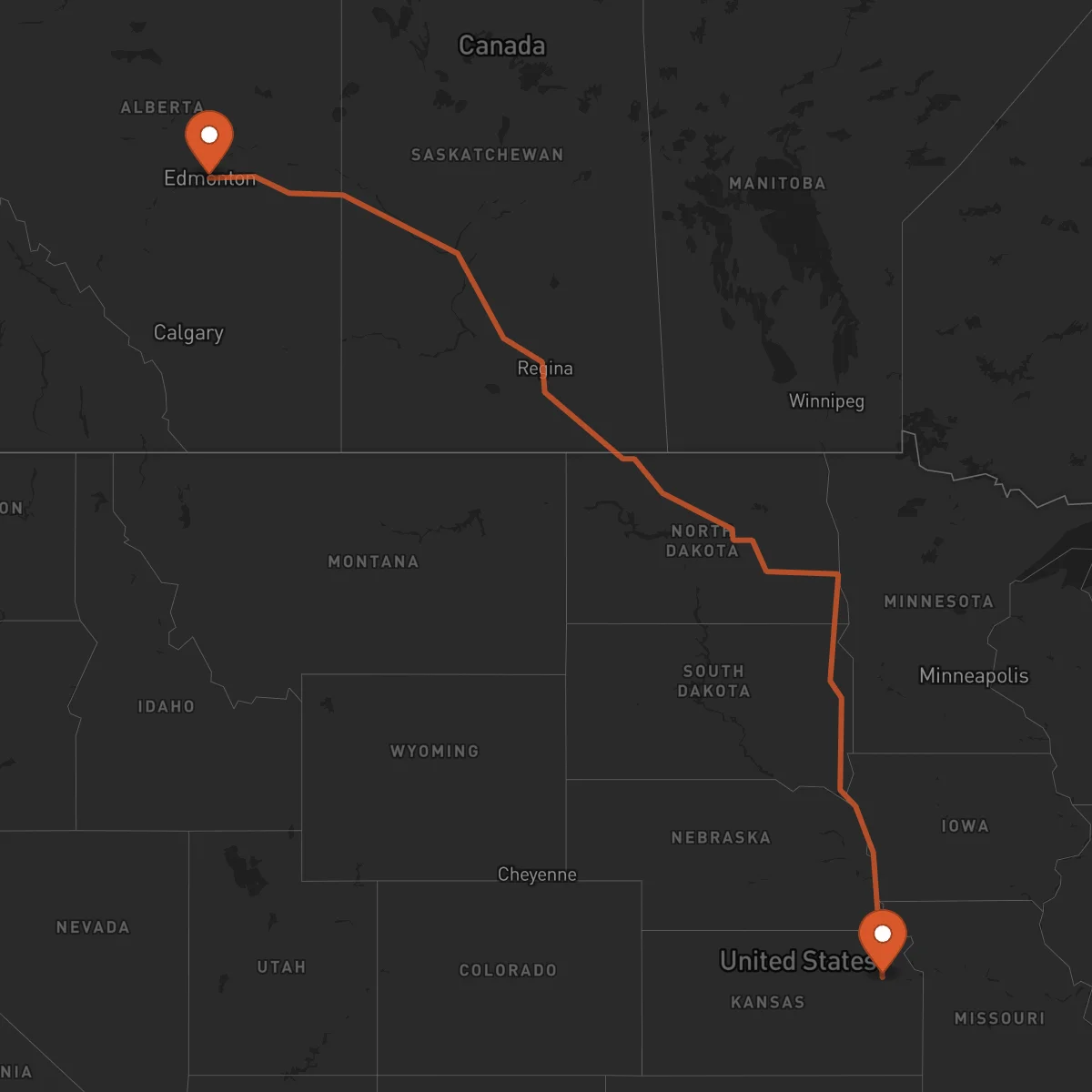
The logistics corridor connecting Topeka, Kansas to Edmonton, Alberta represents a vital cross-border freight transportation route spanning approximately 2,103 kilometers through the heart of North America. This corridor traverses diverse terrain and crosses international borders, linking the industrial Midwest with Canada's western energy and resource hub. The route serves as a critical supply chain artery for industries requiring reliable full truckload (FTL) transportation between the United States and Canada.
The corridor follows major transportation infrastructure including Interstate 29 and Interstate 25 northbound through the Great Plains, transitioning to Canadian highways as it crosses the international border. Key border crossing points facilitate the movement of commercial freight, with customs clearance procedures streamlined through our C-TPAT-certified network. The route passes through significant economic regions including the agricultural heartland and energy-producing areas of the northern United States and western Canada.
Primary industries utilizing this corridor include energy sector logistics, agricultural products, manufacturing components, and construction materials. Edmonton's role as a major oil sands service center and Alberta's industrial base creates substantial northbound freight demand, while Topeka's manufacturing and agricultural sectors generate significant southbound cargo volumes. Control Terrestre optimizes this cross-border operation through our specialized FTL services, ensuring dedicated equipment and experienced drivers navigate the complexities of international freight movement while maintaining schedule reliability and cargo security.
Services for this Route
Available services for the corridor Topeka - Edmonton
 Origin
Topeka
Topeka, Kansas serves as a strategic logistics hub in the American Midwest, positioned advantageously for freight distribution throughout the central United States. The city's location provides excellent connectivity to major transportation networks, including interstate highways that facilitate efficient movement of goods to both coasts and northern border crossings. Topeka's central geographic position minimizes transit times to key markets across the country, making it an ideal origin point for cross-border freight operations.
The local economy features strong manufacturing, agricultural processing, and distribution sectors that generate substantial freight volumes. Major industries include food processing, machinery manufacturing, and agricultural equipment production, all of which require reliable transportation solutions for both raw materials and finished goods. The city's transportation infrastructure includes direct access to Interstate 70 and other major highways, along with proximity to rail terminals and warehousing facilities that support comprehensive logistics operations.
 Destination
Edmonton, Alberta stands as a premier logistics gateway to Western Canada and the broader Pacific Northwest region. The city's strategic location at the northern terminus of the Alberta corridor provides direct access to the oil sands region and serves as a critical distribution point for goods moving throughout western Canada. Edmonton's position along the North Saskatchewan River and its extensive transportation network make it an ideal destination for cross-border freight operations requiring efficient distribution capabilities.
The Edmonton metropolitan area hosts a diverse industrial base centered around energy, manufacturing, and logistics services. As Alberta's capital and a major economic center, the city supports robust freight movements related to oil and gas equipment, construction materials, and industrial machinery. The region's transportation infrastructure includes major highways connecting to Calgary and Vancouver, along with rail facilities and an international airport that support multimodal freight operations. Edmonton's designation as a Foreign Trade Zone further enhances its attractiveness for cross-border logistics activities.










