Topeka to Montreal
Montreal → TopekaFTL freight transportation service between Topeka and Montreal. Reliable logistics solutions for your business.
Route Description
Everything you need to know about the corridor Topeka - Montreal
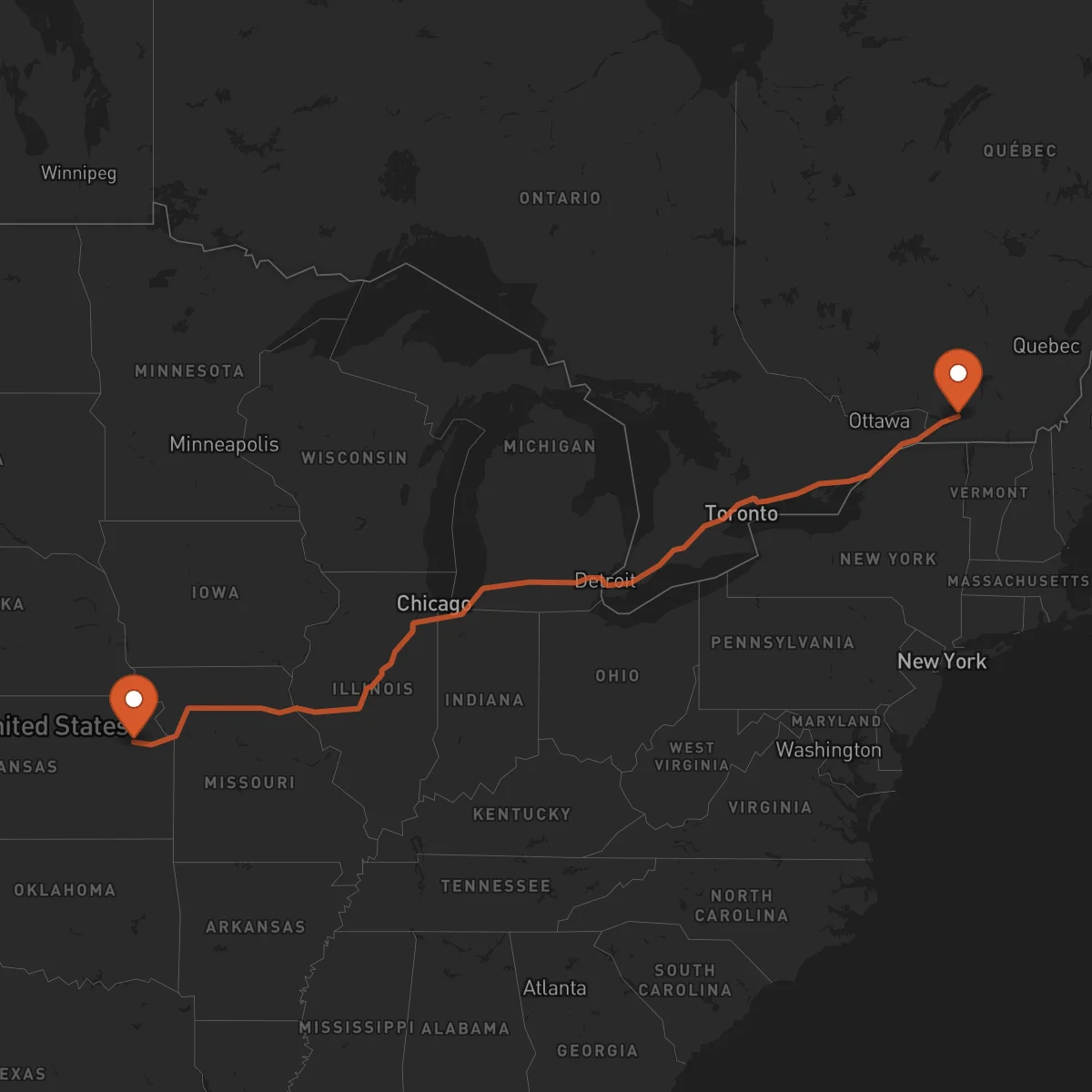
The logistics corridor connecting Topeka, Kansas to Montreal, Quebec represents a vital cross-border freight route spanning approximately 1,948 kilometers across the heart of North America. This strategic corridor links the industrial Midwest of the United States with Canada's major economic hub in Quebec, facilitating the movement of goods between two of North America's most significant manufacturing and distribution regions. The route traverses diverse terrain and crosses international borders, requiring specialized knowledge of customs regulations and cross-border logistics protocols.
The corridor serves a diverse range of industries, with manufacturing, automotive, aerospace, and agricultural products being among the most commonly transported commodities. Topeka's position in the agricultural heartland combined with Montreal's status as Canada's largest port city creates a complementary economic relationship. Major manufacturing centers along the route in both countries rely on this corridor for just-in-time delivery of components and finished goods. The automotive industry particularly benefits from this connection, with parts and vehicles moving between assembly plants and distribution centers.
Key transportation infrastructure includes major interstate highways such as I-70 and I-81 in the United States, connecting to Canadian routes through efficient border crossings like the Thousand Islands Bridge or the Ogdensburg-Prescott International Bridge. Control Terrestre's expertise in cross-border operations ensures seamless customs clearance and compliance with both US and Canadian regulations. Our dedicated FTL services provide the reliability and security that manufacturers and distributors require for this critical supply chain link.
Services for this Route
Available services for the corridor Topeka - Montreal
 Origin
Topeka
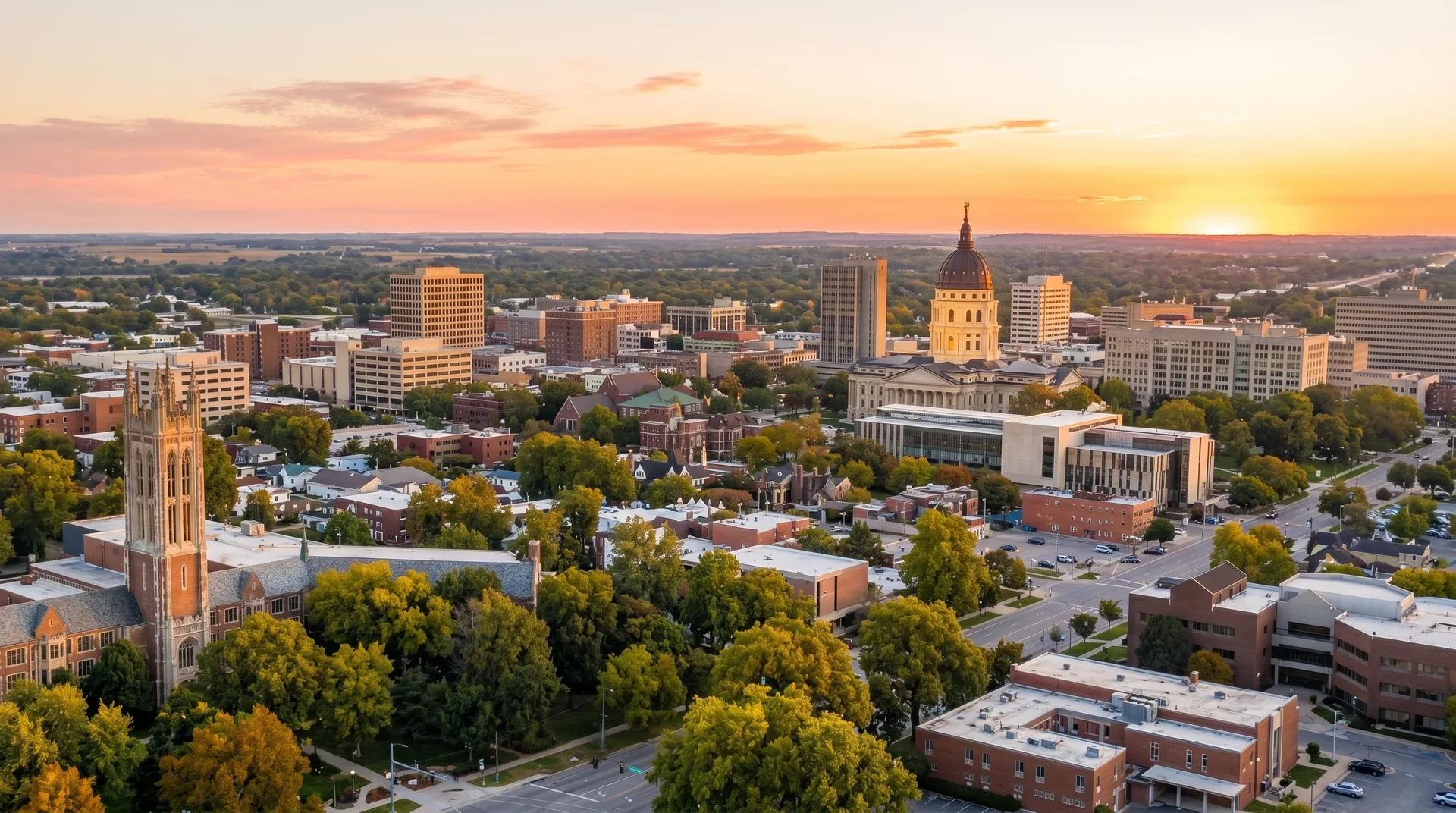
Topeka, Kansas serves as a strategic logistics hub in the American Midwest, positioned advantageously for freight distribution throughout the central United States. The city's location provides excellent connectivity to major transportation networks, including interstate highways that facilitate efficient movement of goods in all directions. Topeka's economy is anchored by manufacturing, healthcare, and retail distribution sectors, with several major distribution centers located in the region to serve the surrounding states.
The city benefits from its proximity to Kansas City's extensive logistics infrastructure, while maintaining its own robust transportation facilities. Topeka's industrial base includes food processing, machinery manufacturing, and agricultural equipment production, creating consistent freight movement needs. The city's transportation infrastructure includes direct access to I-70, which provides a direct east-west corridor across the United States, making it an ideal origin point for cross-country and cross-border freight shipments.
 Destination
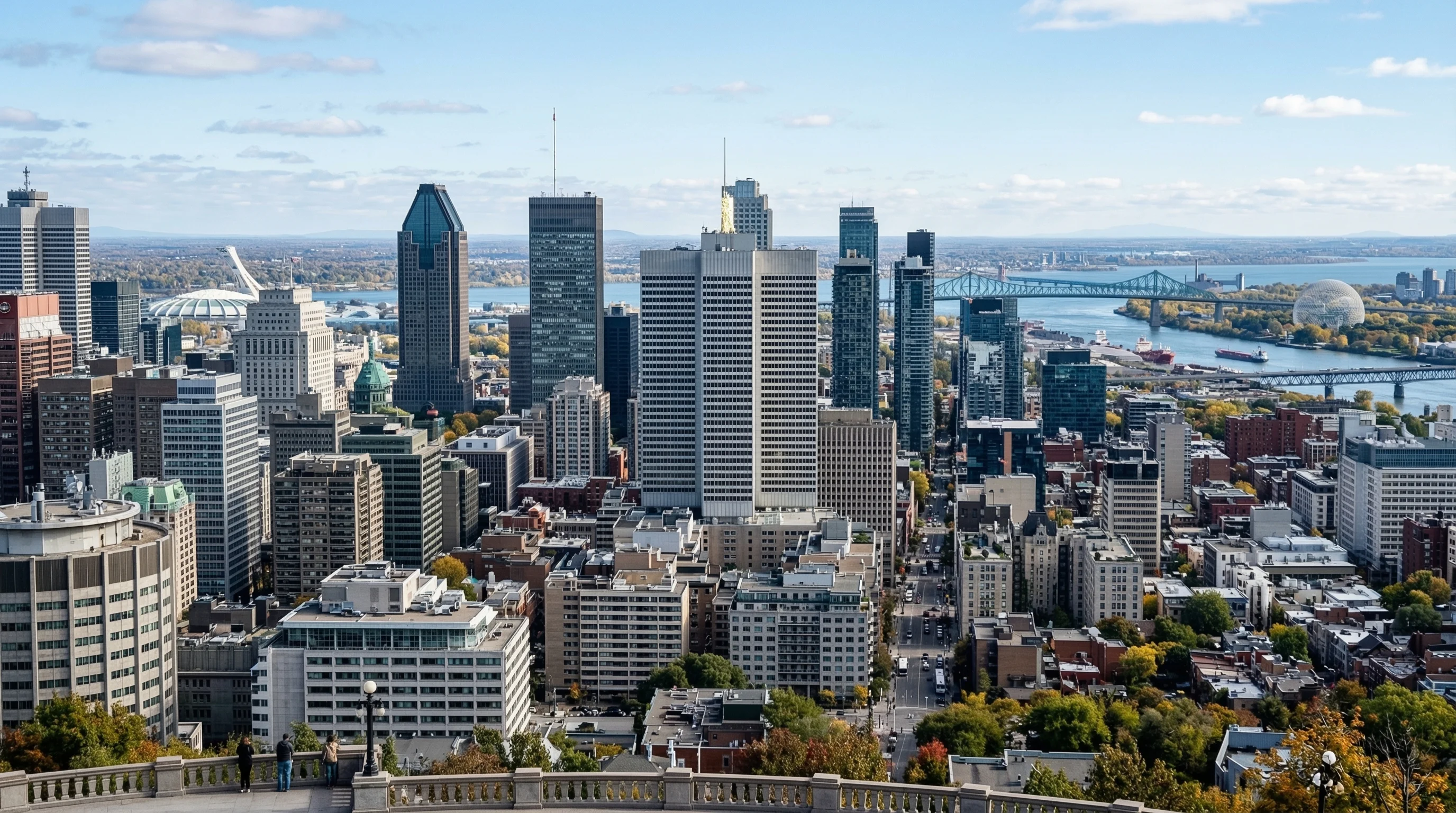
Montreal, Quebec stands as Canada's premier logistics and economic center, strategically positioned at the intersection of major trade routes. As the largest city in Quebec and second-largest in Canada, Montreal serves as a critical gateway for international trade, with the Port of Montreal being one of North America's busiest ports. The city's comprehensive transportation infrastructure includes extensive rail networks, major highways, and air cargo facilities, making it a natural destination for freight from across North America.
The Montreal metropolitan area hosts diverse industries including aerospace, pharmaceuticals, technology, and advanced manufacturing. The city's economic strength is complemented by its role as a major distribution center for goods destined throughout Eastern Canada and the Northeastern United States. Montreal's logistics ecosystem includes numerous warehousing and distribution facilities, with specialized zones dedicated to various industrial sectors. The city's bilingual workforce and established trade relationships with both North American and European markets make it an ideal hub for international freight operations.










