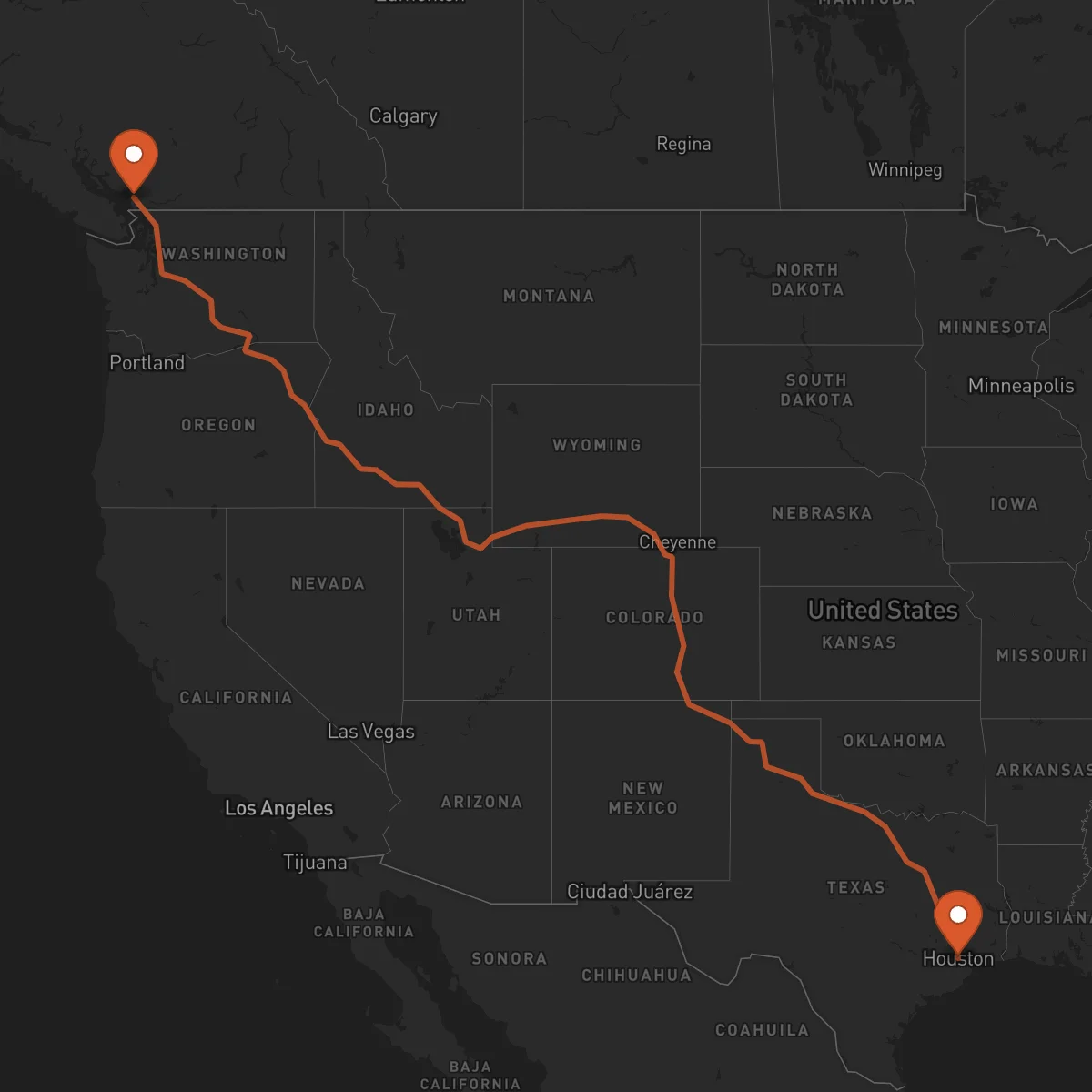
Houston to Vancouver
Vancouver → HoustonFTL freight transportation service between Houston and Vancouver. Reliable logistics solutions for your business.
Route Description
Everything you need to know about the corridor Houston - Vancouver
The Houston to Vancouver corridor represents a vital cross-border freight transportation route connecting the energy and industrial hub of Texas with Canada's Pacific gateway. This 3,188-kilometer route traverses diverse landscapes and crosses multiple state and provincial borders, making it essential for industries requiring reliable full truckload (FTL) services. The corridor's strategic importance stems from its role in facilitating trade between the United States and Canada, two of the world's largest trading partners.
The economic significance of this route is underscored by the complementary industrial strengths of both regions. Houston serves as a major center for energy, petrochemical, and manufacturing industries, while Vancouver functions as Canada's primary port city on the Pacific coast, specializing in international trade, technology, and natural resource exports. This creates a natural flow of goods requiring specialized transportation solutions, from industrial equipment and machinery to consumer goods and raw materials.
Key transportation infrastructure along this corridor includes major interstate highways such as I-10, I-15, and I-5, providing reliable and efficient freight movement. The route typically involves crossing at designated border points where customs clearance is streamlined for pre-qualified carriers. Control Terrestre's extensive network of certified transportation providers ensures seamless operations across this corridor, offering dedicated services with equipment types ranging from standard dry vans to specialized units for oversized or temperature-sensitive cargo.
Services for this Route
Available services for the corridor Houston - Vancouver
 Origin
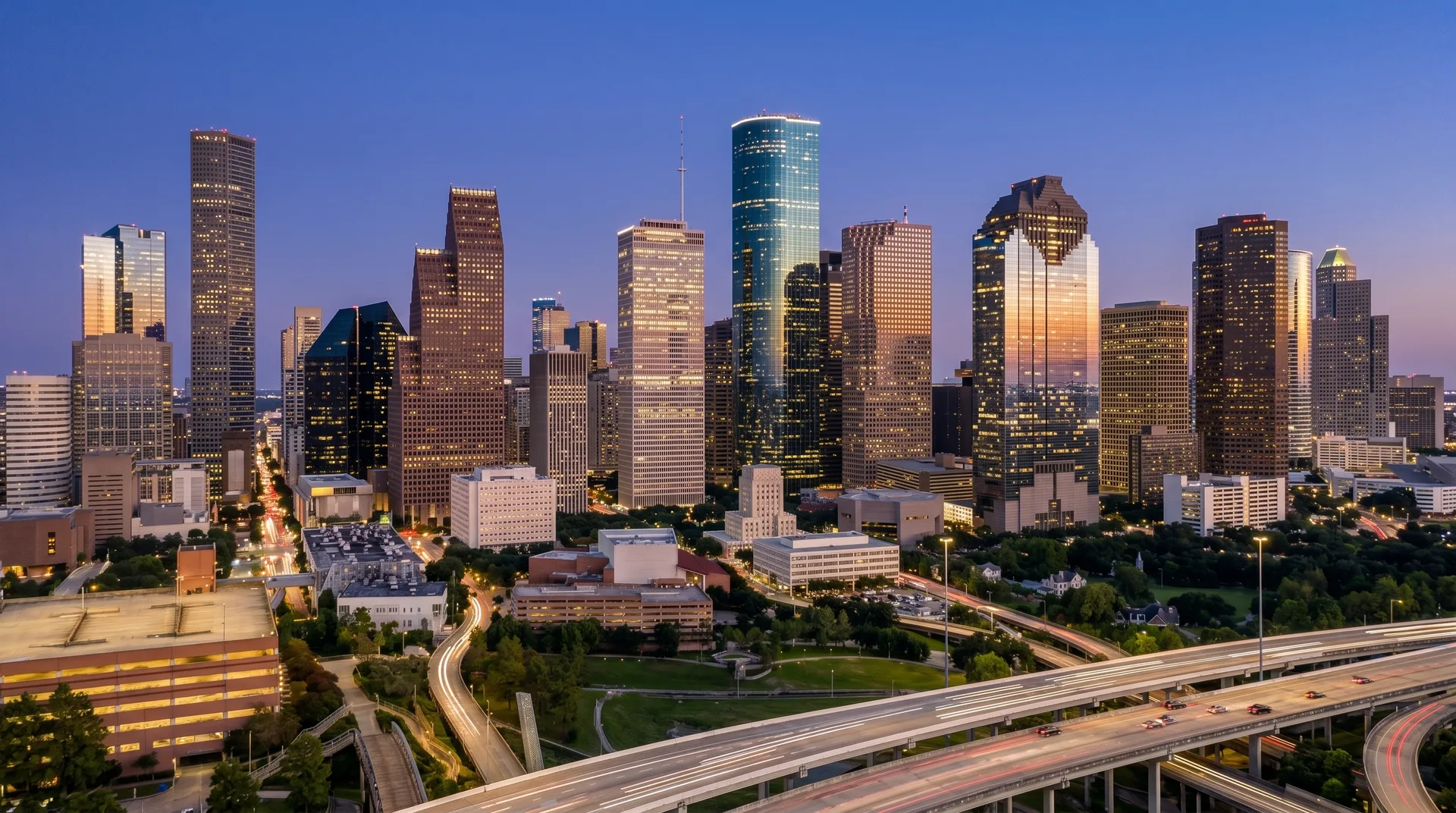
Houston
Houston stands as a strategic logistics powerhouse in the southern United States, benefiting from its proximity to the Gulf of Mexico and extensive transportation networks. The city serves as a critical hub for the energy sector, with numerous refineries, petrochemical plants, and industrial facilities concentrated in the region. Houston's Port of Houston, one of the busiest ports in the nation, provides vital maritime connections that complement its robust ground transportation infrastructure. The city's location at the intersection of major interstate highways, including I-10, I-45, and I-69, makes it an ideal origin point for cross-border freight movements. Additionally, Houston's George Bush Intercontinental Airport and William P. Hobby Airport offer air cargo capabilities that integrate seamlessly with ground transportation services.
 Destination
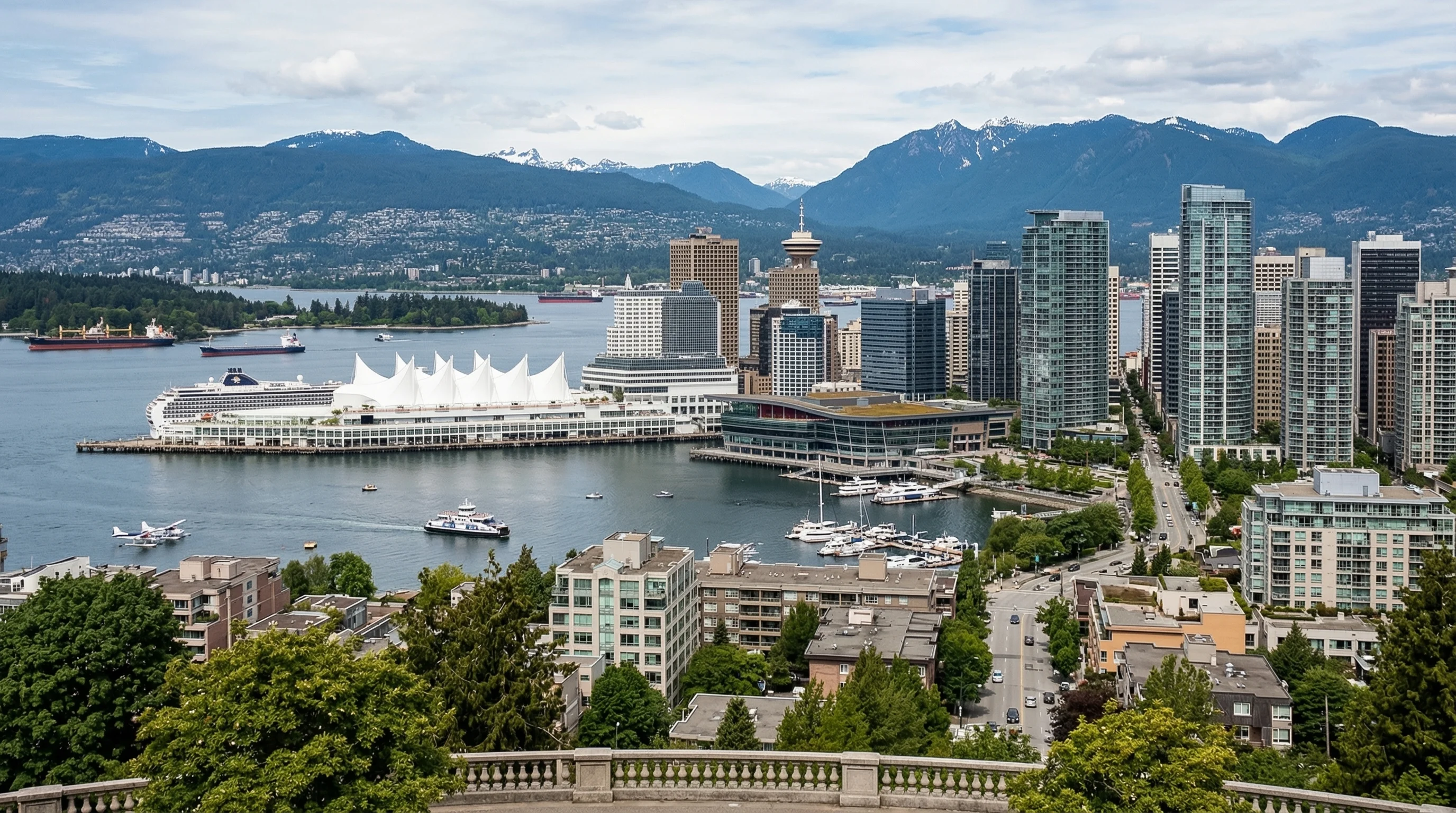
Vancouver
Vancouver's strategic position as Canada's gateway to the Pacific Rim makes it an essential logistics center for international trade. Located on the west coast of British Columbia, the city boasts Canada's largest and busiest port, handling millions of containers annually and serving as a critical link between North American markets and Asia. Vancouver's economy is diverse, with strong sectors in technology, film production, natural resources, and international trade. The city's transportation infrastructure includes major highways such as Highway 1 and Highway 99, connecting it to the rest of Canada and the United States. Vancouver International Airport provides extensive cargo services, while the city's rail connections via Canadian National Railway and Canadian Pacific Railway offer additional freight transportation options. The region's focus on sustainable development and green initiatives also influences its logistics operations, making it an attractive destination for environmentally conscious freight movements.










