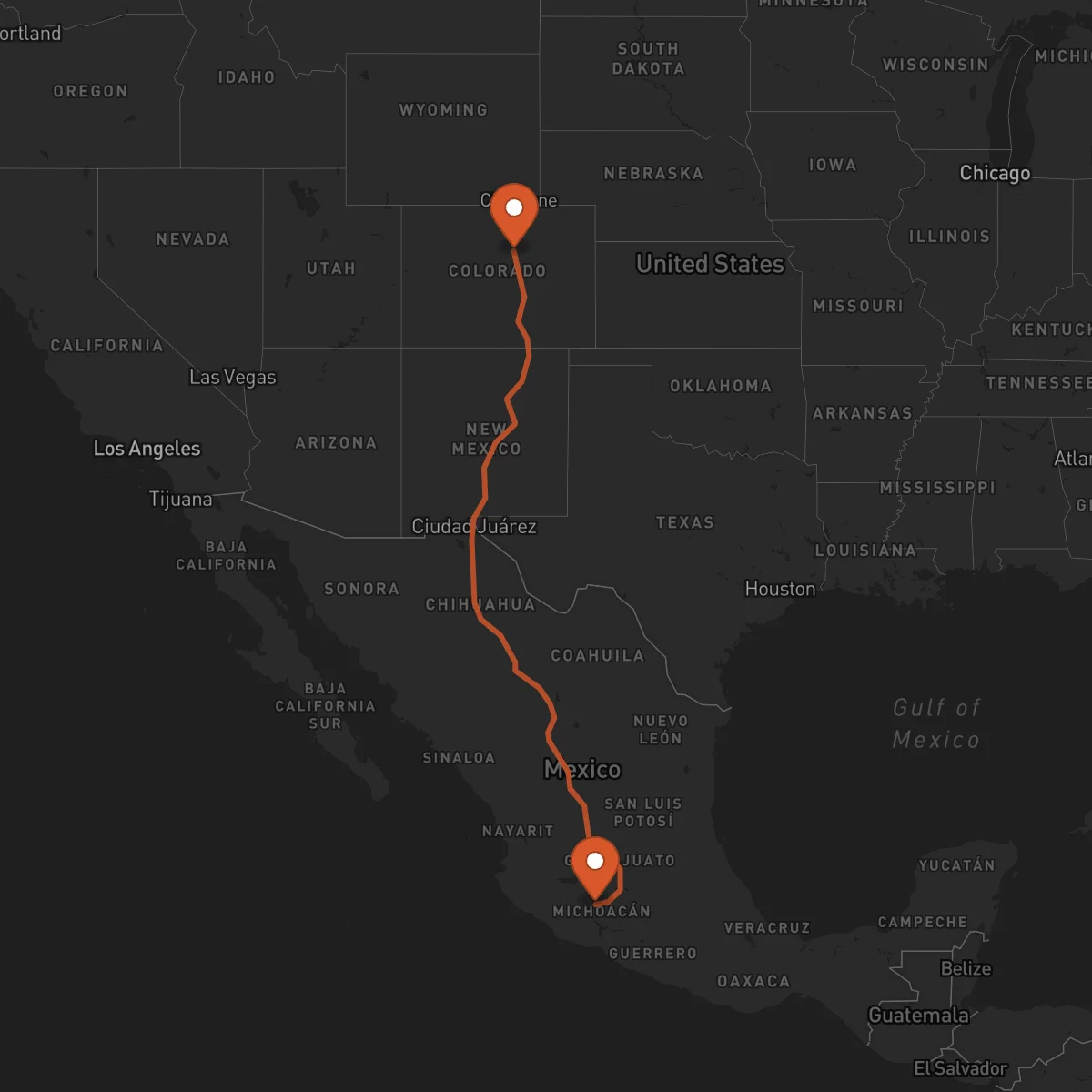
Denver to Uruapan
Uruapan → DenverFTL freight transportation service between Denver and Uruapan. Reliable logistics solutions for your business.
Route Description
Everything you need to know about the corridor Denver - Uruapan
The Denver-Uruapan corridor represents a vital trade link between the United States and Mexico, spanning approximately 2,278 kilometers across diverse terrain and economic zones. This strategic route connects the industrial powerhouse of Colorado with the thriving agricultural and manufacturing center of Michoacán, facilitating the movement of goods that drive both regional and international commerce. The corridor traverses key economic regions, including the central Mexican highlands, making it an essential artery for cross-border trade.
This transportation route serves a diverse range of industries, with particular emphasis on automotive parts, agricultural products, electronics, and manufactured goods. Denver's position as a major distribution hub in the western United States, combined with Uruapan's significance as an industrial and agricultural center in Mexico, creates substantial freight movement in both directions. The corridor particularly benefits from the strong manufacturing presence in both locations, including aerospace, technology, and agricultural processing sectors.
Major transportation infrastructure along this route includes Interstate 25 and Interstate 40 in the United States, connecting to Mexican Federal Highways 45, 45D, and 15. The primary border crossing utilized is typically Laredo/Nuevo Laredo or El Paso/Ciudad Juárez, depending on specific routing requirements and current border conditions. Control Terrestre's expertise in navigating these cross-border operations ensures seamless customs clearance and efficient transit, with our C-TPAT and FAST certifications streamlining the process for our clients' full truckload shipments.
Services for this Route
Available services for the corridor Denver - Uruapan
 Origin
Denver
Denver, Colorado serves as a strategic logistics hub in the western United States, positioned at the intersection of major interstate highways and benefiting from its central location within a day's drive of many key markets. The city's elevation and geographical position make it a natural distribution point for goods moving throughout the Rocky Mountain region and beyond. Denver's transportation infrastructure includes Denver International Airport, one of the largest airports in the world by land area, and extensive rail connections through Union Pacific and BNSF railways, complementing its robust trucking network.
The Denver metropolitan area is home to diverse industries including aerospace, technology, telecommunications, and energy. The region hosts major employers in the telecommunications sector, with numerous data centers and technology companies maintaining significant operations. Additionally, Denver's proximity to agricultural regions in Colorado and surrounding states makes it a key point for food processing and distribution. The city's strong manufacturing sector, particularly in aerospace components and outdoor equipment, generates substantial freight movement that requires reliable transportation solutions.
 Destination
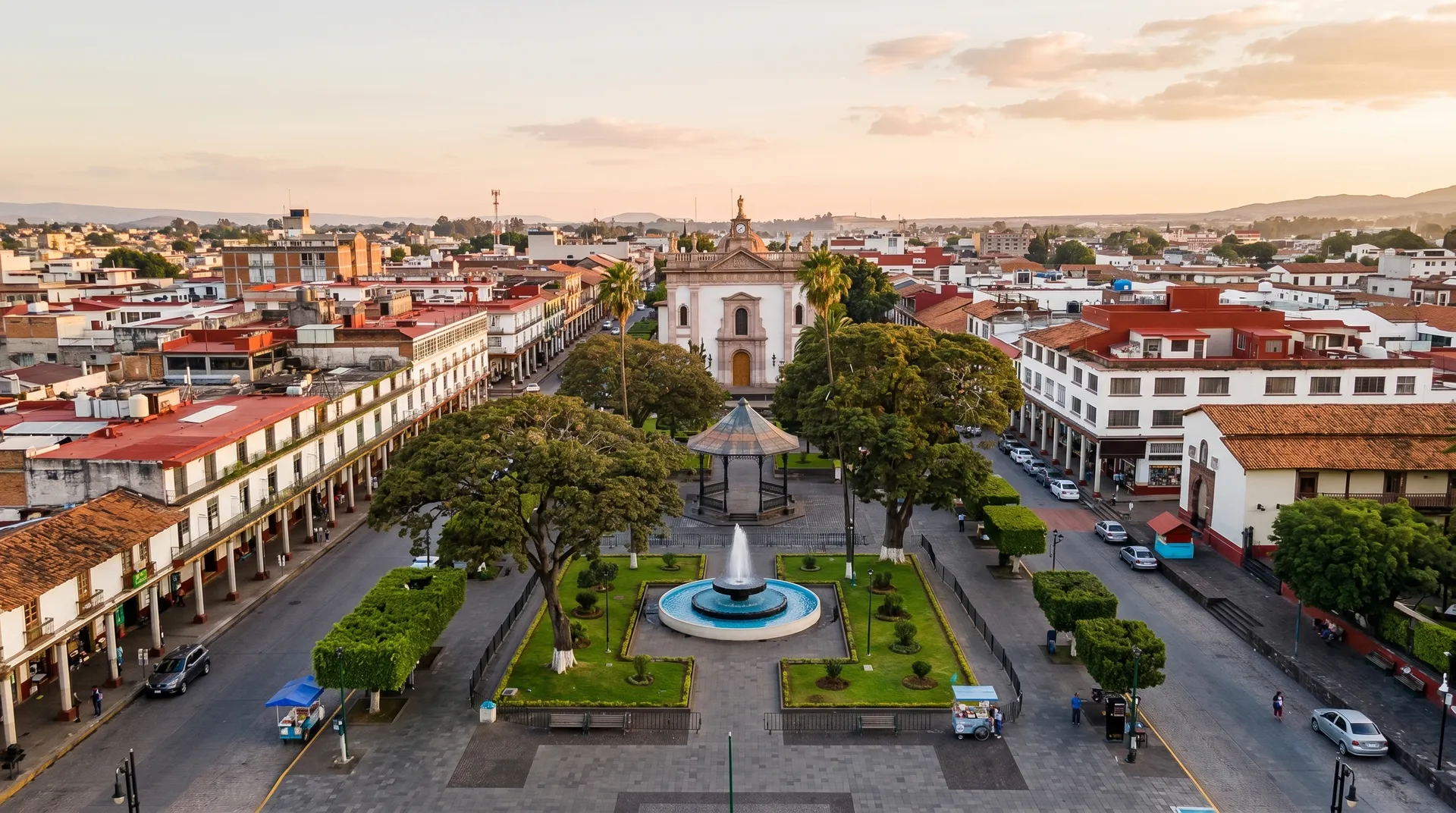
Uruapan, located in the state of Michoacán, Mexico, is strategically positioned in the heart of Mexico's agricultural and manufacturing regions. Known as the "World Capital of Avocados," Uruapan serves as a crucial distribution point for agricultural products from the surrounding region. The city's location provides excellent connectivity to major industrial centers in central and western Mexico, making it an important node in the country's logistics network. Uruapan's elevation and climate have historically made it a center for agriculture and related industries.
The region surrounding Uruapan is characterized by diverse manufacturing activities, including automotive parts production, food processing, and furniture manufacturing. The presence of industrial parks and manufacturing facilities has created a robust demand for freight transportation services. Uruapan's infrastructure includes access to Federal Highway 15, connecting it to major ports and border crossings, as well as rail connections that support the movement of bulk goods and industrial materials. The city's economic development has been supported by its strategic location between Mexico's central highlands and the Pacific coast.










