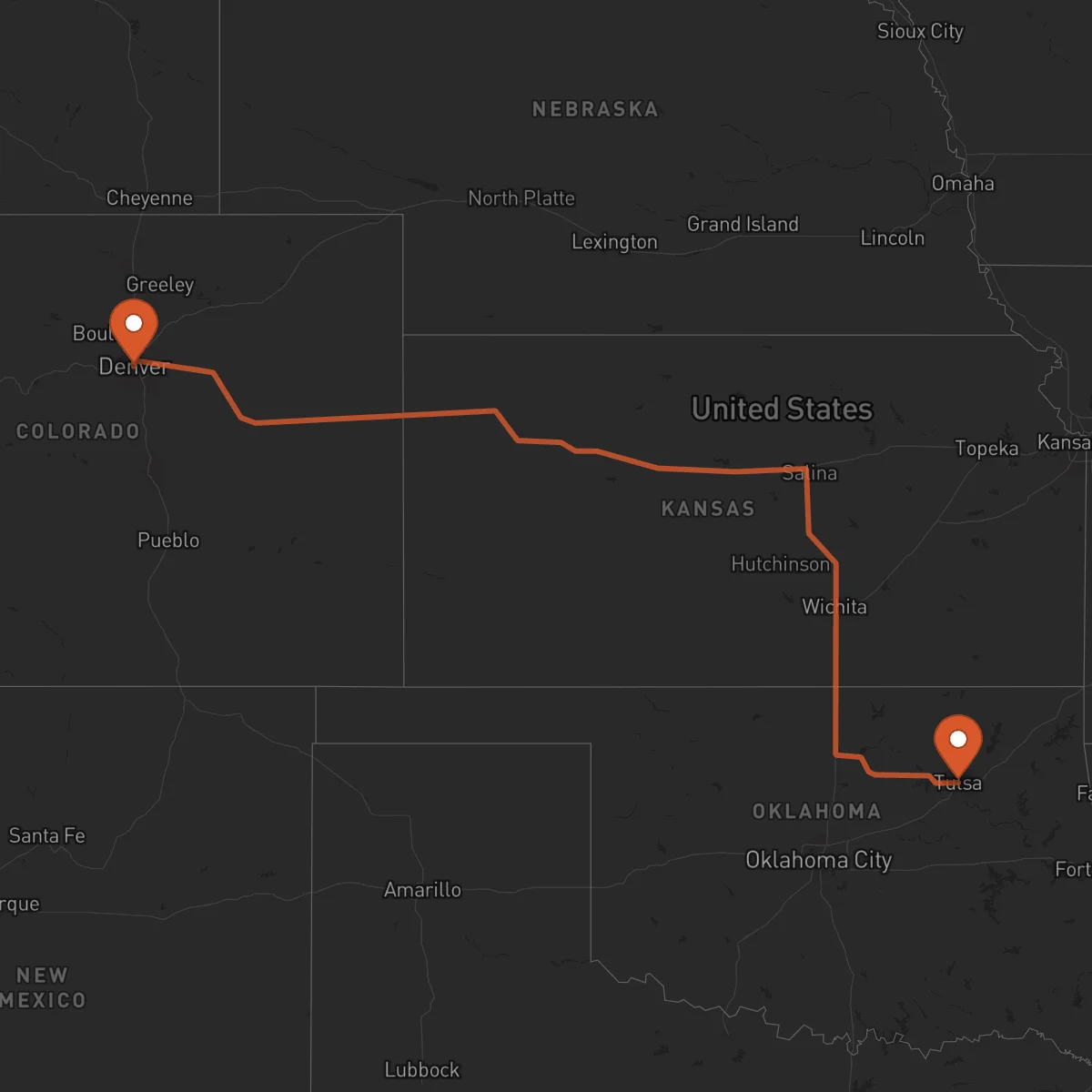
Denver to Tulsa
Tulsa → DenverFTL freight transportation service between Denver and Tulsa. Reliable logistics solutions for your business.
Route Description
Everything you need to know about the corridor Denver - Tulsa
The Denver to Tulsa corridor represents a vital transportation link between the Rocky Mountain region and the heart of the U.S. energy corridor. This 884 km route connects Colorado's capital with Oklahoma's second-largest city, facilitating the movement of goods between two economically dynamic regions. The corridor traverses diverse terrain, from the high plains of eastern Colorado through the rolling hills of Kansas before reaching northeastern Oklahoma's industrial base.
The economic significance of this route is substantial, connecting Denver's diverse economy—anchored by technology, aerospace, and energy sectors—with Tulsa's historical role as the "Oil Capital of the World." This corridor serves as a crucial supply chain link for energy equipment, industrial machinery, and manufactured goods. The route primarily follows Interstate 70 East and Interstate 44 East, utilizing well-maintained highway infrastructure that supports efficient freight movement.
Control Terrestre leverages this established infrastructure to provide reliable full truckload (FTL) transportation services between Denver and Tulsa. Our network of certified carriers ensures consistent capacity and service quality, while our strategic partnerships enable us to offer flexible solutions for both scheduled and spot freight needs. We understand the specific requirements of industries operating along this corridor, from time-sensitive deliveries for the energy sector to specialized handling for industrial equipment.
Our expertise in managing cross-regional freight movements ensures that your cargo moves seamlessly between these two important commercial centers. Whether you're shipping from Denver's manufacturing facilities to Tulsa's industrial parks or supporting the energy sector's equipment needs, Control Terrestre provides the dedicated service and reliability that businesses require for their critical supply chain operations.
Services for this Route
Available services for the corridor Denver - Tulsa
 Origin
Denver
Denver serves as a strategic logistics hub at the intersection of major transportation routes in the western United States. Situated one mile above sea level, the city offers unique advantages including direct access to I-70, I-25, and I-76, creating multiple freight corridors to both coasts and the Midwest. Denver International Airport, one of the largest cargo facilities in the country, complements the city's ground transportation network. The region's economy is anchored by aerospace, technology, energy, and manufacturing sectors, with a growing presence in renewable energy and advanced industries. Denver's central location in the Mountain Time Zone and its infrastructure make it an ideal origin point for freight distribution throughout the central and western United States.
 Destination
Tulsa
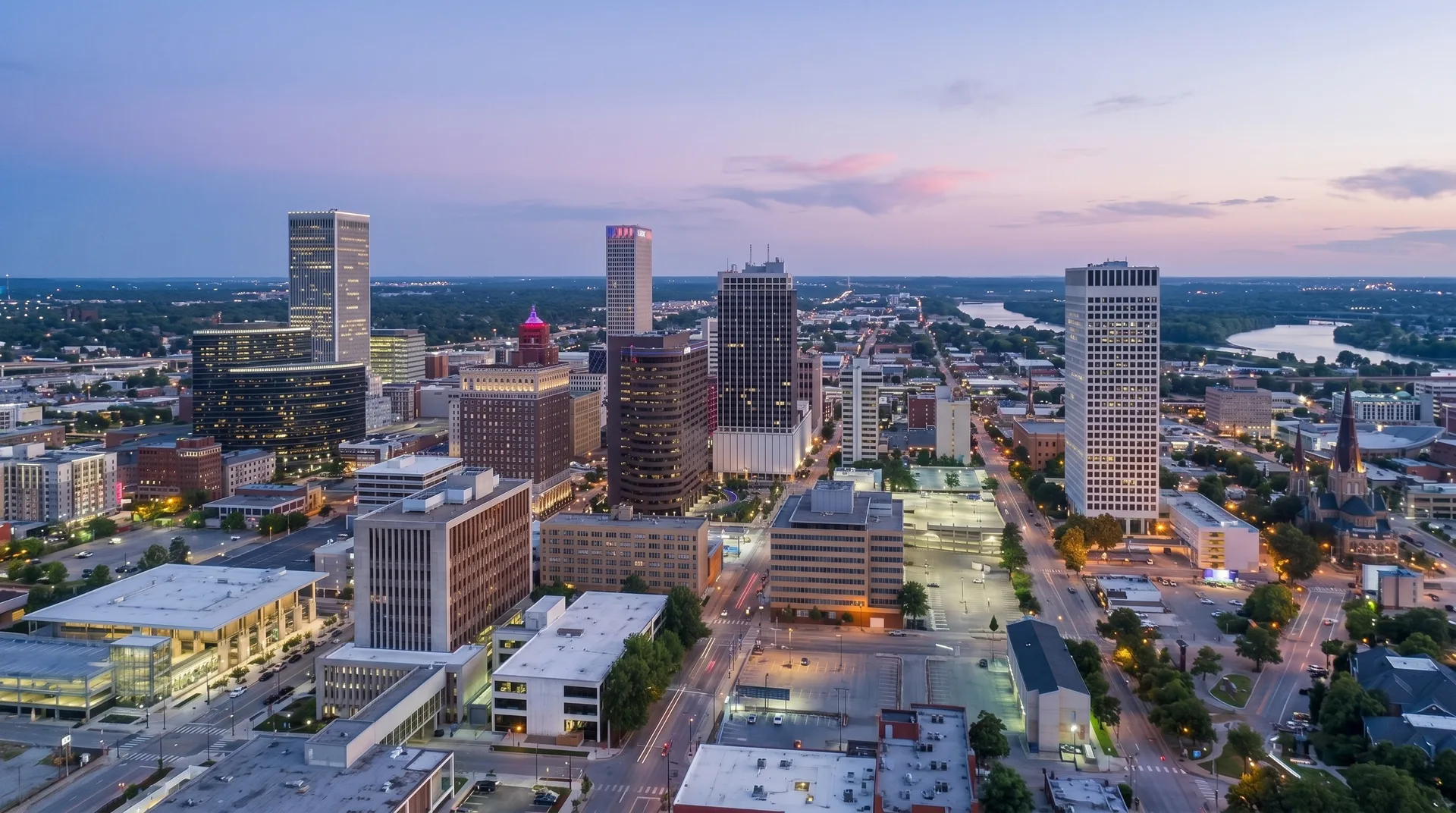
Tulsa stands as a critical logistics and industrial center in the Southern Plains region. The city's strategic location at the intersection of I-44 and several state highways provides excellent connectivity to major markets across the central United States. Tulsa International Airport and the Tulsa Port of Catoosa, offering access to the McClellan-Kerr Arkansas River Navigation System, create multimodal transportation options. Historically known as the "Oil Capital of the World," Tulsa's economy has diversified to include aerospace, telecommunications, and manufacturing while maintaining strong energy sector ties. The city's central location and robust infrastructure make it an important destination for freight movements, particularly for industrial equipment, energy-related cargo, and manufactured goods destined for the Southern Plains and beyond.










