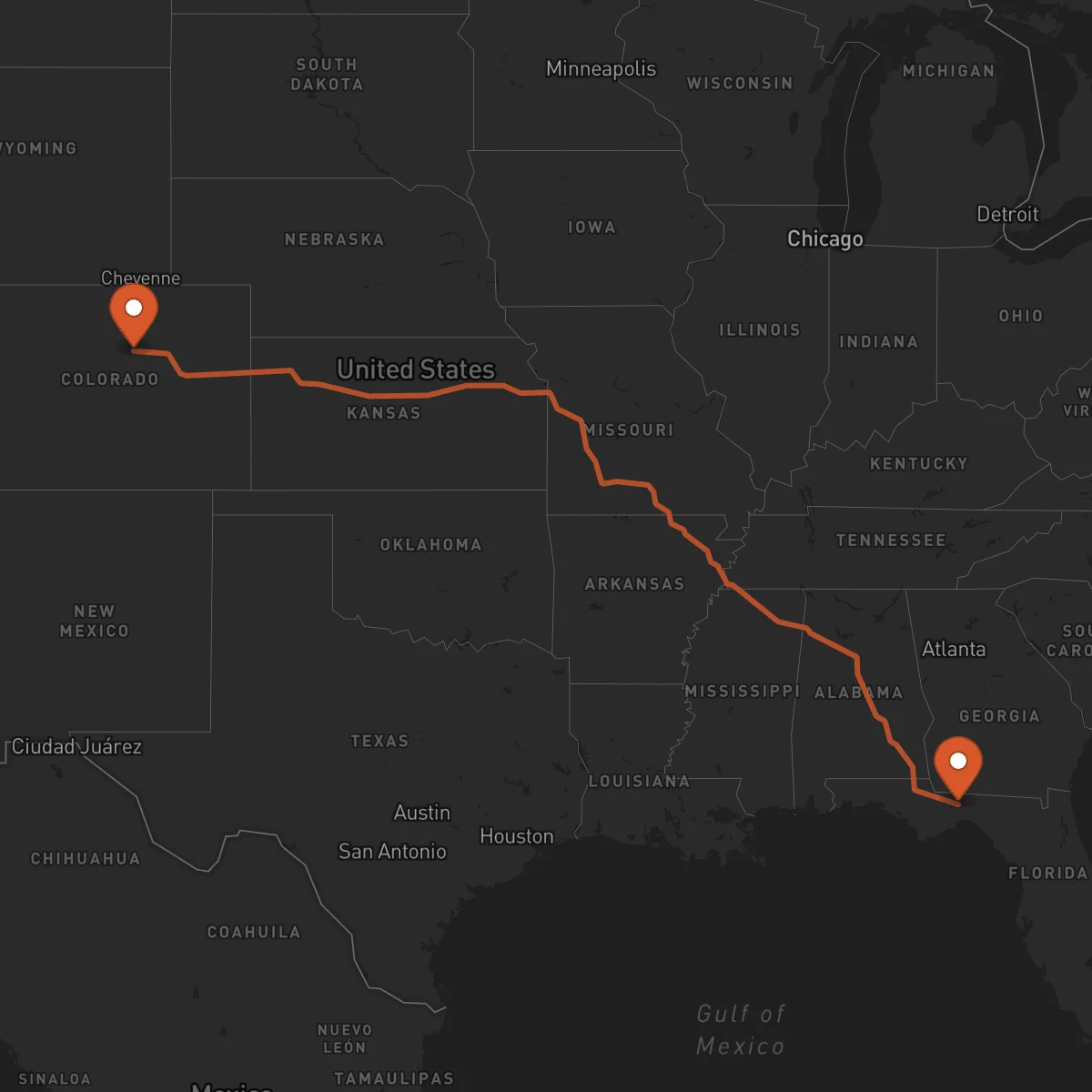
Denver to Tallahassee
Tallahassee → DenverFTL freight transportation service between Denver and Tallahassee. Reliable logistics solutions for your business.
Route Description
Everything you need to know about the corridor Denver - Tallahassee
The Denver to Tallahassee corridor represents a vital freight transportation route connecting the Rocky Mountain region with the Gulf Coast of Florida. This 2,142 km journey traverses diverse landscapes and connects two distinct economic regions, facilitating the movement of goods essential to both Colorado's and Florida's industrial sectors. The route primarily follows major interstate highways, including I-70 East from Denver through Kansas and Missouri, then transitioning to I-55 South through Tennessee and Alabama before connecting to I-10 East into Florida and finally reaching Tallahassee via I-75 South and local routes.
This corridor serves as a critical link between Colorado's manufacturing, aerospace, and agricultural sectors with Florida's agricultural production, tourism industry, and distribution centers. Companies in Denver rely on efficient transportation to Florida's ports and markets, while Florida businesses depend on timely delivery of goods from the Rocky Mountain region. The route supports industries ranging from technology and electronics to fresh produce and specialized equipment, making it an essential component of North American supply chains.
Control Terrestre specializes in full truckload (FTL) services along this corridor, providing dedicated transportation solutions that ensure cargo moves efficiently and securely. Our network of certified carriers offers consistent capacity, real-time tracking, and experienced drivers familiar with this cross-country route. We understand the unique challenges of long-haul transportation, including weather variations, regulatory compliance across multiple states, and the need for timely delivery to maintain supply chain integrity.
Services for this Route
Available services for the corridor Denver - Tallahassee
 Origin
Denver
Denver, Colorado serves as a strategic logistics hub at the intersection of major transportation routes in the western United States. Located at the base of the Rocky Mountains, Denver benefits from its central location within the Mountain Time Zone, providing excellent connectivity to both coastal regions and the Midwest. The city's economy is anchored by aerospace, technology, telecommunications, energy, and manufacturing sectors, with a growing emphasis on renewable energy and sustainable practices. Denver International Airport, one of the largest airports in the world by land area, provides extensive air cargo capabilities, while the city's extensive highway network includes I-70, I-25, and I-76, facilitating efficient ground transportation to all directions.
The Denver metropolitan area hosts numerous logistics centers, warehouses, and distribution facilities that support both regional and national supply chains. The city's robust infrastructure includes rail connections through Union Pacific and BNSF, complementing the extensive trucking capabilities available in the region. Denver's strategic position makes it an ideal origin point for freight moving east across the Great Plains or south to the Gulf Coast, with Tallahassee representing a key destination for various industrial and commercial goods.
 Destination
Tallahassee
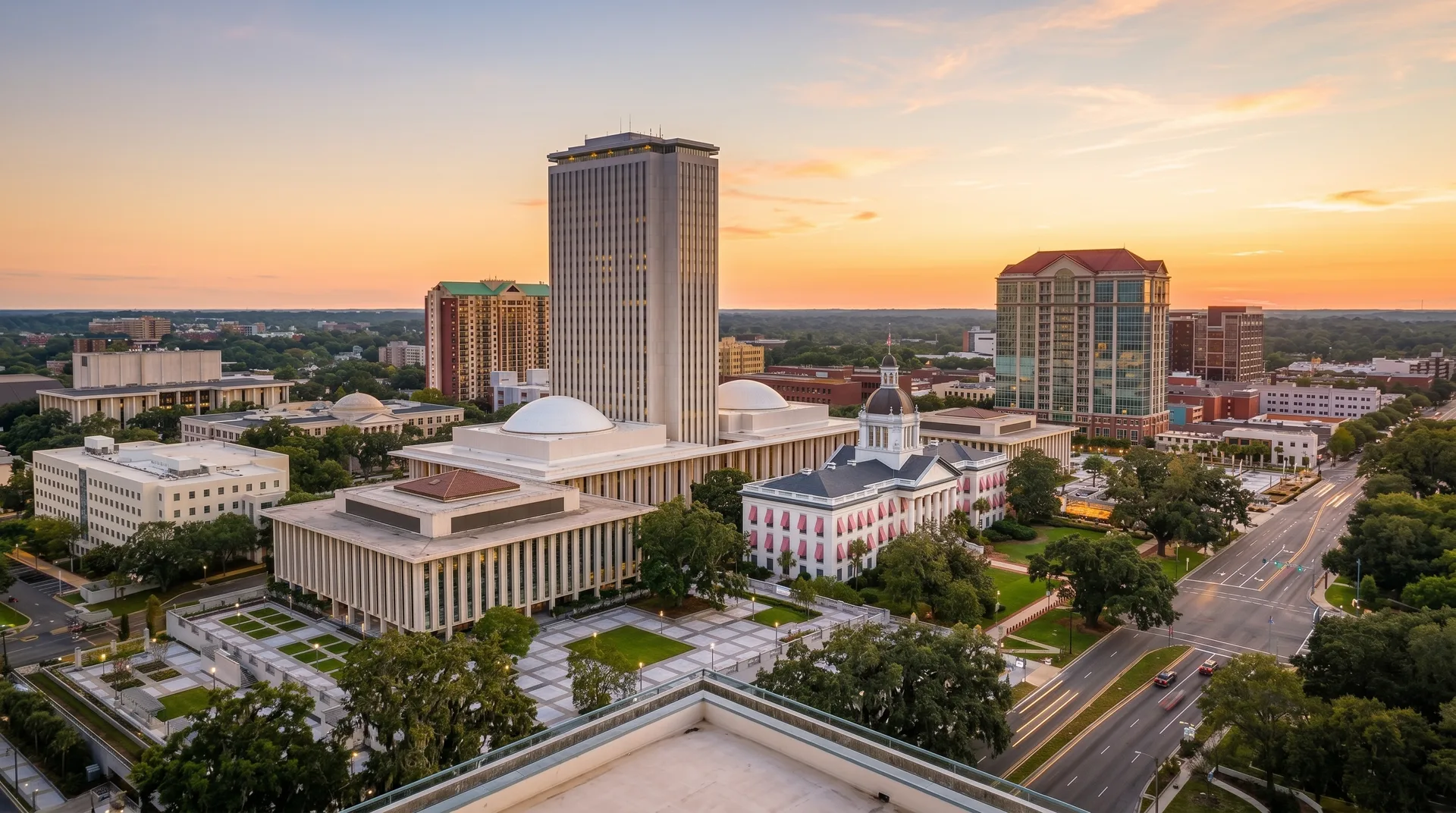
Tallahassee, Florida serves as the capital city of the Sunshine State and a strategic logistics center in the Florida Panhandle. Located in the northern part of Florida, Tallahassee provides excellent access to both the Gulf Coast and Atlantic markets, with proximity to major ports including Panama City and Jacksonville. The city's economy is driven by government services, education (home to Florida State University and Florida A&M University), healthcare, and agriculture, particularly in the surrounding rural areas where timber, cotton, and other crops are produced. Tallahassee's location makes it a natural distribution point for goods destined for the southeastern United States and beyond.
The transportation infrastructure in Tallahassee includes access to I-10, which runs east-west across the southern United States, and US-319 and US-27 providing additional connectivity. The city is served by Tallahassee International Airport for air cargo needs, while rail services through CSX Transportation support industrial freight movements. The region's growing logistics sector benefits from Florida's strategic position for international trade, with Tallahassee serving as an inland hub connecting to coastal ports and distribution networks throughout the Southeast.










