Denver to Seattle
Seattle → DenverFTL freight transportation service between Denver and Seattle. Reliable logistics solutions for your business.
Route Description
Everything you need to know about the corridor Denver - Seattle
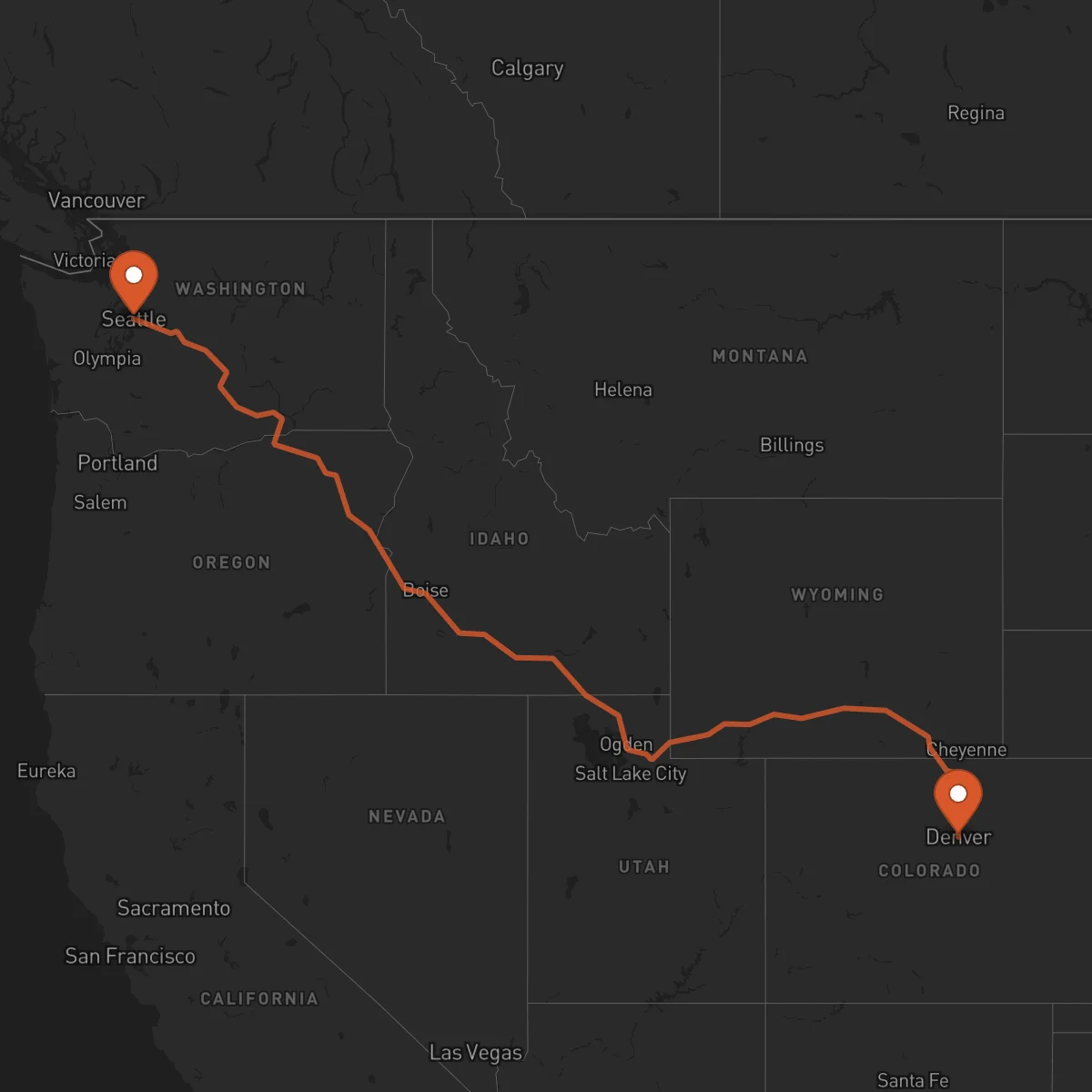
The Denver to Seattle corridor represents one of the most important freight transportation routes in the western United States, connecting the Rocky Mountain region with the Pacific Northwest. This 1,641 km route traverses diverse terrain and crosses multiple states, serving as a vital link between the industrial and agricultural heartland of Colorado and the major port and technology hub of Seattle.
The corridor passes through key economic centers including Cheyenne, Wyoming, and Spokane, Washington, providing access to major manufacturing, distribution, and agricultural regions. The route is essential for industries such as technology, aerospace, agriculture, and manufacturing, facilitating the movement of high-value electronics, agricultural products, industrial equipment, and consumer goods between these strategic markets.
Control Terrestre optimizes freight transportation along this corridor through our network of certified carriers and specialized equipment. Our full truckload (FTL) services ensure direct, efficient delivery without intermediate stops, maintaining the integrity of time-sensitive and high-value shipments. We leverage our expertise in handling diverse cargo types, from refrigerated goods to oversized equipment, providing tailored solutions that meet the specific needs of each industry served by this critical transportation link.
Services for this Route
Available services for the corridor Denver - Seattle
 Origin
Denver
Denver serves as a strategic logistics hub in the central United States, positioned at the intersection of major transportation routes in the Rocky Mountain region. The city's location provides access to both eastern and western markets, with excellent connectivity via I-25, I-70, and I-76 highways. Denver's elevation and central position make it an ideal distribution point for freight moving in multiple directions.
The Denver metropolitan area hosts a diverse economic base including aerospace, telecommunications, healthcare, and financial services industries. The region is also a major center for outdoor recreation equipment manufacturing and distribution. Denver International Airport and the city's extensive rail network complement the highway system, creating a multimodal transportation infrastructure that supports efficient freight movement to all regions of the country.
 Destination
Seattle
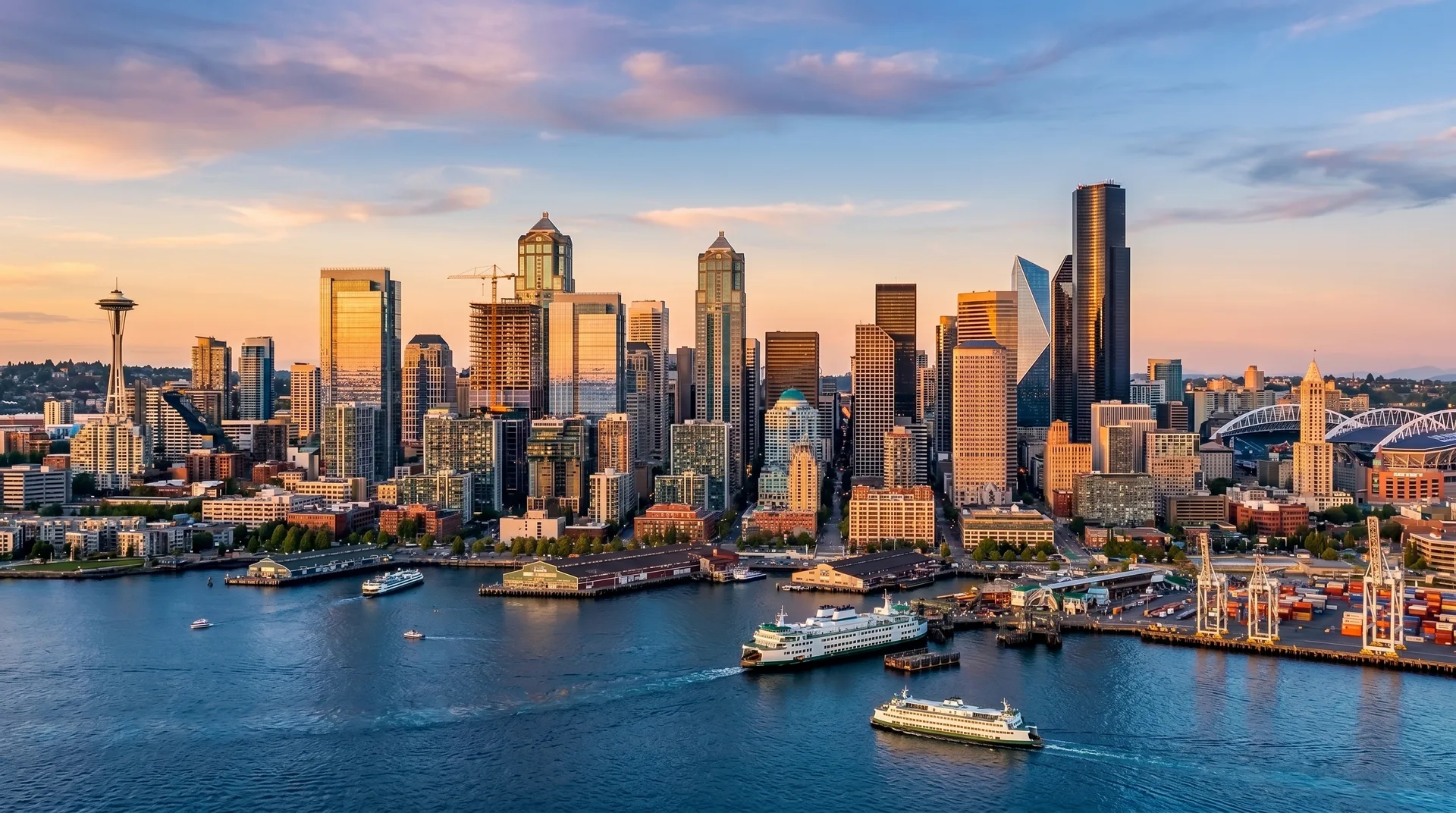
Seattle stands as a premier logistics gateway on the West Coast, combining its role as a major port city with its status as a technology and aerospace center. The city's strategic location provides direct access to international markets through the Port of Seattle, while its proximity to major Asian trade routes enhances its importance in global supply chains. I-5 serves as the primary north-south corridor connecting Seattle to the rest of the West Coast.
The Seattle metropolitan area is home to major corporations in technology, aerospace (including Boeing), and maritime industries. The region's economy also includes significant activity in software development, biotechnology, and sustainable energy. Seattle's extensive port facilities, international airport, and comprehensive highway network create a robust transportation infrastructure that efficiently handles both domestic and international freight movements.










