
Denver to Puntarenas
Puntarenas → DenverFTL freight transportation service between Denver and Puntarenas. Reliable logistics solutions for your business.
Route Description
Everything you need to know about the corridor Denver - Puntarenas
The logistics corridor connecting Denver, Colorado, to Puntarenas, Costa Rica, represents a vital cross-border transportation route spanning approximately 3,863 kilometers through Mexico and Central America. This corridor facilitates the movement of goods between the United States and Costa Rica, serving as a critical link in the North American and Central American supply chains. The route traverses diverse terrains and crosses multiple international borders, requiring specialized expertise in cross-border logistics and customs procedures.
The economic significance of this corridor is substantial, connecting Denver's robust industrial and commercial sectors with Costa Rica's growing economy, particularly its export-oriented industries. Denver serves as a major distribution hub for the western United States, while Puntarenas functions as Costa Rica's primary Pacific port, handling significant import and export volumes. The corridor supports industries including automotive, electronics, agricultural products, and manufactured goods, with increasing demand for refrigerated transportation for perishable items.
Key transportation infrastructure along this route includes major highways such as I-25, I-10, and Mexican Federal Highways 85 and 190, connecting to CA-1 in Central America. The corridor involves critical border crossings at Laredo-Nuevo Laredo and Paso Canoas between Costa Rica and Panama. Control Terrestre's expertise in managing complex cross-border operations ensures seamless freight movement, handling all necessary documentation, customs clearance, and compliance requirements across multiple jurisdictions.
Services for this Route
Available services for the corridor Denver - Puntarenas
 Origin
Denver
Denver, Colorado, serves as a strategic logistics hub in the western United States, situated at the intersection of major transportation routes and benefiting from its central location in the Rocky Mountain region. The city's economy is diverse, with strong presence in aerospace, telecommunications, healthcare, and technology sectors, along with significant manufacturing and distribution activities. Denver's elevation and geographic position make it an ideal consolidation point for goods destined for both coastal and inland markets.
The city boasts excellent transportation infrastructure, including Denver International Airport, one of the busiest cargo airports in the country, extensive rail connections through Union Pacific and BNSF rail networks, and major highway systems including I-70, I-25, and I-76. The Denver metropolitan area features numerous warehousing and distribution centers, providing efficient consolidation and deconsolidation services for cross-border freight movements.
 Destination
Puntarenas
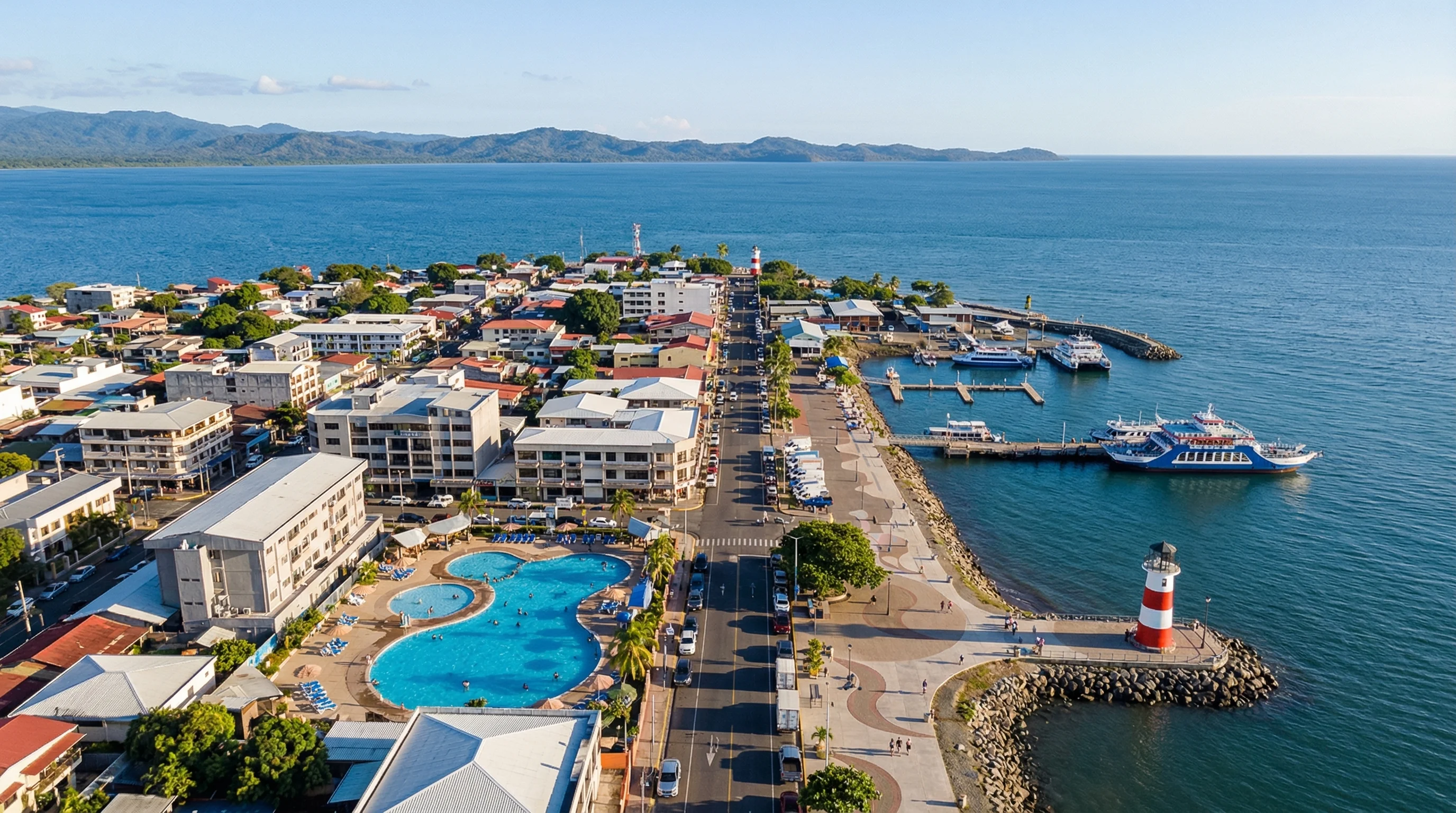
Puntarenas, located on Costa Rica's Pacific coast, serves as the country's primary maritime gateway and a crucial logistics node for Central American trade. The region's economy benefits from its port facilities, tourism industry, and agricultural exports, particularly seafood, tropical fruits, and manufactured goods. Puntarenas Port handles the majority of Costa Rica's containerized cargo and is strategically positioned to serve both domestic markets and re-export opportunities to neighboring countries.
The port infrastructure in Puntarenas includes modern container terminals, bulk cargo facilities, and specialized handling equipment for various freight types. The area is connected to Costa Rica's road network via Route 27 and Route 23, providing efficient access to San José and other inland destinations. The region's Free Trade Zones and industrial parks create additional demand for reliable freight transportation services connecting to North American markets.










